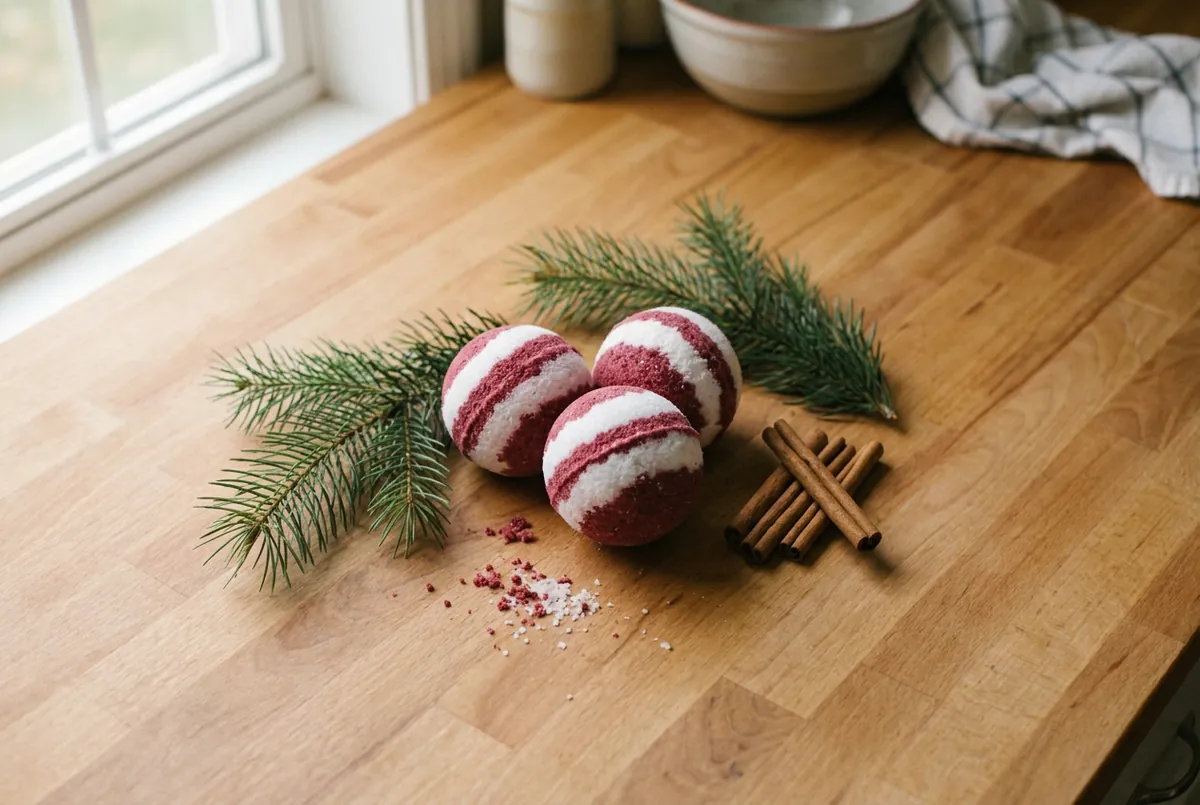
These Christmas bath bombs are made from baking soda, citric acid, cornstarch and Epsom salt, bound with coconut oil and scented lightly with peppermint and sweet orange. Half the mixture is tinted red, then layered with white in sphere molds to make six candy cane bath bombs.
These are bath bombs for December, for the house and for handing out. They are red and white like a candy cane, scented gently with peppermint and sweet orange, and big enough to fill a bath with fizz. The recipe makes six, which is the right number for a first try: enough to give away, few enough that a mistake costs little.
A bath bomb is not the same as a shower steamer. Everything in it ends up in the water you sit in, so the scent is deliberately light and there is oil in the mix for your skin. If you have made the shower steamer recipe, treat this as a cousin rather than a variation.
Ingredients
- 1 cup (about 220g) baking soda
- 1/2 cup (about 110g) citric acid
- 1/2 cup cornstarch
- 1/2 cup Epsom salt
- 2 1/2 tablespoons melted coconut oil or sweet almond oil
- 12 drops peppermint essential oil (leave out for children)
- 10 drops sweet orange essential oil
- A small pinch of skin-safe red mica
- Witch hazel in a spray bottle, only if needed
Tools
- Two mixing bowls
- Whisk
- Measuring cups and spoons
- Stainless steel two-part sphere molds, about 6.5cm
- Wire rack or folded towel for drying
- Gloves
How do you make Christmas bath bombs?
1Set out the ingredients
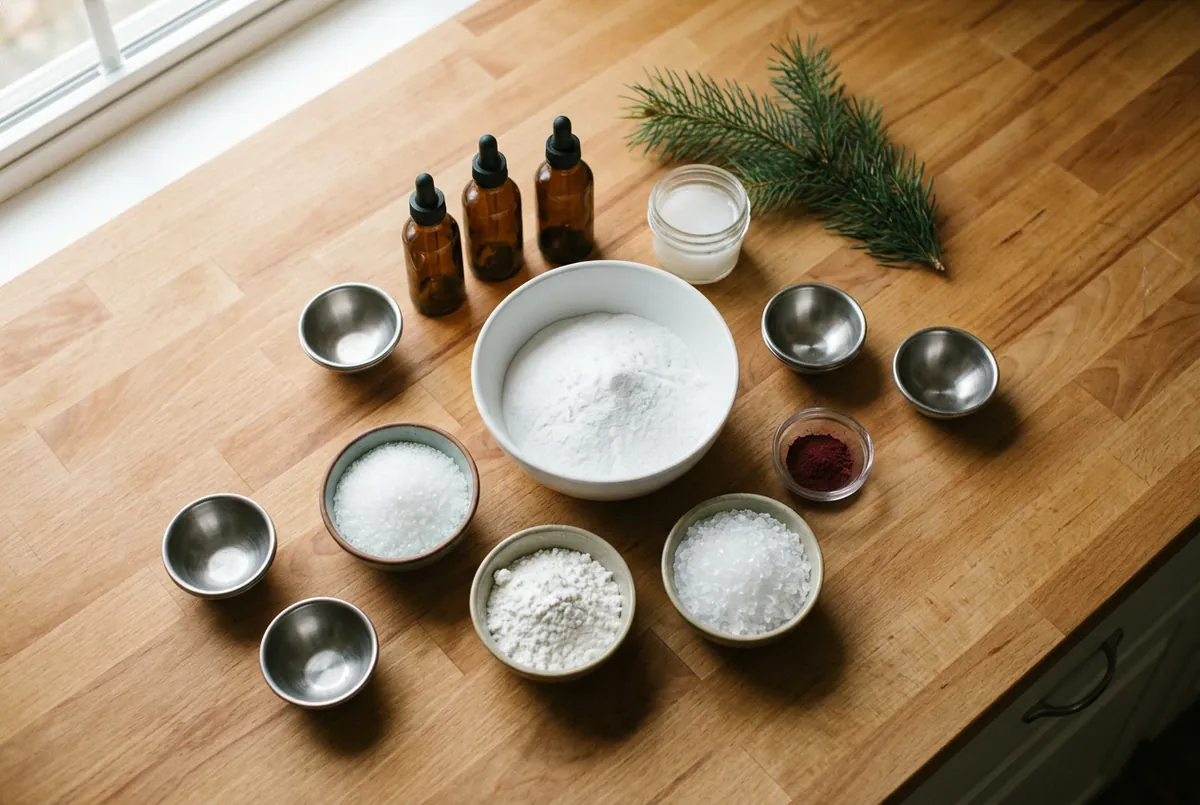
Measure everything before you start. Bath bomb mixture sets quickly once the liquid goes in, and the colouring step means you are working with two bowls at once.
Use a stainless steel two-part sphere mold for these, about 6.5cm across. Plastic ones work but crack after a season; steel lasts for years.
2Whisk the dry ingredients
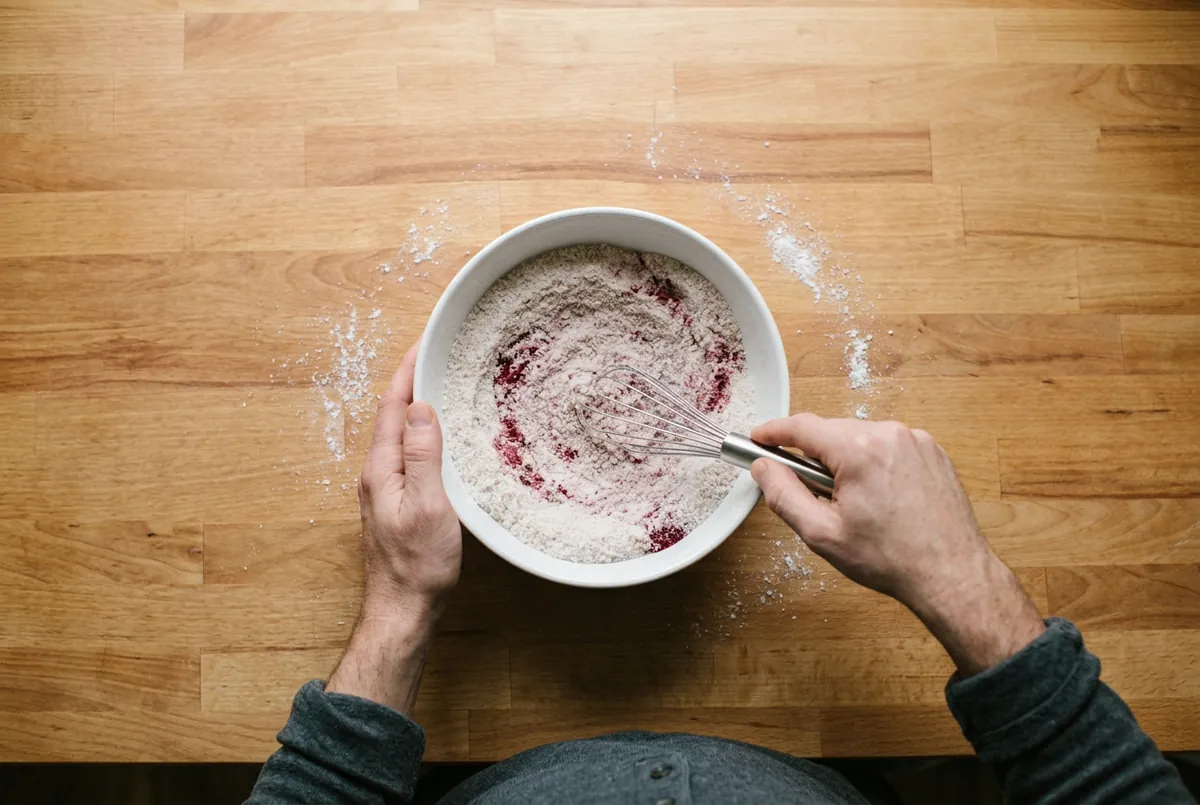
Whisk the baking soda, citric acid, cornstarch and Epsom salt together for a full minute, and press out any lumps against the side of the bowl.
The Epsom salt gives the finished bomb a slightly sparkling, crystalline look and softens the water. The cornstarch slows the fizz so the bath gets a long, steady show instead of a ten-second eruption.
3Add the oil and scent
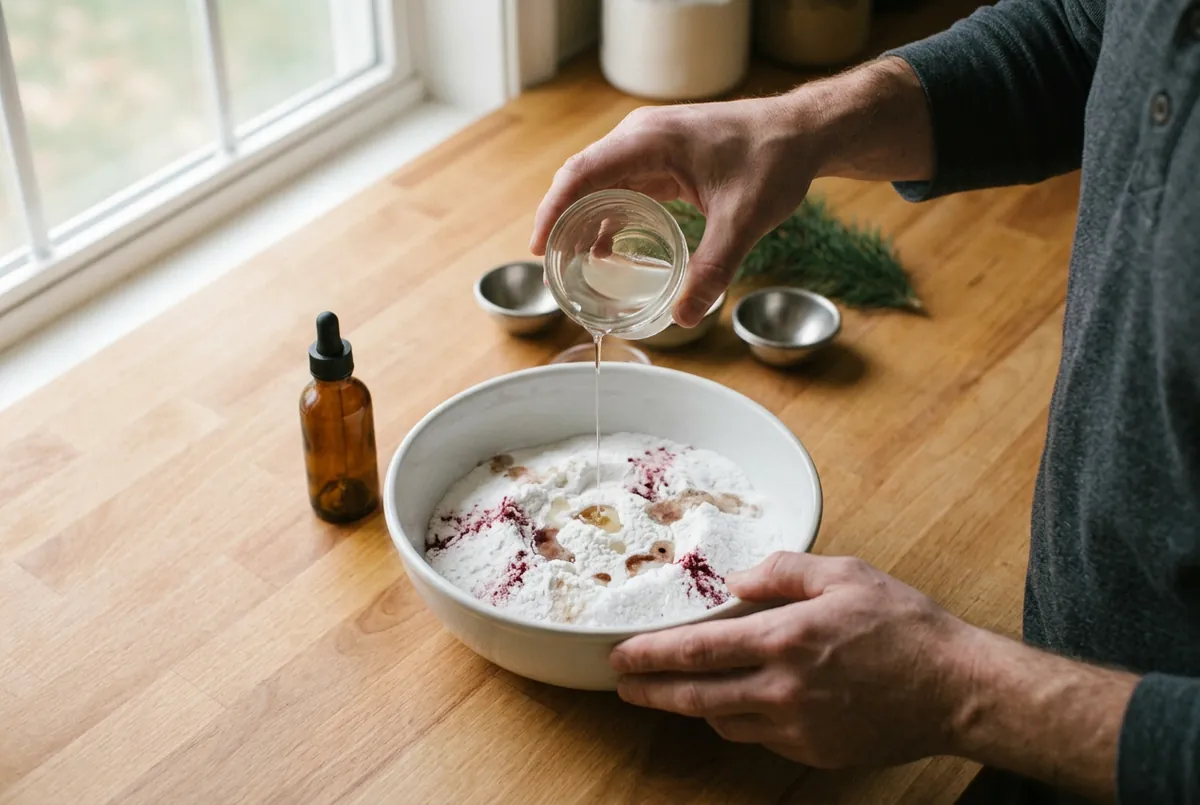
Stir the peppermint and sweet orange oils into the melted coconut oil first, then drizzle it slowly into the dry mix while you stir with your fingertips. Rub any damp clumps between your fingers until the whole bowl feels like slightly damp sand.
Keep the essential oil low. Twelve drops of peppermint across six large bombs is plenty for a bath, because peppermint in warm water can feel cold and tingly on sensitive skin. If you are making these for children, leave the peppermint out entirely and use sweet orange alone.
4Split the mixture and colour half red
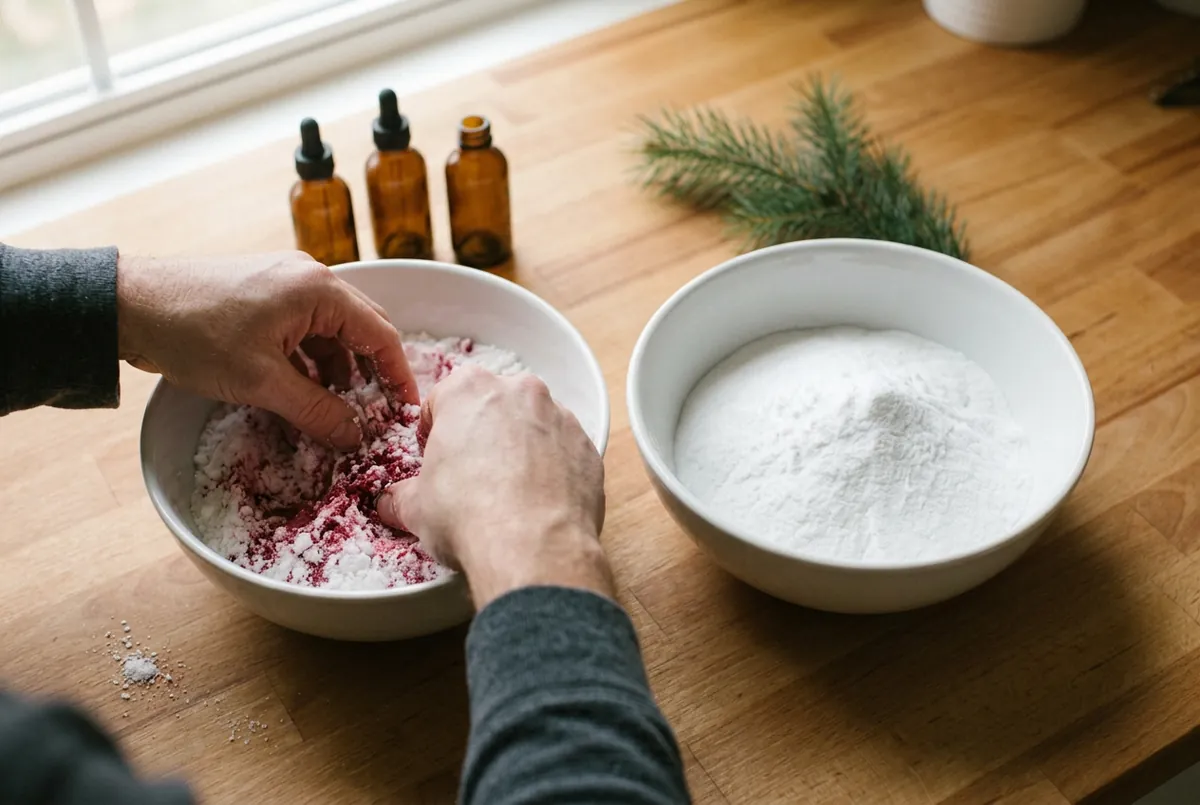
Tip half the mixture into a second bowl. Add a small pinch of red mica to one bowl and rub it through with your fingers until the colour is even, with no streaks.
Use a skin-safe mica and keep it to a pinch. A deep red looks lovely in the bowl and can leave a ring on a white tub if you overdo it. If you want brighter colour without the ring, add a teaspoon of polysorbate 80 to the red bowl, which helps the colour disperse in the water instead of sitting on the surface.
5Layer red and white into the molds
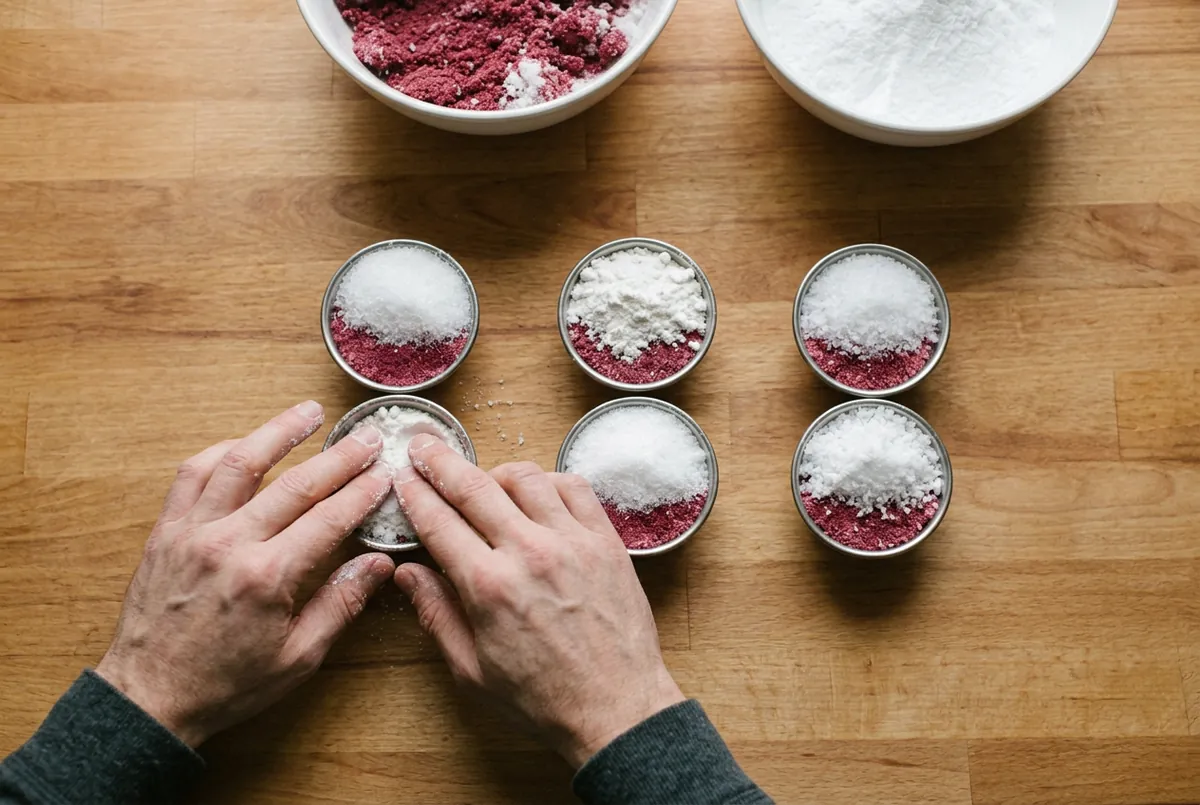
Spoon a layer of red into one half of the mold, then white, then red again, pressing each layer down lightly. Overfill both halves so they are heaped above the rim.
Press the two halves together firmly and give them a small twist, without sliding them sideways. Scrape off the excess that squeezes out at the seam, then tap the top half gently with the back of a spoon and lift it off. Tap the bottom half and turn the bomb out into your palm. If it crumbles at this stage, the mixture is too dry: mist it once with witch hazel, mix, and try again. The table further down covers the other common problems.
6Let them dry for two days
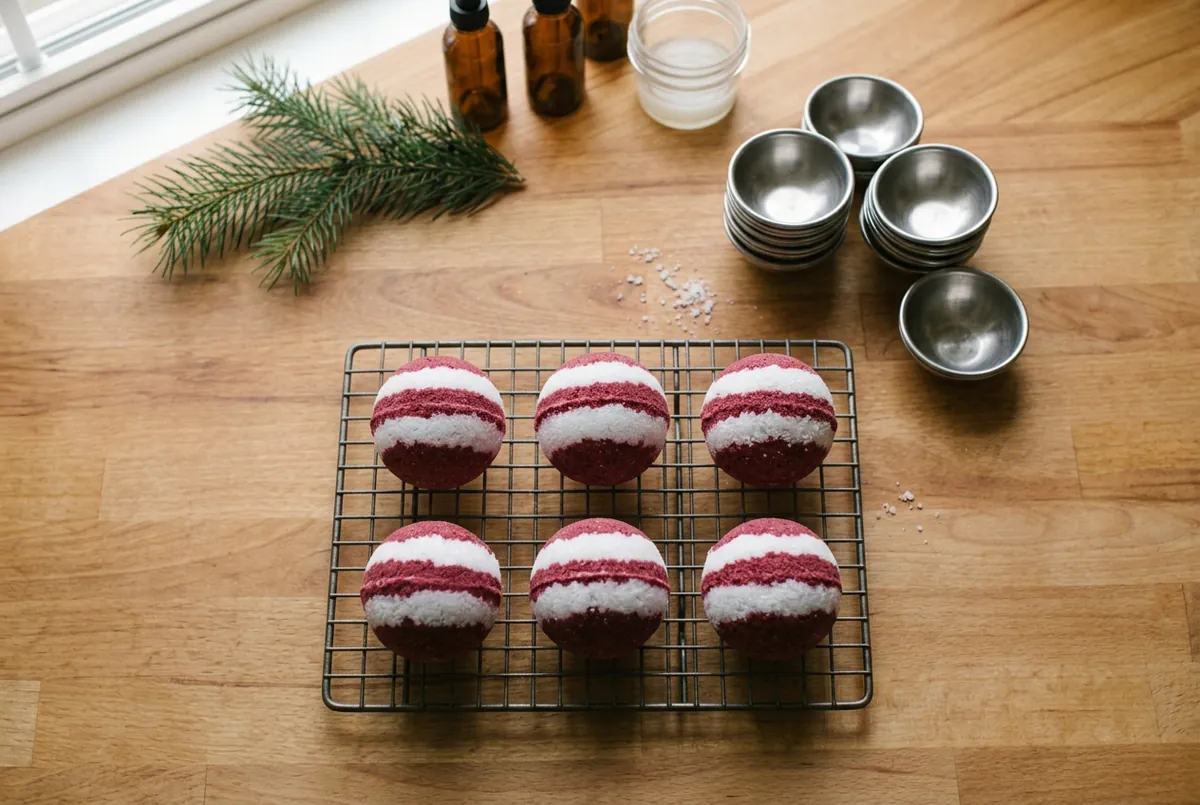
Set the bombs on a wire rack or a folded towel somewhere dry and leave them alone for at least 24 hours, ideally 48. They are fragile for the first few hours and harden as they dry.
Once they are hard all the way through, wrap them in plain cellophane or store them in an airtight tin. Bath bombs react with humid air, so keep them away from the bathroom until you use them.
If it goes wrong
| Problem | Likely cause | How to fix it |
|---|---|---|
| The bath bomb falls apart when you release it | The mixture is too dry or the halves were not packed firmly | Mist once with witch hazel, mix, and pack both halves heaped before pressing them together. |
| It grows warts or expands while drying | Too much liquid or a humid room set off the reaction | Add liquid more slowly and dry the bombs away from the kitchen sink and bathroom. |
| The red leaves a ring in the tub | Too much mica, with nothing to disperse it | Use a smaller pinch, or add a teaspoon of polysorbate 80 to the coloured half. |
| The two colours smear together | The halves were slid sideways instead of pressed straight together | Press straight down with only a small twist, and keep each layer fairly thick. |
When should you make Christmas bath bombs?
Earlier than you think. They keep their fizz for months if wrapped, but the scent is best in the first four to six weeks, so making them in late November for Christmas gifts is ideal. For gifting, the bath bomb gift set guide covers wrapping and boxing them.
What other Christmas scents work in bath bombs?
Sweet orange on its own is warm and festive and the gentlest on skin. Orange with a few drops of cinnamon leaf is the classic Christmas pairing, but keep cinnamon to two or three drops per batch because it can irritate skin in warm water. Fir or pine needle oil gives a fresh tree scent. Avoid clove and cinnamon bark in the bath; both are too harsh.
If you want something to give alongside these, shower steamer gift sets use the same cupboard of ingredients, and the DIY spa gift basket puts it all together. Everything else seasonal is in gifts and seasonal.
Frequently asked questions
How far ahead can you make Christmas bath bombs?
Four to six weeks is ideal. Wrapped and kept dry they fizz for months, but the scent is strongest in the first month or so, so late November is a good time to make them for Christmas.
Are peppermint bath bombs safe for kids?
Peppermint can feel cold and tingly on young skin in warm water, so leave it out for children and use sweet orange alone. Keep colour light, and keep bath bombs out of reach of small children, since they look like sweets.
Will red bath bombs stain the tub?
Only if you use a lot of colour. A small pinch of skin-safe mica rinses away easily. For bolder colour, add a teaspoon of polysorbate 80 to help it disperse instead of sitting on the surface.
Can I use coconut oil in bath bombs?
Yes. Melted coconut oil or sweet almond oil both work as the binder and leave the water feeling soft. Coconut oil sets firm when cold, so work quickly or keep the bowl somewhere warm while you mix.