For DIY teacher gifts, whisk 1 cup of baking soda, half a cup of citric acid and a tablespoon of green clay, add 30 drops each of lemon and lavender, mist with witch hazel, press into a round mold, dry for a day and stack three steamers in each of four small jars with a tag.
DIY teacher gifts are hard to get right. A teacher may be given dozens of mugs and candles every year, and anything handmade has to be useful, small and easy to like. A little jar of three shower steamers ticks all three: it takes up no space, gets used up, and feels personal without being fussy. This recipe makes twelve soft sage green steamers scented with lemon and lavender, a combination almost everyone likes, and fills four small jars. It is also a good project to make with children, with an adult handling the oils.
If you have never made steamers, the shower steamer recipe explains the basic method in more detail.
Ingredients
- 1 cup (about 220g) baking soda
- 1/2 cup (about 110g) citric acid
- 1 tablespoon green clay
- 30 drops lemon essential oil
- 30 drops lavender essential oil
- Witch hazel in a small spray bottle
- 4 small glass jars about 9cm tall, tags and twine
Tools
- Large mixing bowl
- Whisk
- Measuring cups and spoons
- Silicone mold with 12 round cavities about 4cm across
How to make DIY teacher gifts with shower steamer jars
1Gather the ingredients and jars
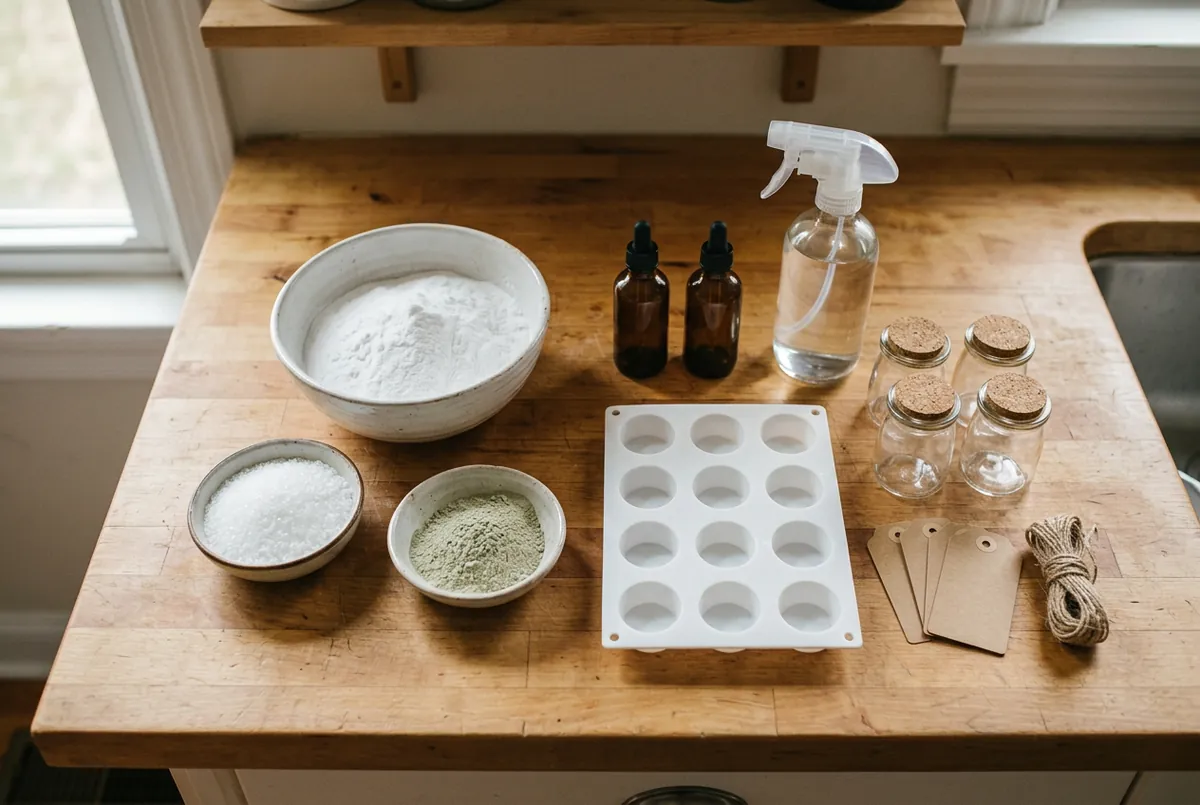
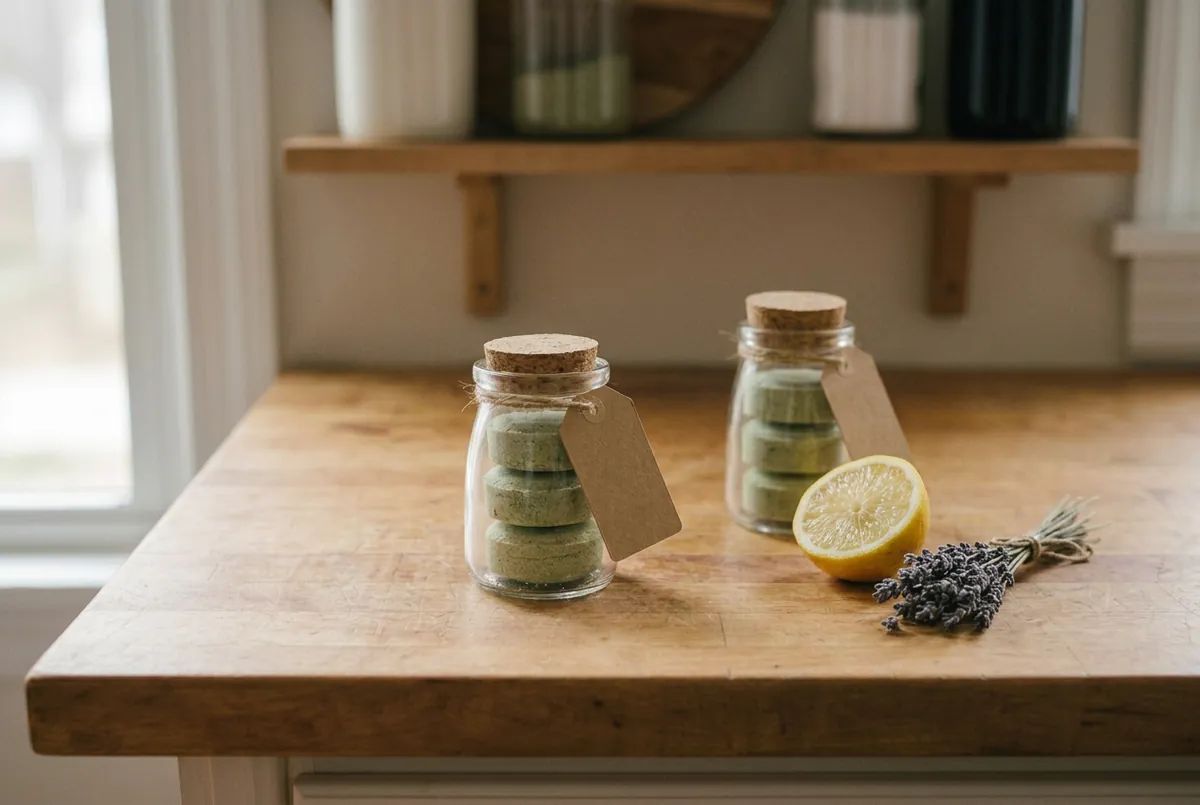
Choose jars about 9cm tall and 5cm wide, which fit three steamers stacked. Cork lids look lovely but let a little air in; screw-top or clip-top jars keep the scent longer if the gift may sit on a desk for a while.
2Whisk the powders and clay
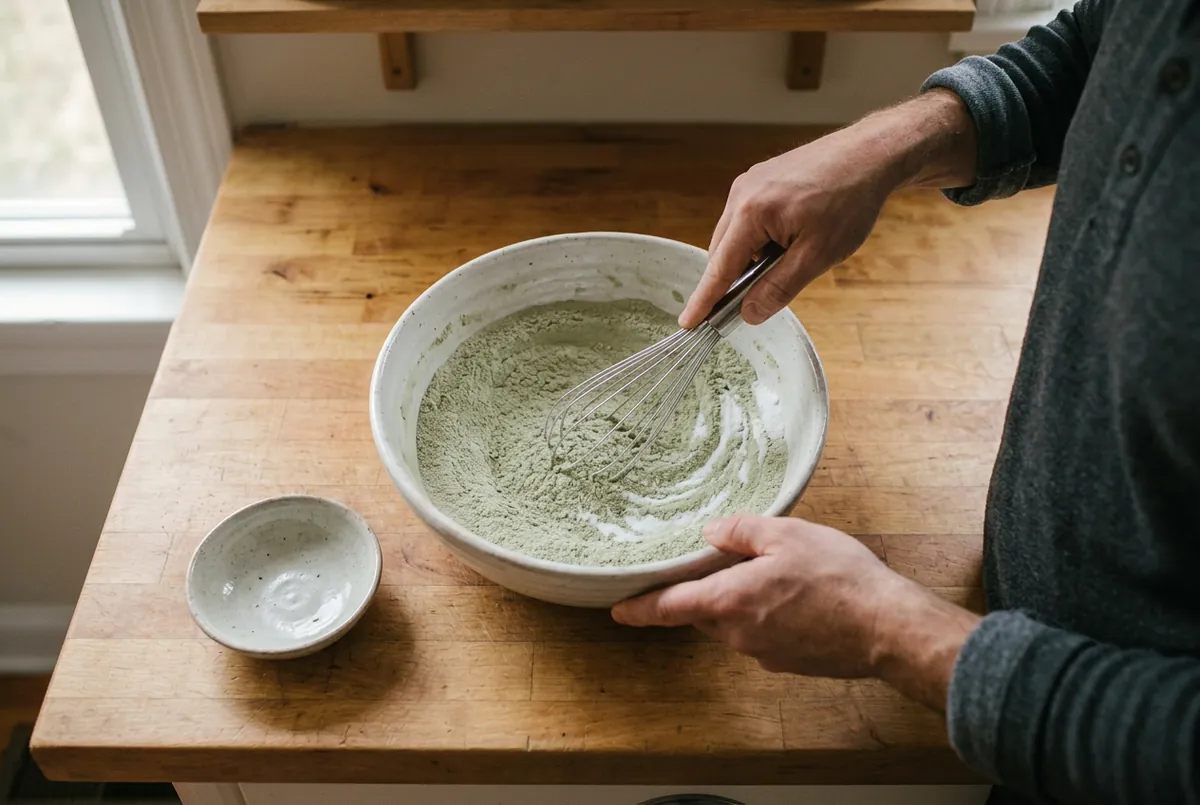
Whisk the baking soda, citric acid and a tablespoon of green clay for a full minute, rubbing out any clay lumps with your fingertips. The clay gives the soft colour with no dye and makes a firmer steamer that survives a school bag.
3Add the lemon and lavender
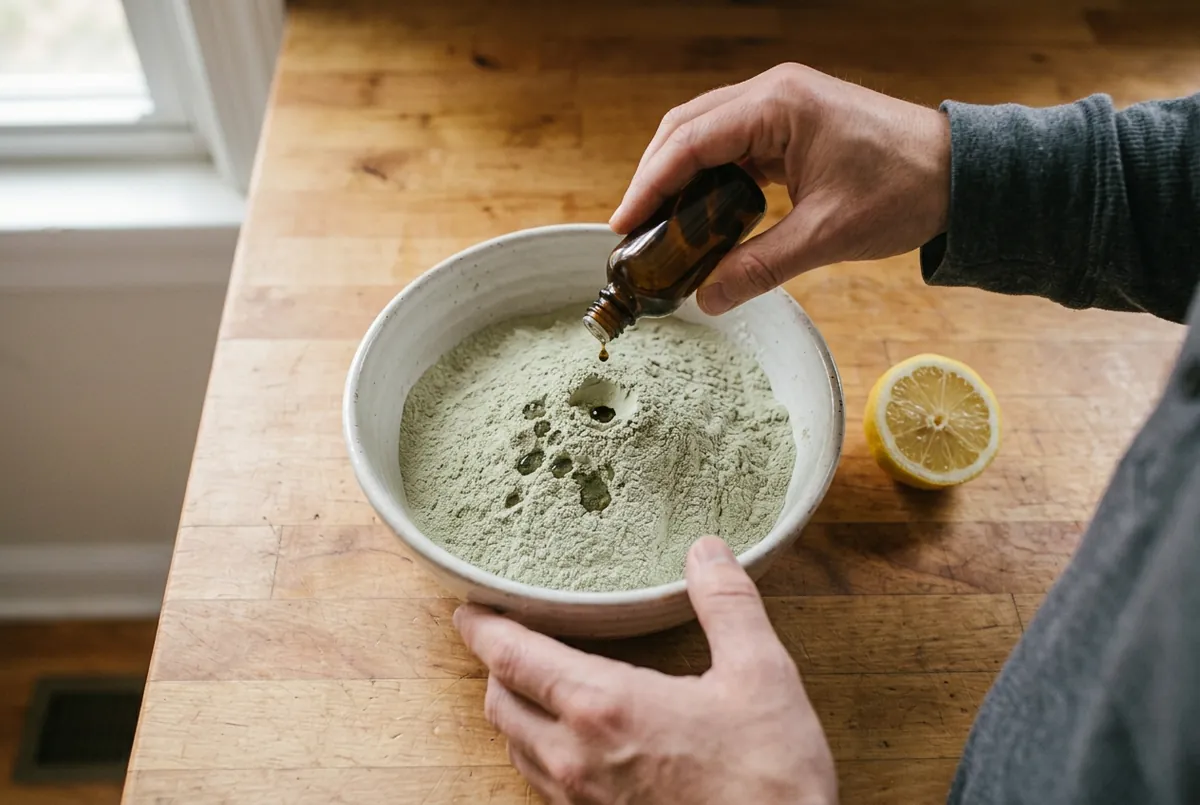
Add thirty drops of lemon and thirty of lavender, a few at a time into different spots, whisking between each. Lemon and lavender together smell clean and soft, which is exactly right when you do not know someone’s taste.
4Mist and press into the mold
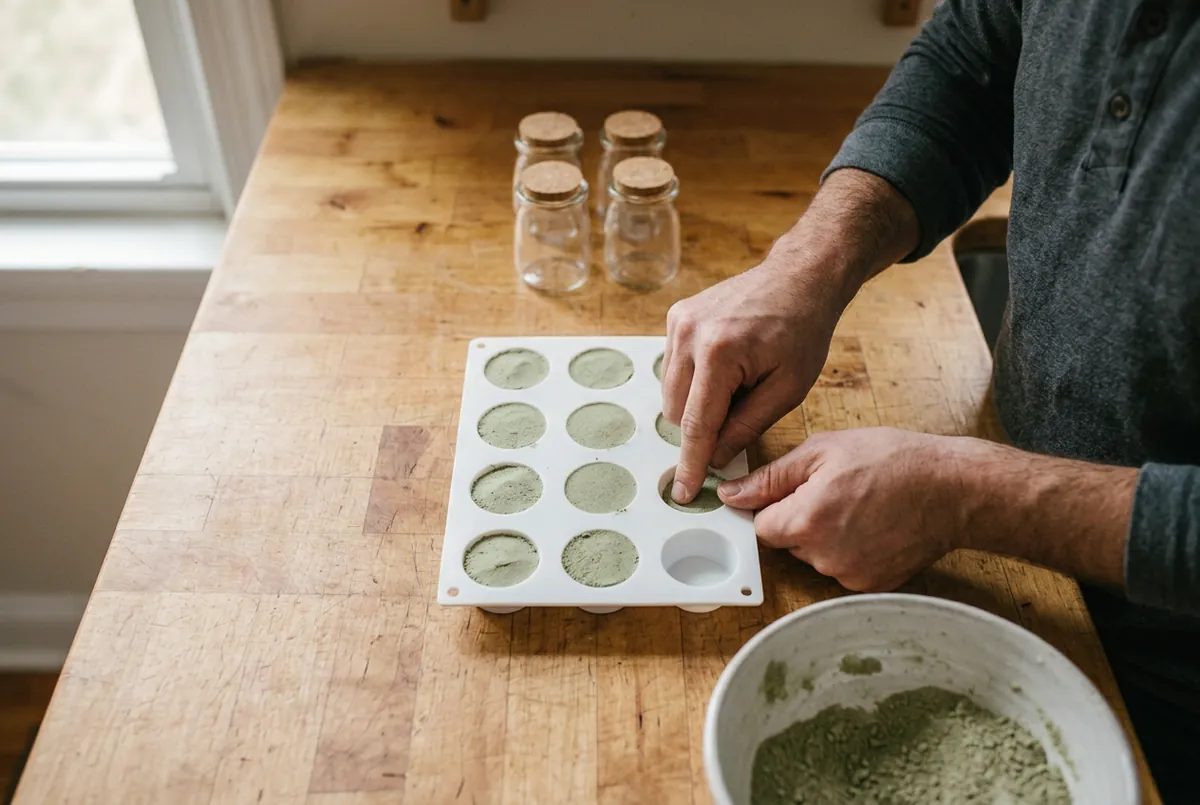
Mist with witch hazel, two sprays at a time, until a squeezed handful holds. Overfill each cavity, press hard, top up and press again. If children are helping, this is their job; pressing is the fun part.
5Dry and unmold
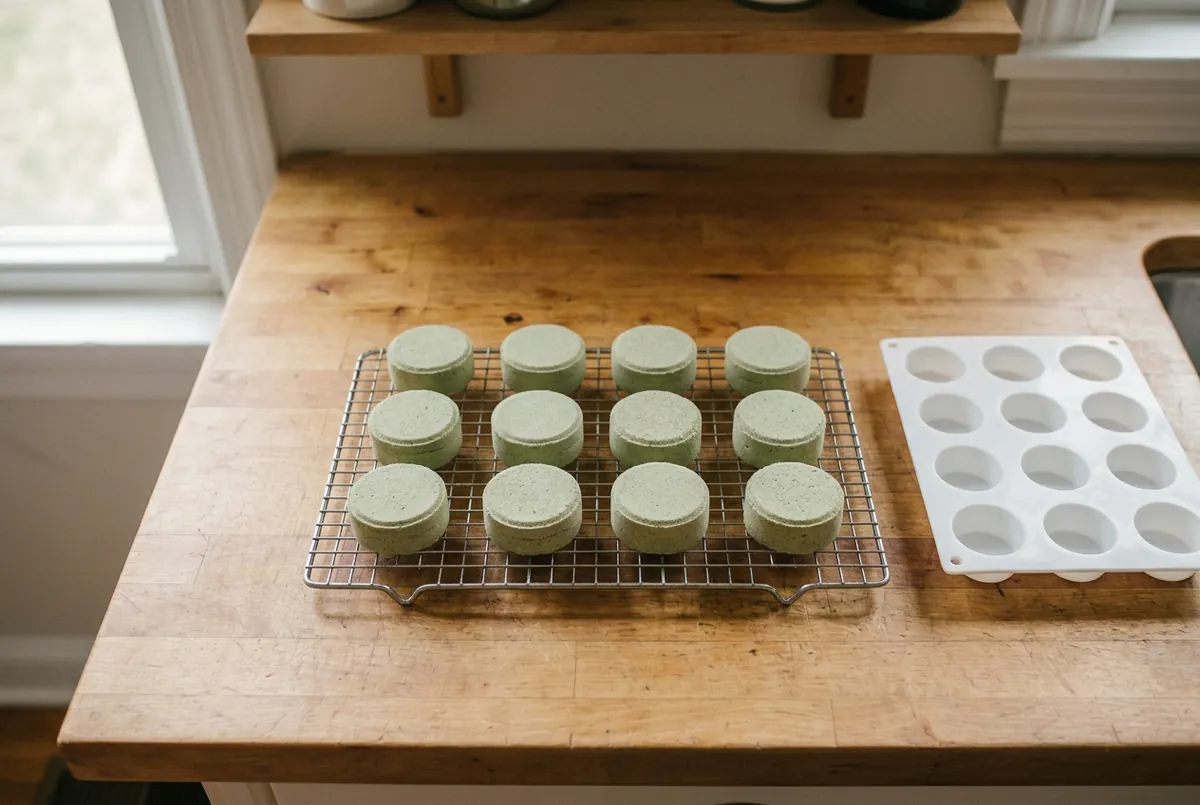
Leave them for 24 hours, then push them out from underneath. Let them sit on the rack for another hour before jarring so any last dampness dries off.
6Fill the jars and tie the tags
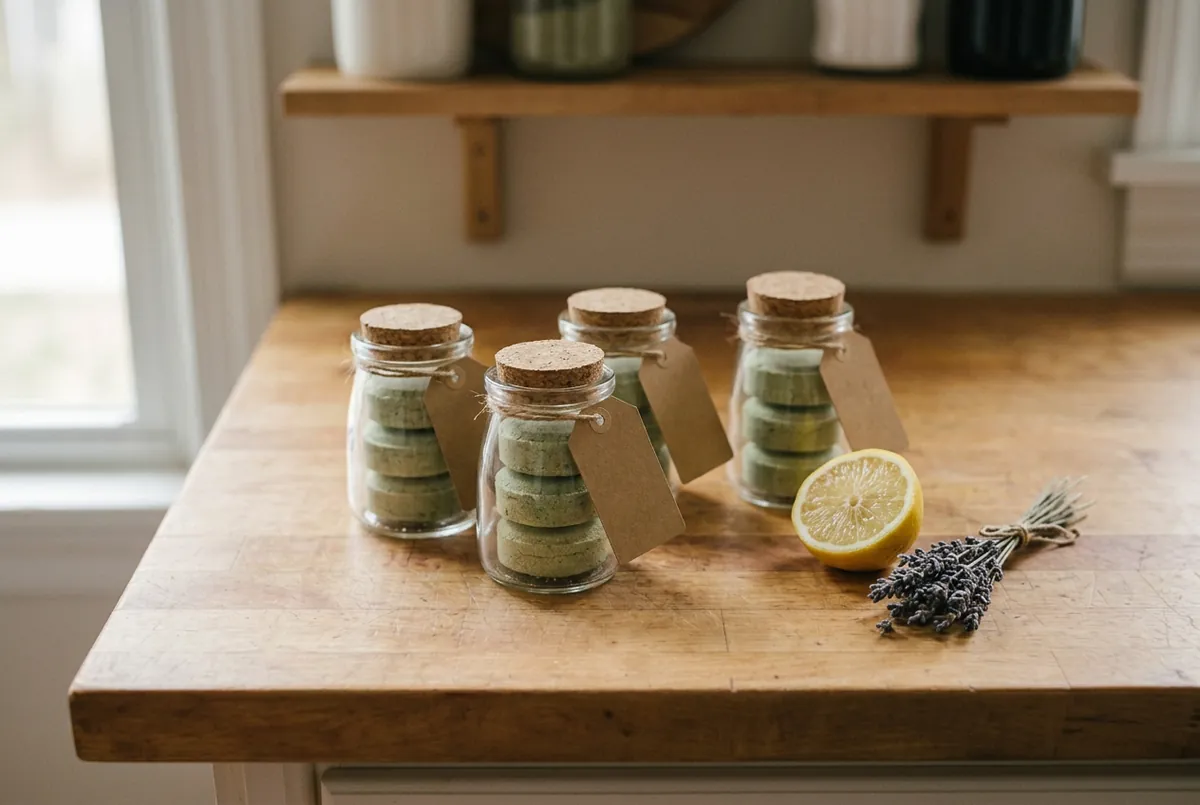
Stack three steamers in each jar, close the lid and tie a tag around the neck with twine. Write a short note and how to use them on the tag.
If it goes wrong
| Problem | Likely cause | How to fix it |
|---|---|---|
| The steamers break in the jar | They were not pressed firmly | Overfill, press hard, top up and press again. |
| The scent has faded when the gift is opened | Cork lids let air in | Use screw-top jars, or give the gifts within a few weeks. |
| The colour is patchy | Clay lumps were not whisked out | Rub the clay through your fingertips and whisk for a full minute. |
| Condensation inside the jar | The steamers were jarred while still damp | Let them rest on the rack for an hour after unmolding. |
What should the tag say?
Keep it short and practical. The name of the scent, “For the shower, not the bath”, and one line on how to use it: “Place on a shelf where it catches the spray; do not stand it in the stream.” List the ingredients on the back: baking soda, citric acid, clay, witch hazel, lemon and lavender oils. That matters for anyone with allergies or sensitivities, and it is the thing people most often forget. If a child made them, a handwritten note from them does more than any decoration.
Why lemon and lavender?
Because it is about the safest crowd-pleaser there is. Lavender is soft and familiar; lemon keeps it from smelling like a linen cupboard. Stronger oils like peppermint and eucalyptus are wonderful but divisive, and some people with asthma find them too much. For a teacher you do not know well, gentle wins. If you do know their taste, scents and blends has plenty of alternatives.
When to give them
End of the school year and the winter holidays are the two big moments, and steamers suit both. For the holidays, make them in early December and keep the jars sealed until you give them. For the end of the year, a lighter, fresher blend such as grapefruit and mint suits summer. Either way, they keep well for about two months.
How much do they cost to make?
Very little per jar. The dry ingredients for a batch cost about the same as a coffee, and the two oils will last many batches. The jars are usually the biggest expense, so look for small spice jars or buy a multipack. Four jars from one batch works out far cheaper than a shop-bought gift, and it is something a teacher will actually use rather than find a shelf for.
Making them with children
This is a lovely project to make with a class or your own children, with an adult in charge of a few things. Adults handle the essential oils, because neat oil can irritate skin and eyes, and the citric acid, which stings in cuts. Children can whisk, press, unmold and decorate the tags. Everyone washes their hands afterwards. For a version children can make start to finish, leave the oils out entirely; the steamers still fizz.
For more gift ideas, see the shower steamer gift set or the rest of the gifts hub.
Frequently asked questions
Are shower steamers a good teacher gift?
Yes. They are small, useful and get used up, so they do not add clutter. Gentle scents such as lemon and lavender suit most people.
What should I write on a shower steamer gift tag?
The scent, that it is for the shower not the bath, how to use it, and a short ingredient list.
Can children make these teacher gifts?
Yes, with an adult handling the essential oils and citric acid. Children can whisk, press and decorate.
How long do shower steamer gifts last?
About two months in a closed jar kept away from the bathroom.