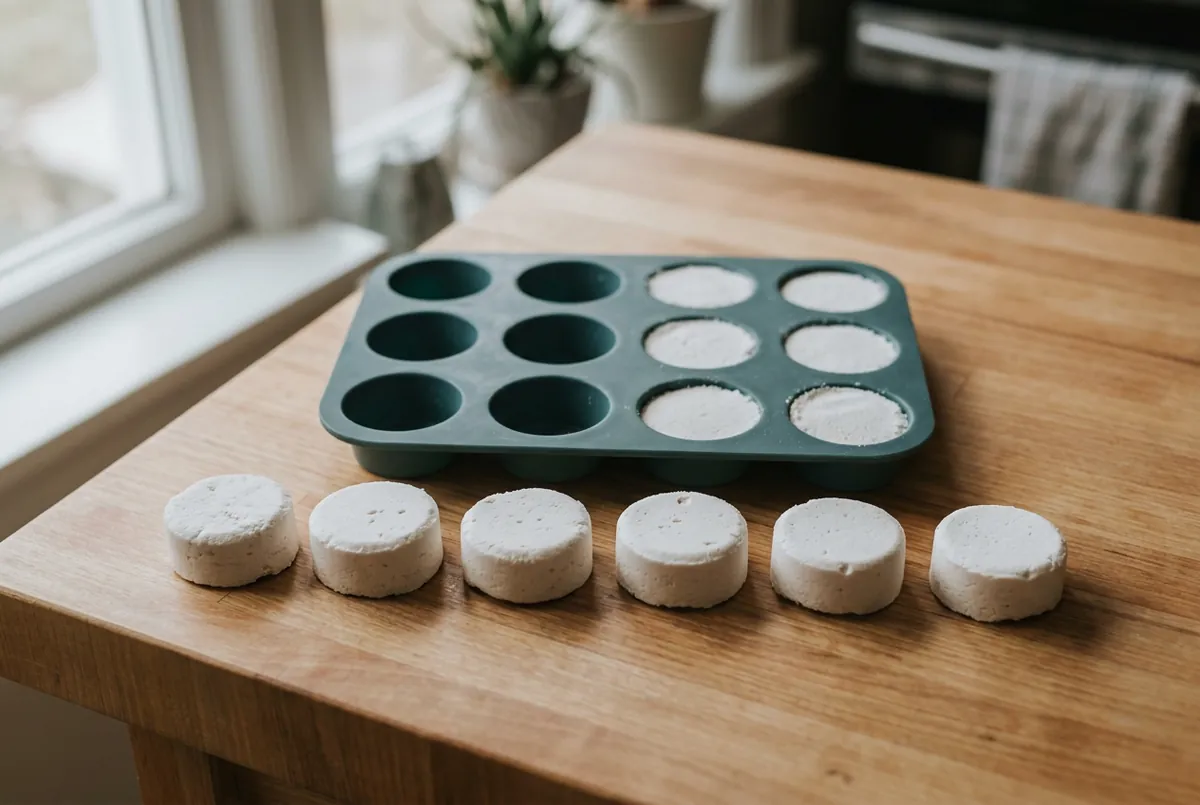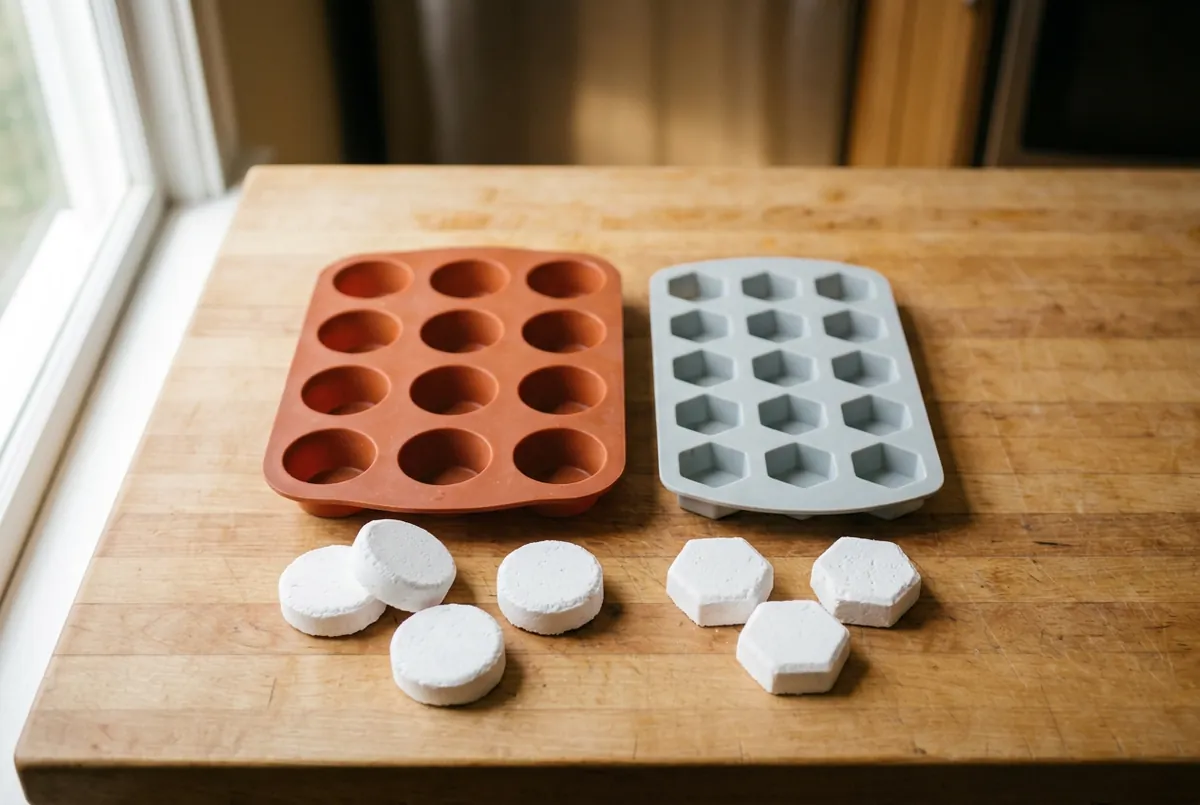
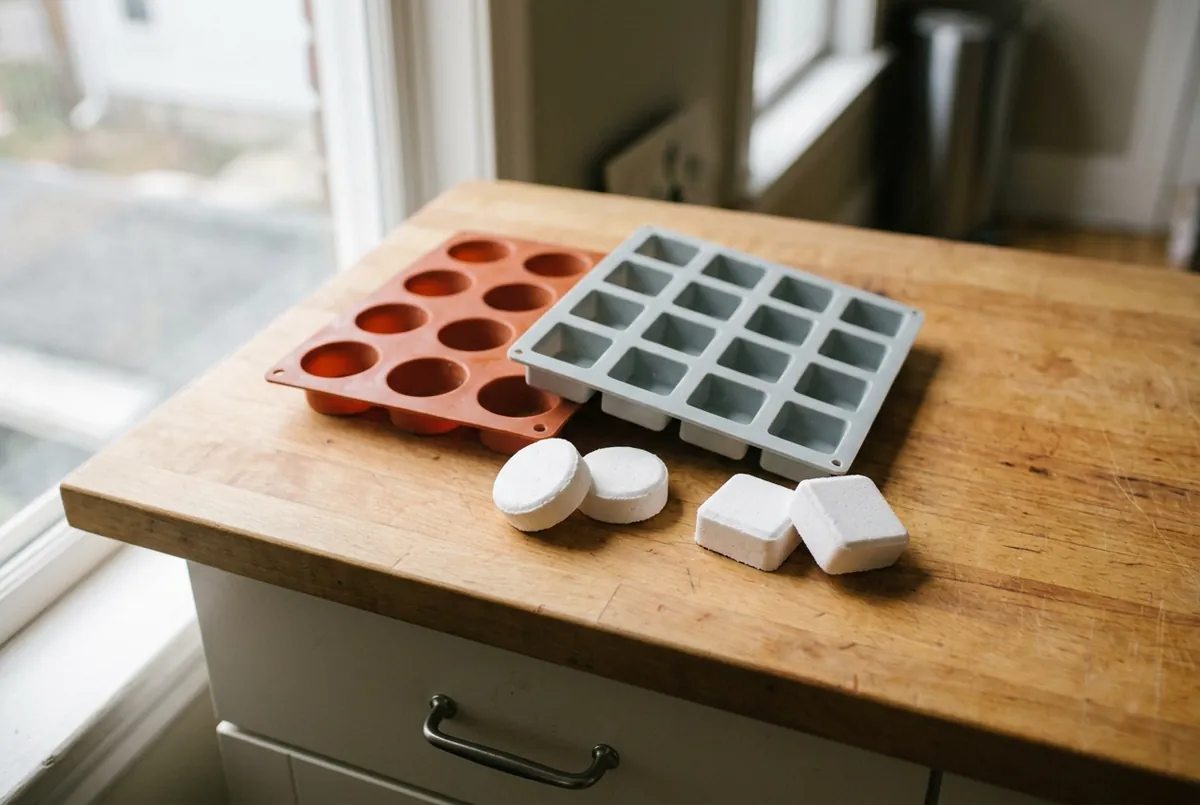
The best silicone molds for shower steamers have simple rounded cavities 3.5 to 5cm across and about 2cm deep, in silicone firm enough to hold its shape when full. Avoid thin, floppy molds and detailed shapes with points, which break off when you push the steamers out.
It is easy to buy more silicone molds than you need, because the wrong ones are wrong in ways that are not obvious from the listing: too big, too floppy, or shaped with points that snap off every single time. The right silicone molds for shower steamers are cheap and last for years, and once you know the three things that matter, choosing one takes a minute.
This guide covers size, shape, firmness, getting steamers out cleanly, and looking after the mold. The same advice applies to most bath fizzies, though bath bombs are covered separately.
What size are the best silicone molds for shower steamers?
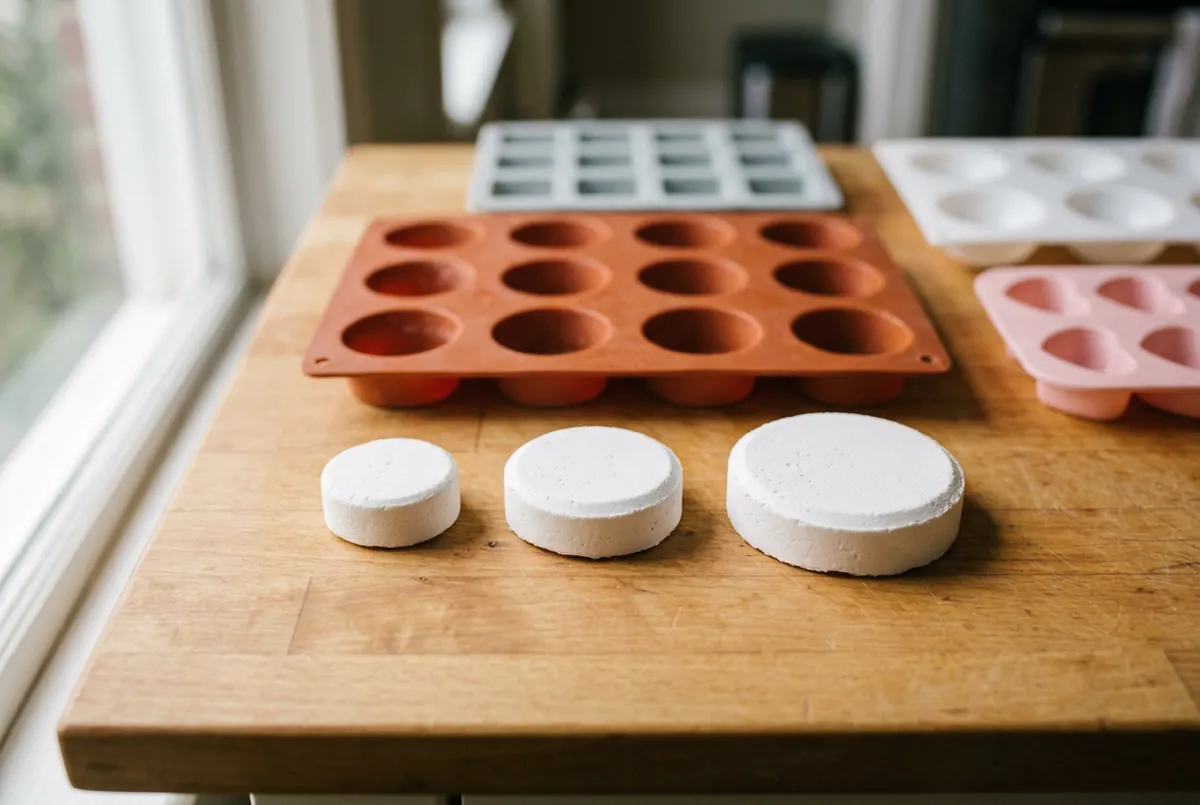
Cavities between 3.5cm and 5cm across. A 4cm round cavity is a good default, and it gives a steamer that lasts eight to ten minutes out of the direct spray.
Bigger sounds better and is not. A 6cm steamer takes twice as long to dry, and in the shower the outside fizzes away while the middle stays dry, so you get a weak start, a long gap and a rushed end. Two 4cm steamers used one after the other beat one big one. Smaller than 3cm and the scent is gone before you have washed your hair.
Depth matters too. Look for cavities around 2cm deep. Shallow ones make thin discs that crack when you push them out; very deep ones make tall tablets that take days to dry through.
Which silicone mold shapes work best?
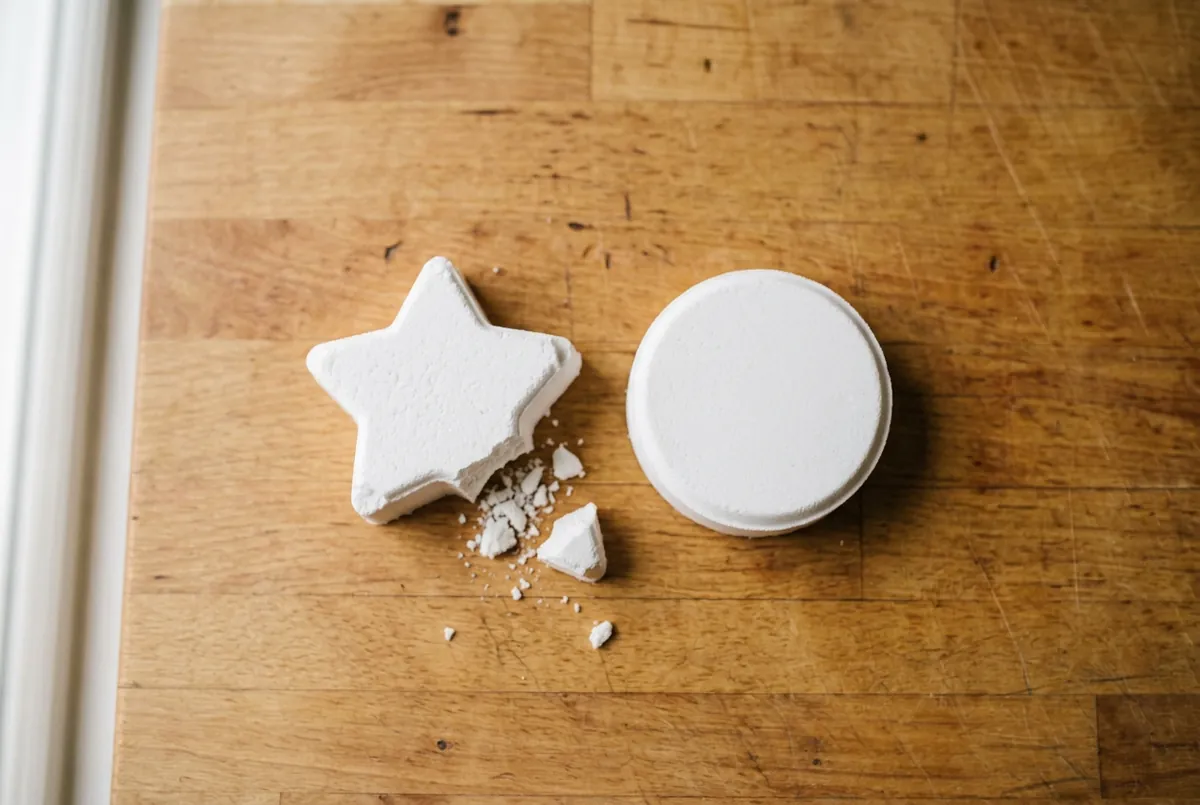
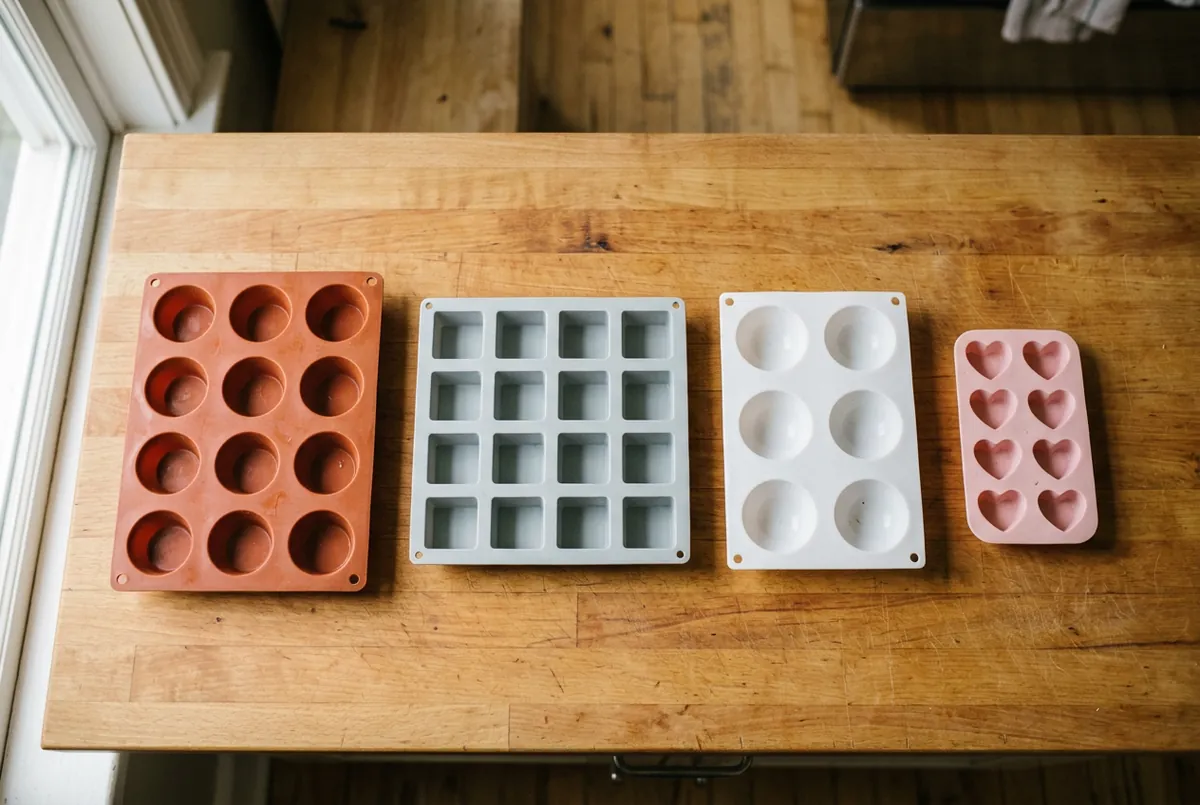
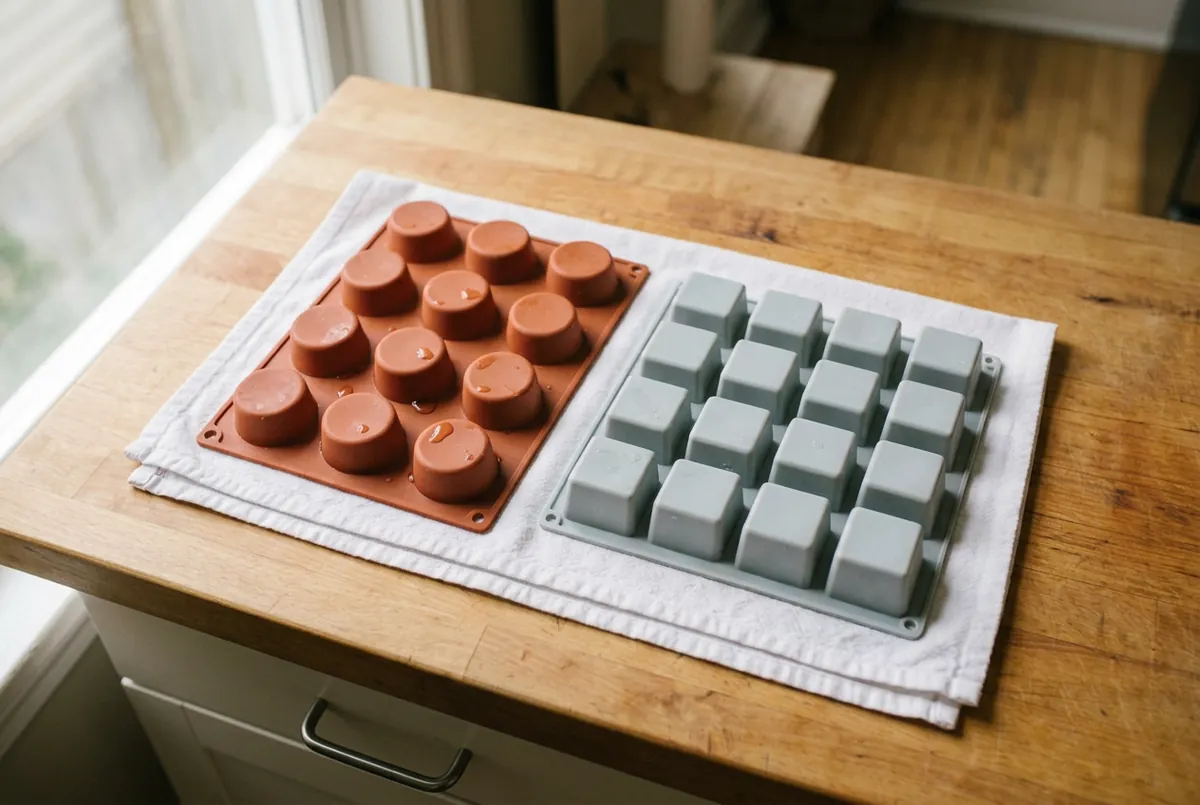
Simple, rounded shapes. Rounds, squares with soft corners, domes and hearts all release cleanly and survive handling. Stars, flowers, leaves and anything with thin points or deep detail are a false economy: the points are the thinnest part of the steamer, they dry first and weakest, and they break off when you push the steamer out.
If you want something decorative, a heart or a dome gives you shape without fragile edges. For something that stacks neatly in a tin, square cavities are the most practical.
Should a silicone mold be firm or floppy?
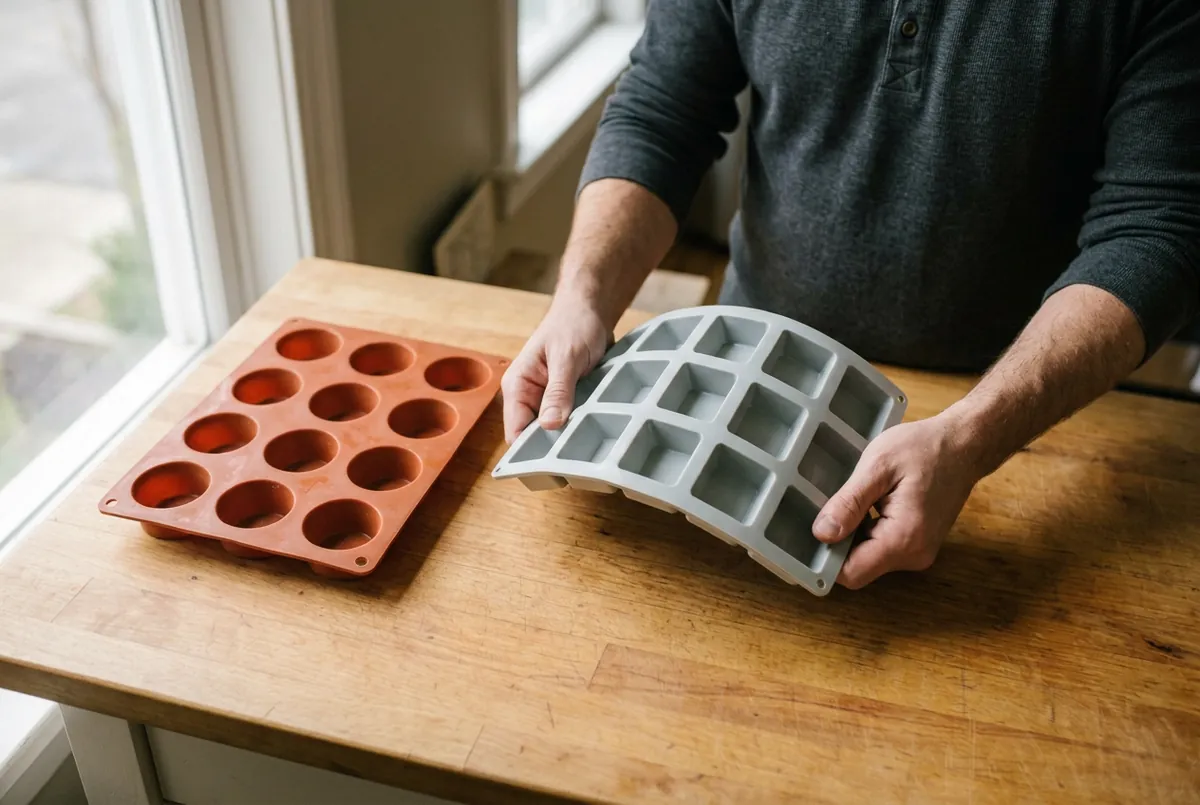
Firm enough to hold its shape when you carry it full, soft enough to flex when you push the steamers out. Thin, floppy molds are the most common problem with cheap listings: they sag when you press the mixture in, so the steamers come out misshapen and loosely packed.
A simple test: hold the empty mold by one edge. If it droops like a dish cloth, it is too thin. If it stays roughly flat, it will do. When in doubt, set a floppy mold on a baking sheet before filling it and move the whole tray.
How do you get shower steamers out of a silicone mold?
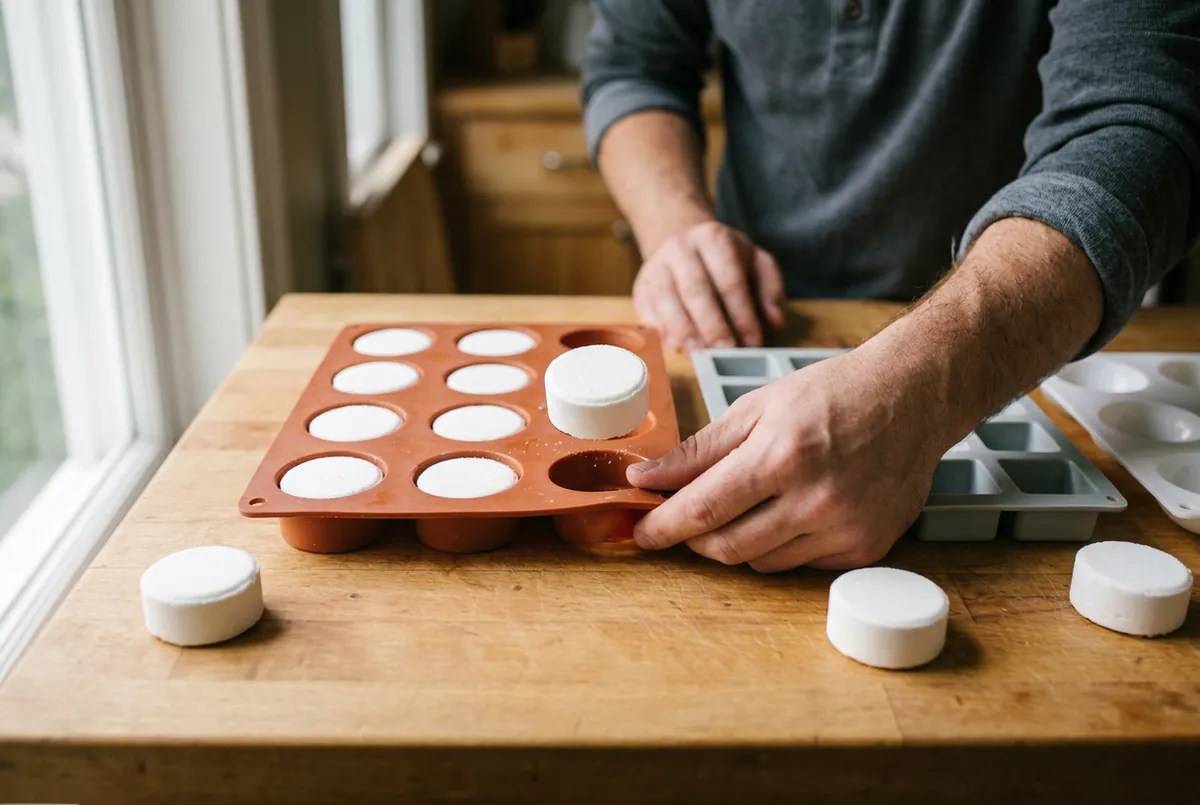
Wait until they are completely dry, usually 24 hours. Then flex the mold gently to loosen every cavity, turn it so the steamer is facing down over your palm, and push up from underneath with your thumb. Do not pry from the top with a knife; it gouges both the mold and the steamer.
If a steamer resists, it is not dry in the middle yet. Leave the whole mold another few hours rather than forcing one out. A steamer that crumbles as it comes out is usually a mixture problem rather than a mold problem; why shower steamers crumble covers the causes.
How do you clean silicone molds?
Rinse them in warm water with a drop of dish soap, and dry them completely before the next batch. Any water left in a cavity sets off the fizz in the next mixture as soon as it touches it.
Silicone holds on to essential oil scents, so if you make several scents, it is worth keeping one mold for mint and eucalyptus and another for florals. Store them flat, not folded, so the cavities keep their shape.
How many silicone molds do you need?
Two is the practical number. One 12-cavity mold holds a full batch of the standard recipe, and a second means you can make a new batch while the first is still drying, or keep mint scents and floral scents in separate molds. Beyond that, extra molds only earn their place if they are a genuinely different shape you will use, such as squares for gift tins or domes for a softer look.
Can you use silicone ice cube trays or baking molds?
Yes. A silicone ice cube tray with small square cavities makes very good shower steamers, and so does a silicone mini muffin pan. What matters is the cavity size, not what the mold was sold for. Keep any mold you use for steamers out of the kitchen afterwards, though; essential oils are not something you want in your ice.
If you have no mold at all, homemade shower steamers are pressed with a measuring spoon. For a recipe to fill your mold, start with the shower steamer recipe, try rosemary shower steamers or browse shower steamers. The rest of supplies covers the other equipment.
Frequently asked questions
What size mold is best for shower steamers?
Cavities between 3.5 and 5cm across and about 2cm deep. A 4cm round cavity makes a steamer that lasts around eight to ten minutes out of the direct spray. Larger ones dry slowly and fizz unevenly.
Why do my shower steamers break when I take them out of the mold?
Usually because they are not fully dry, the mixture was too dry or loosely packed, or the mold has thin points that snap. Wait a full day, pack firmly, and choose simple rounded shapes.
Can I use an ice cube tray for shower steamers?
Yes. A silicone ice cube tray with small cavities works well. Keep it for steamers afterwards rather than going back to ice, because silicone holds on to essential oil scents.
Do you need to grease silicone molds for shower steamers?
No. Clean, completely dry silicone releases steamers on its own. Greasing it only adds oil to the surface of the steamers. What matters is waiting until they are fully dry before pushing them out.