The best citric acid substitute for shower steamers and bath bombs is cream of tartar, used at the same volume. It fizzes more softly and slowly. Pure vitamin C powder also works but costs more. Never use lemon juice or vinegar: they are liquids and set off the fizz in the bowl.
Citric acid is half of every fizz on this site, and it is the ingredient people most often cannot find. It sells out in canning season, some supermarkets do not stock it at all, and plenty of people simply do not want to order a bag online for one batch. The good news is that you have options. The bad news is that most of the substitutes suggested online do not work, and one of them ruins the batch before it reaches the mold.
This is what each substitute does, what to expect from it, and which to use for shower steamers versus bath bombs.
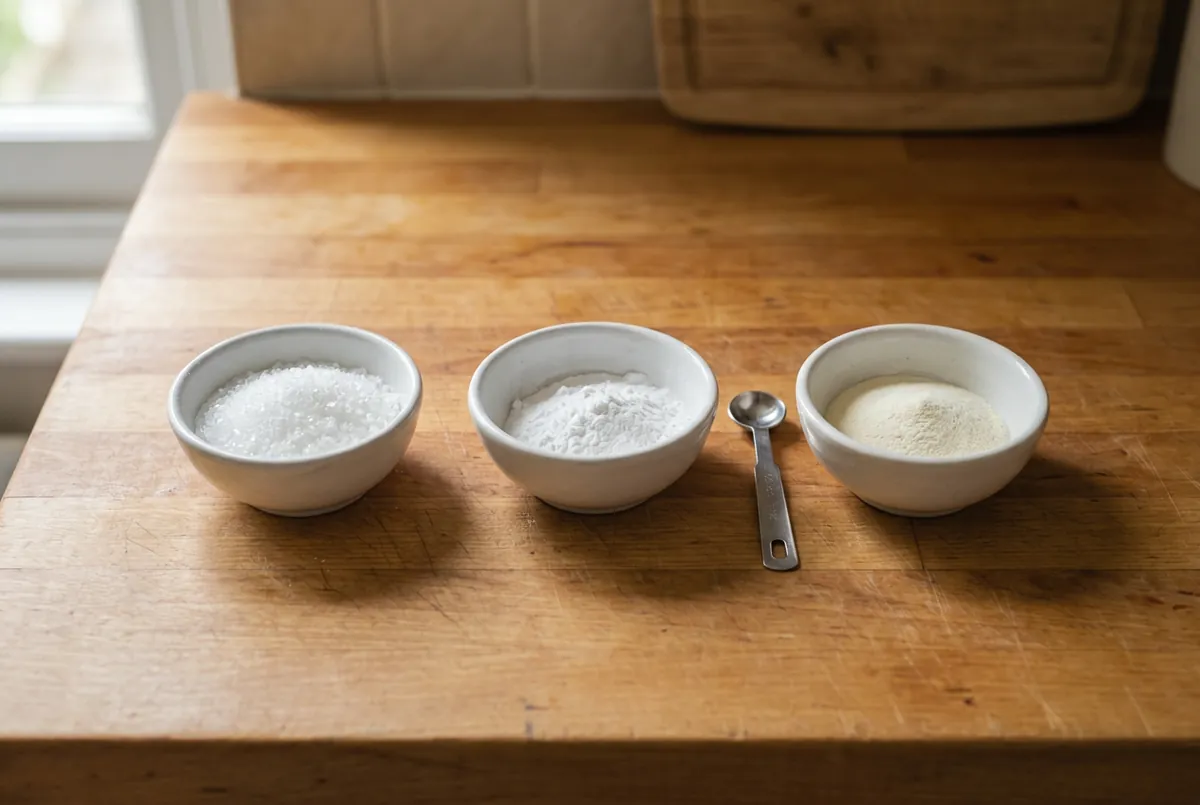
What can you use instead of citric acid?
The fizz in a shower steamer or bath bomb comes from an acid meeting baking soda in water. Citric acid is simply the cheapest dry acid that does the job well. Any other dry, food-safe acid will fizz too; the questions are how strongly, how much it costs, and whether it stays inert while dry.
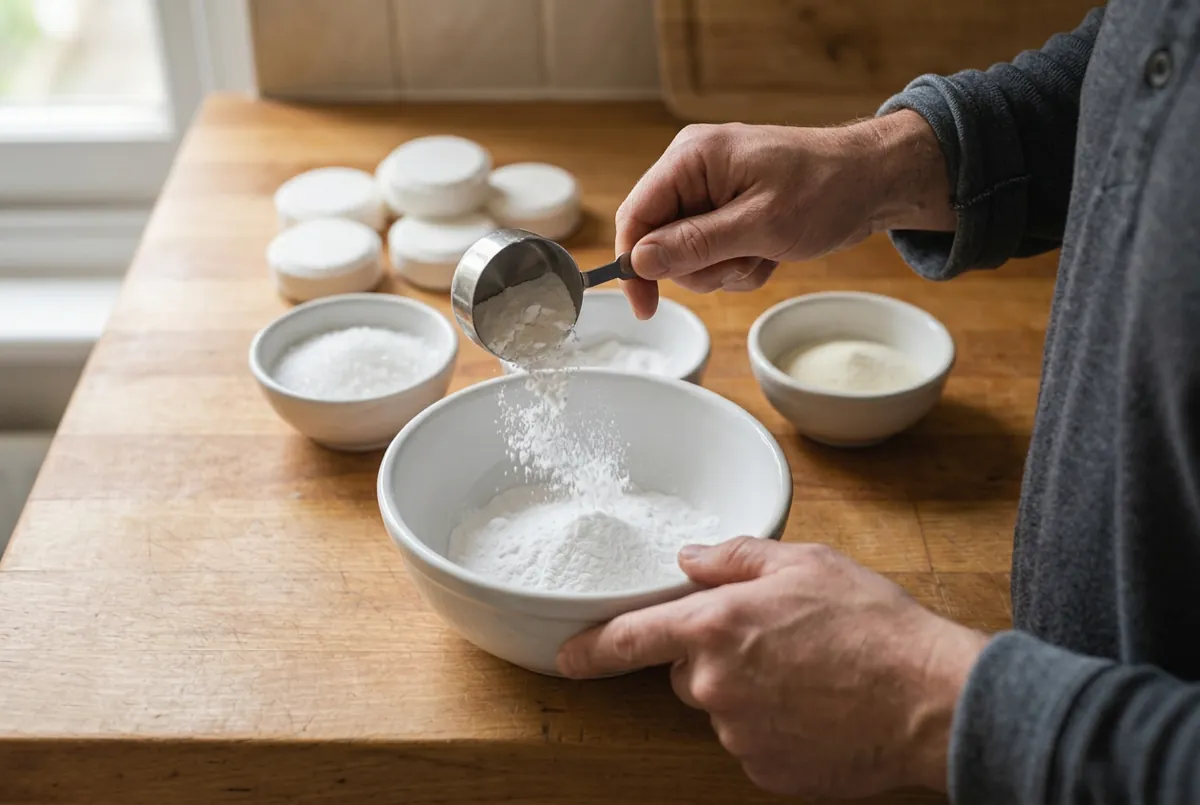
In order of how well they work:
- Cream of tartar. The one to use. Easy to find in the baking aisle, works at the same volume, and gives a softer fizz.
- Vitamin C powder (ascorbic acid). Works well, with a fizz a little gentler than citric acid. More expensive.
- Malic acid. Works almost exactly like citric acid, but is as hard to find, so it rarely solves the problem.
- Lemon juice or vinegar. Do not use either. They are liquids, and the reaction happens in the bowl rather than in the shower.
Is cream of tartar a good citric acid substitute?
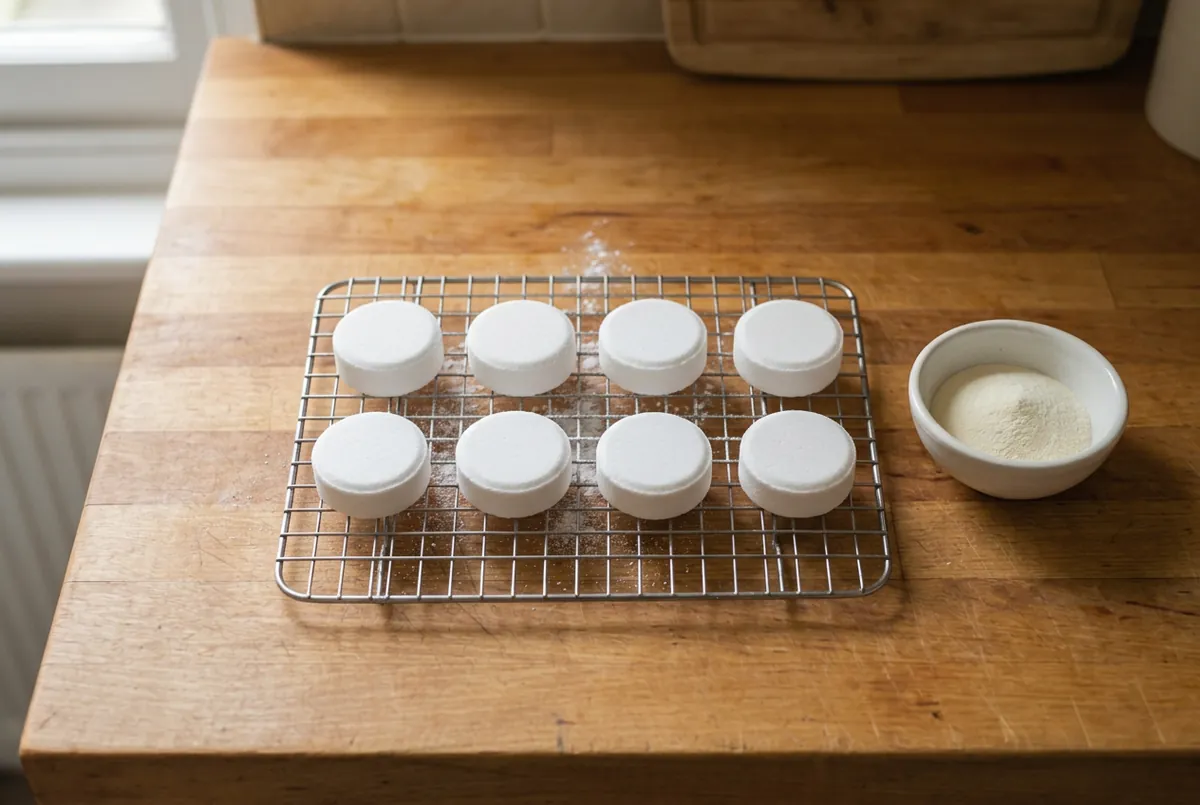
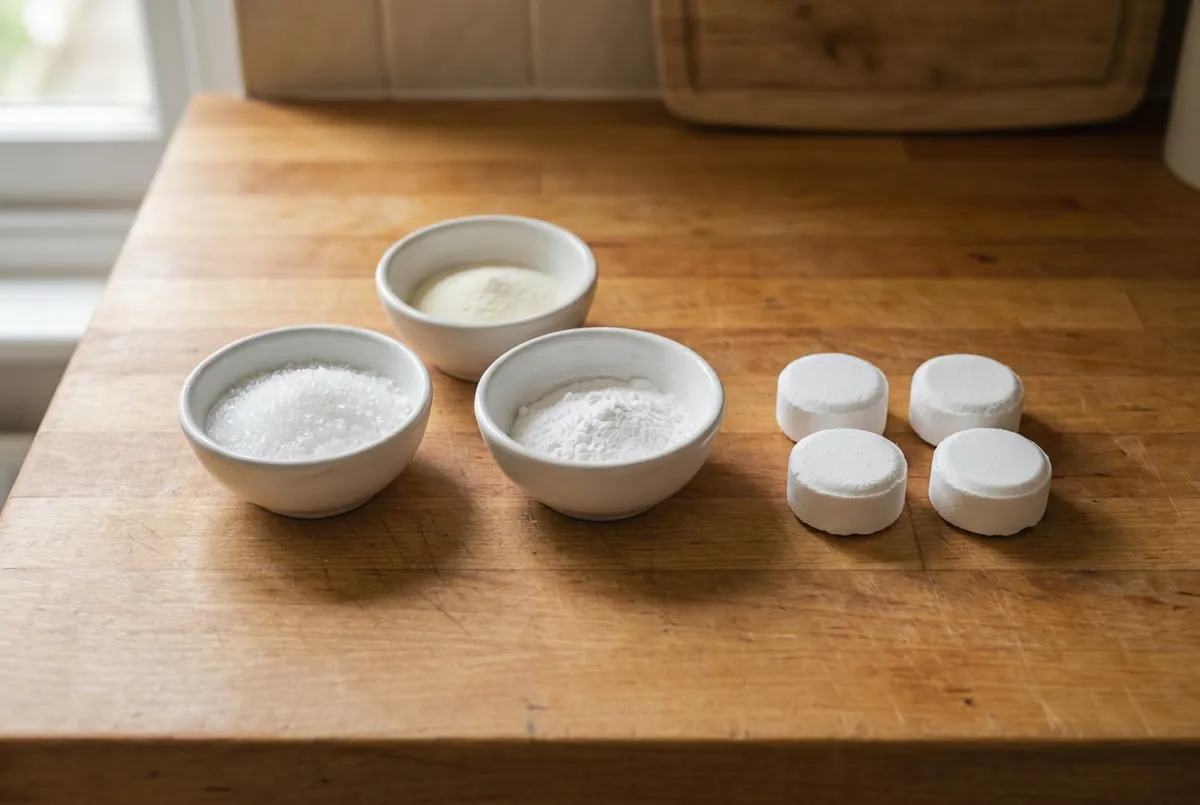
Yes, and it is the substitute to reach for first. Swap it in at the same volume as the citric acid: half a cup of cream of tartar in place of half a cup of citric acid.
Expect three differences. The fizz is softer and slower, more of a gentle foam than a crackle, which some people actually prefer in a shower steamer. The mixture binds a little more easily, because cream of tartar is a finer powder, so mist with witch hazel even more lightly. And the steamers come out with a smoother, finer surface.
The catch is price. Cream of tartar comes in small jars in most supermarkets, and a batch needs about half a cup, so buy it by the pound online or from a bulk store if you plan to make more than one batch.
Does vitamin C powder work instead of citric acid?
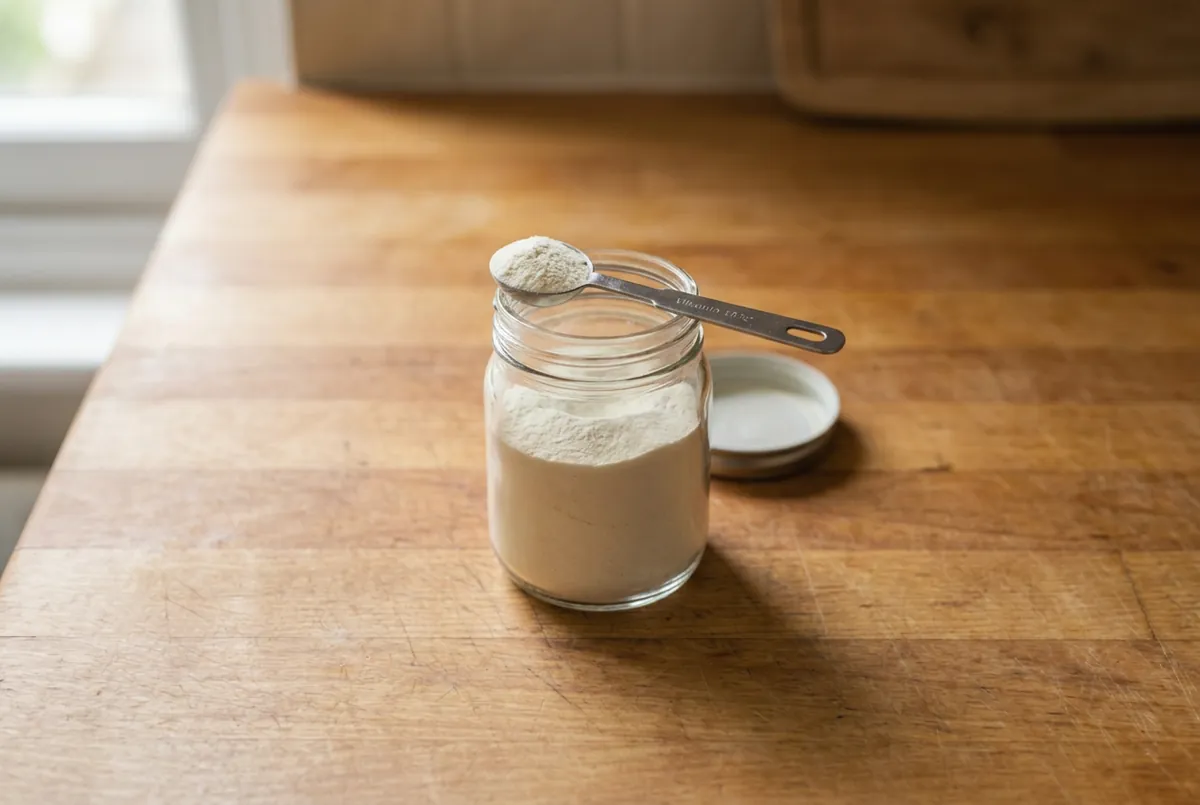
It does. Pure ascorbic acid powder, sold as vitamin C powder, reacts with baking soda much as citric acid does, with a slightly gentler fizz. Use it at the same volume.
Two things to watch. Buy pure ascorbic acid, not a vitamin C supplement with fillers or sweeteners, which clump and can leave residue. And compare the price per cup before you buy: it is usually several times the cost of citric acid, which makes it better as a one-off rescue than a regular ingredient.
Why not use lemon juice or vinegar?
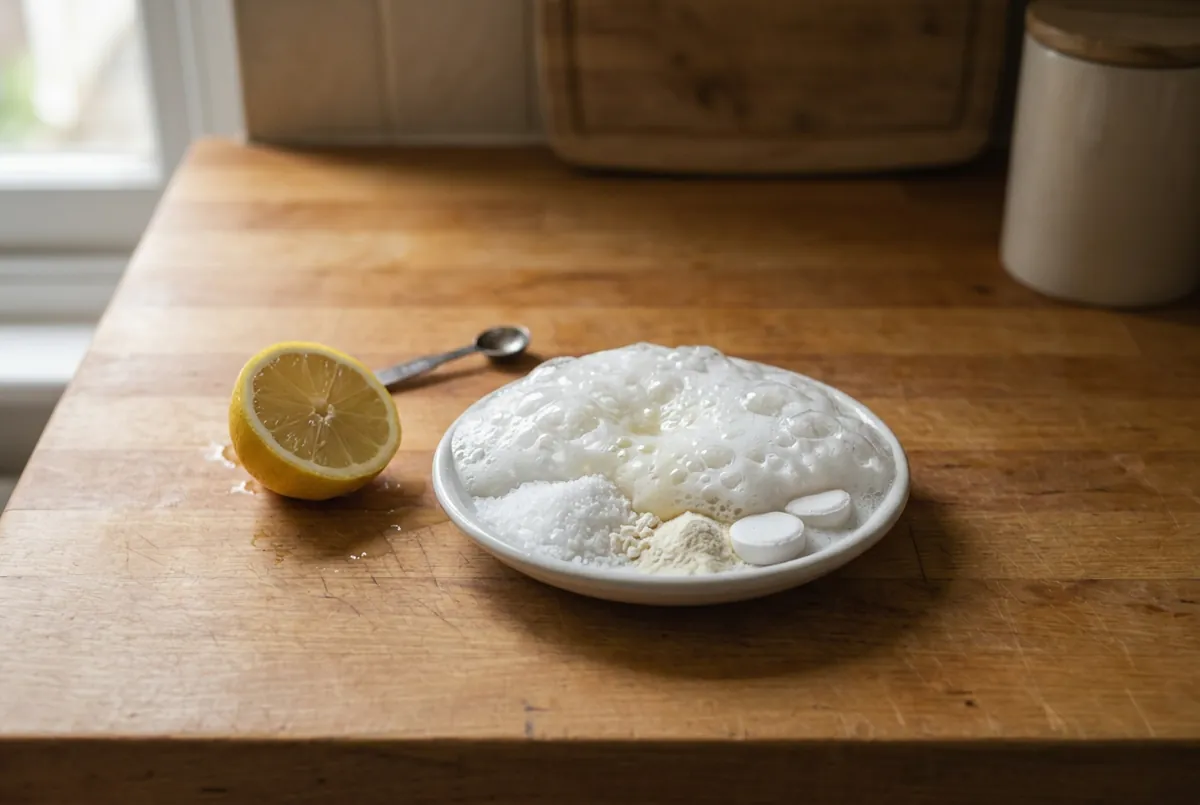
Because they are wet. The whole trick of a shower steamer is keeping the acid and the baking soda dry and apart until they reach the shower. Liquid lemon juice or vinegar sets off the reaction the moment it touches the baking soda, so all the fizz happens in your bowl, and what is left to press into the mold is spent powder that barely reacts in the water.
You will see this advice online surprisingly often. It is the one substitute that reliably ruins the batch. A smaller version of the same thing happens when too much witch hazel goes in, which shower steamers fizzing in the mold covers. If you want a lemon scent, use lemon essential oil instead.
How do the substitutes compare in the shower?
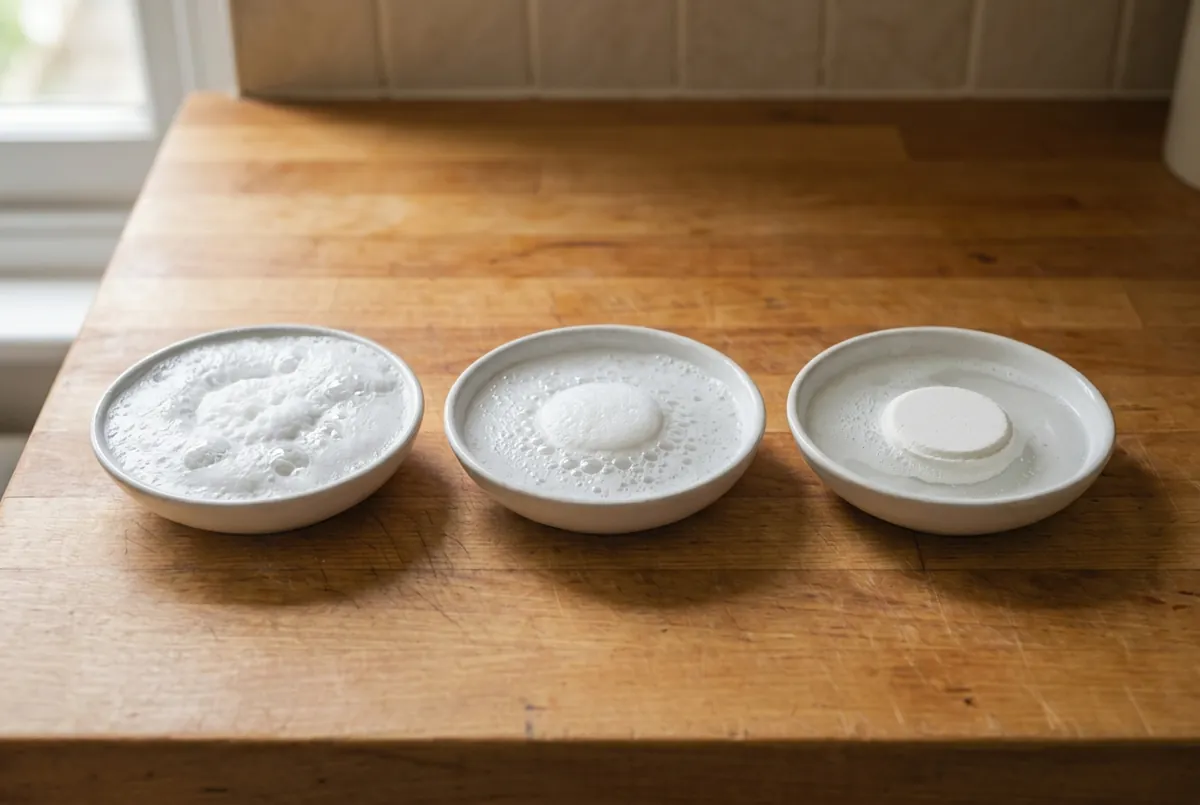
In a dish of water, citric acid gives the strongest, fastest fizz. Vitamin C comes close, a touch gentler. Cream of tartar foams softly for longer, and because the scent comes from the essential oil rather than the acid, it is no weaker.
For shower steamers, where a slower fizz is an advantage, cream of tartar is a perfectly good permanent swap. For bath bombs, where people expect a dramatic fizz, citric acid is still worth tracking down.
Can you make shower steamers without any acid?
You can make something that smells nice, but it will not fizz. Baking soda on its own simply dissolves slowly, releasing its essential oil as it goes. It works, in a quieter way, and is worth knowing if you have run out of everything. For a fizzing batch, make the shower steamer recipe and swap cream of tartar in for the citric acid at the same volume.
For the rest of the ingredient cupboard, molds and equipment, see the rest of the supplies section. If your finished steamers are not fizzing at all, see shower steamers not fizzing.
Frequently asked questions
Can I use cream of tartar instead of citric acid?
Yes. Swap it in at the same volume, for example half a cup of cream of tartar in place of half a cup of citric acid. The fizz is softer and slower, and the mixture binds a little more easily, so mist even more lightly.
Can I use lemon juice instead of citric acid in shower steamers?
No. Lemon juice is a liquid, so it sets off the reaction as soon as it touches the baking soda. The fizz is used up in the bowl and the finished steamers barely react. Use lemon essential oil if you want the scent.
Is vitamin C powder the same as citric acid?
No, but it behaves similarly. Pure ascorbic acid powder reacts with baking soda to fizz, a little more gently than citric acid. Buy pure powder rather than a supplement with fillers, and check the price, as it usually costs more.
Where can I buy citric acid?
Look in the canning or baking section of large supermarkets, in bulk food stores, in home-brewing shops, or online, where it is cheapest by the pound. It is sometimes labelled sour salt.