For an Epsom salt bath, stir 2 cups of Epsom salt with a quarter cup of baking soda, dilute 2 drops of eucalyptus and 3 of lavender in a tablespoon of almond oil, stir it through the salt and add it under the running tap. Soak for fifteen to twenty minutes in warm water.
An Epsom salt bath is the soak most people already know, usually from a parent who swore by one after a long day on their feet. This version is for a single bath: Epsom salt, a little baking soda to soften the water, and a gentle eucalyptus and lavender blend diluted properly in carrier oil. It takes five minutes to mix while the tub fills. Unlike the jarred bath salts recipe, this is made fresh, one soak at a time, so you can change the scent to suit the evening.
Ingredients
- 2 cups Epsom salt
- 1/4 cup baking soda
- 1 tablespoon sweet almond oil
- 2 drops eucalyptus essential oil
- 3 drops lavender essential oil
Tools
- Large mixing bowl
- Measuring cup
- Small glass dish
- Tablespoon
How do you make an Epsom salt bath?
1Gather the ingredients
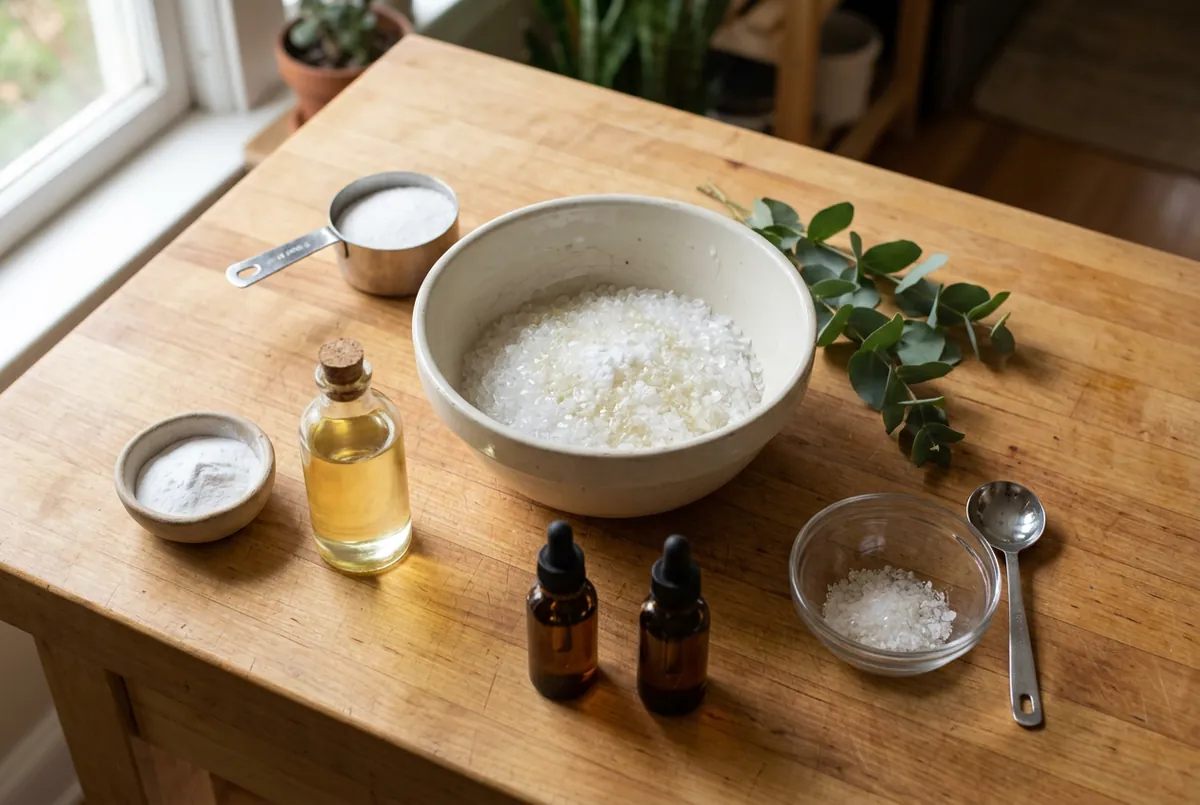
Use plain, unscented Epsom salt from a pharmacy or garden centre. It is magnesium sulfate, the same whichever brand you buy. Fine or coarse crystals both work; fine dissolve faster.
2Measure the Epsom salt
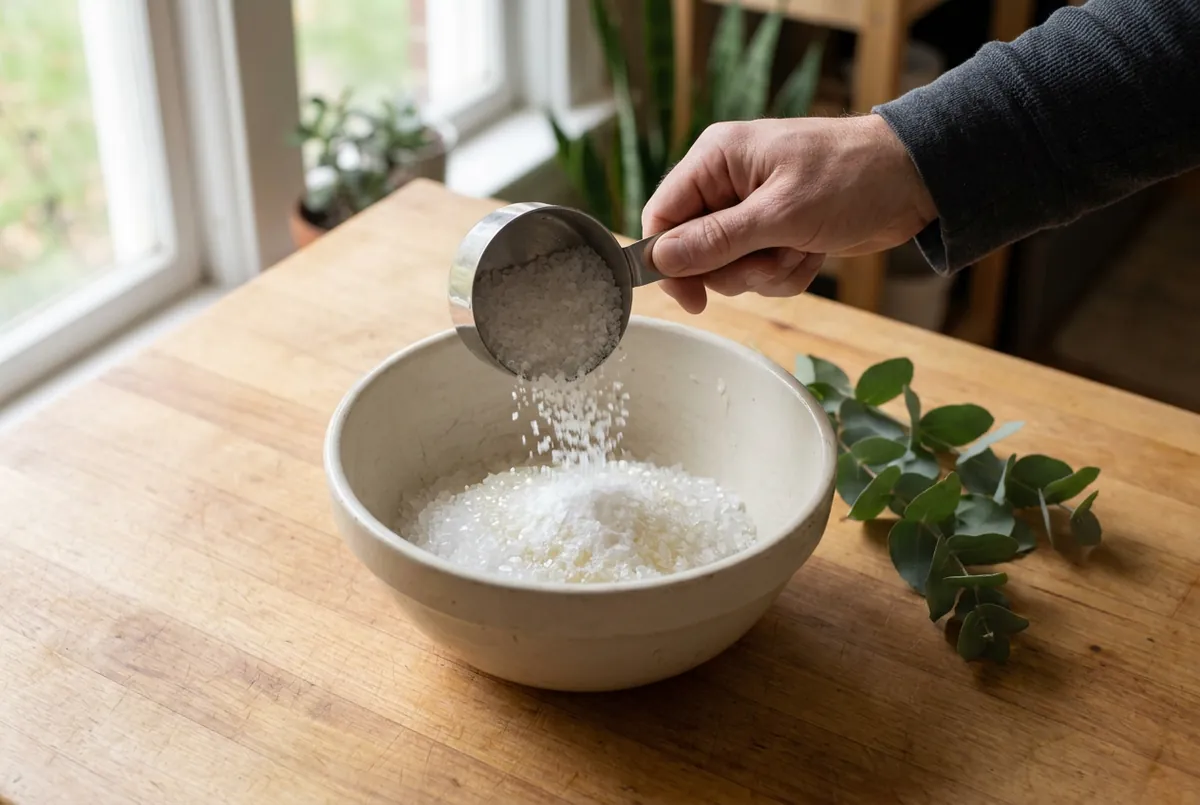
Measure two cups of Epsom salt into the bowl. That is the amount most packets suggest for a standard bath. Use one cup for a smaller tub or a shorter soak.
3Add the baking soda
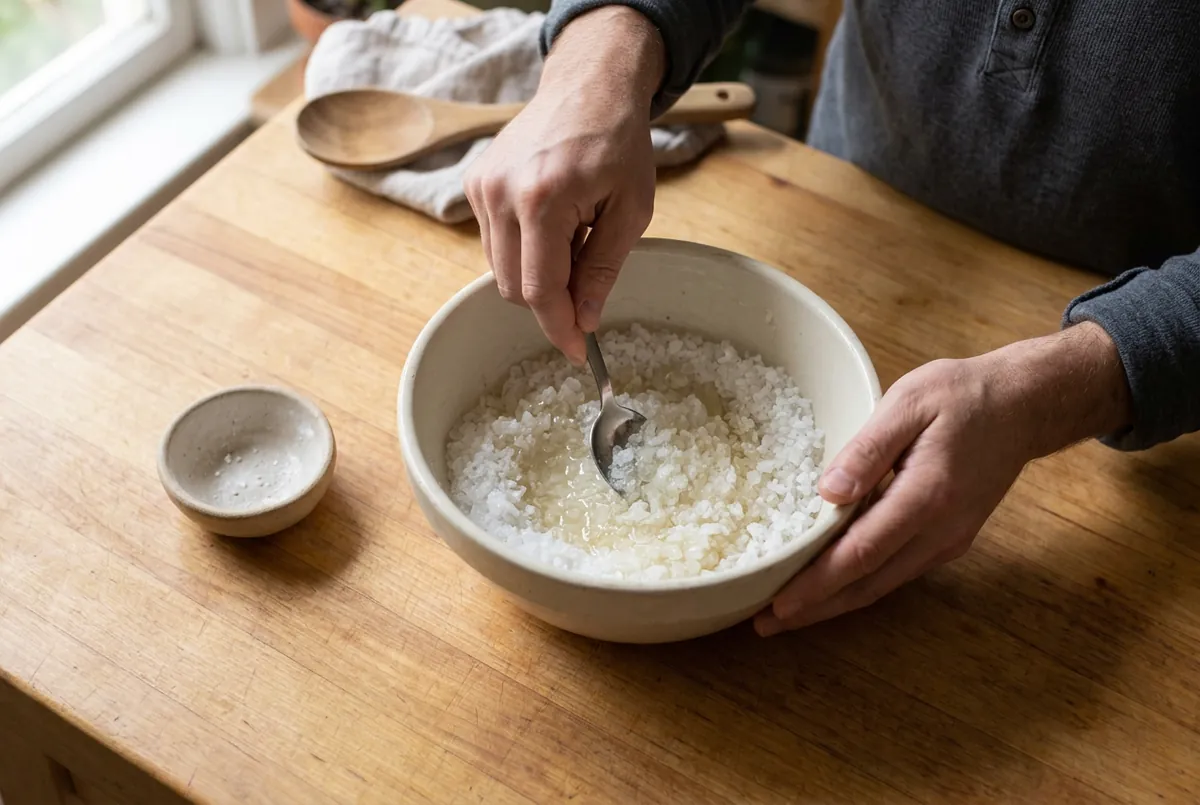
Stir in a quarter cup of baking soda. It softens the water, which makes the bath feel silkier, especially if you live somewhere with hard water.
4Dilute the oils in the carrier
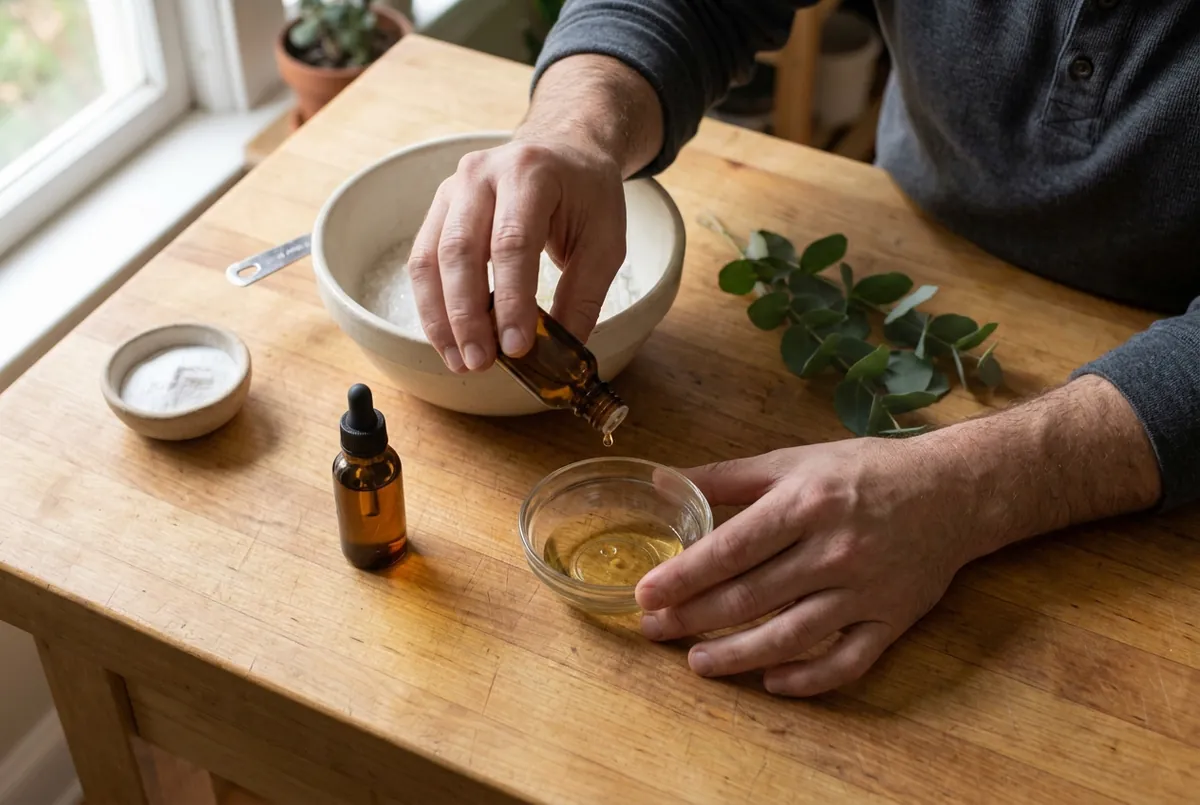
Stir two drops of eucalyptus and three of lavender into a tablespoon of almond oil. Five drops in total is enough for one bath. Eucalyptus is strong in warm water, so resist adding more.
5Stir the oil into the salt
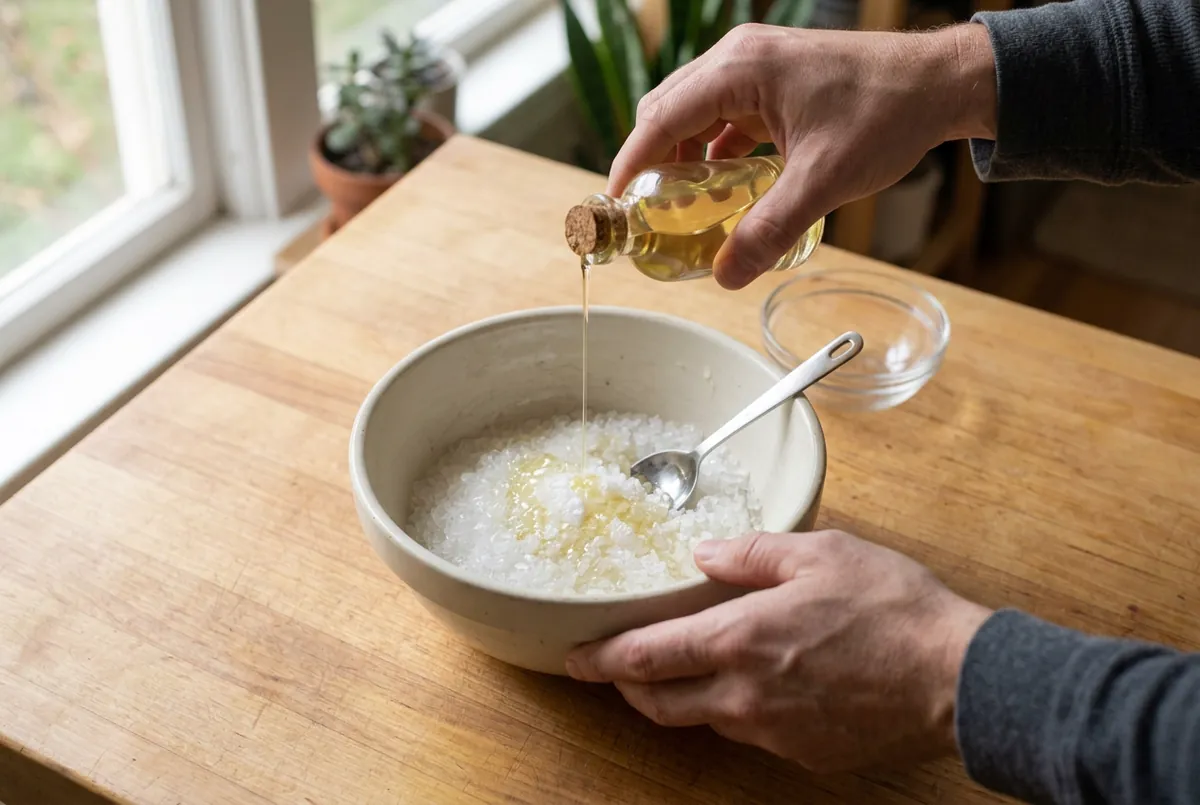
Drizzle the oil over the salt and stir until every crystal has a faint sheen. The salt carries the oil into the water and helps spread it, rather than leaving drops floating on top.
6Carry it to the bath
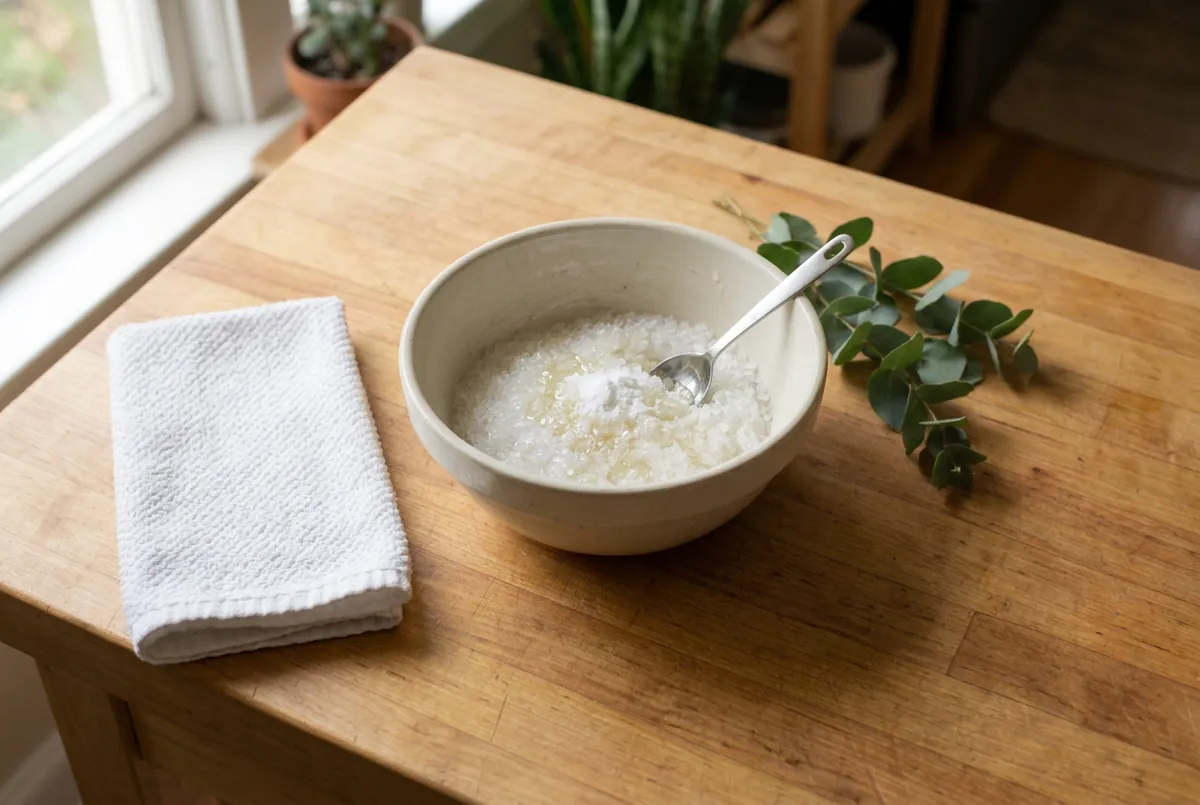
Tip the salt under the running tap as the bath fills, then swish the water until it has dissolved before you get in. Soak for fifteen to twenty minutes.
If it goes wrong
| Problem | Likely cause | How to fix it |
|---|---|---|
| The salt sits undissolved on the bottom | It was added to a full bath of cooling water | Add it under the running warm tap and swish until dissolved. |
| Skin stings or itches | Too much essential oil, or oil that was not diluted | Keep to five drops, always in a carrier oil, or leave the oil out. |
| Oily drops float on the water | Too much carrier oil | Use one tablespoon and stir it through the salt first. |
| Skin feels dry afterwards | The water was too hot or the soak too long | Keep the water warm and the soak to about twenty minutes. |
What does an Epsom salt bath actually do?
It makes a warm bath feel softer and more restful, and many people find it helps them relax after exercise or a long day standing. The popular claim is that your body absorbs magnesium through the skin during the soak. The honest answer is that the evidence for that is thin; studies are small and mixed. What is well established is that a warm bath itself eases tension and helps many people unwind.
So think of Epsom salt as making a good bath better, not as medicine. That is reason enough to use it.
Who should skip an Epsom salt bath?
Most people can use one safely. Ask your doctor first if you have kidney problems, heart problems or diabetes, if you are pregnant, or if you have broken or infected skin. Very hot baths are not advised in pregnancy or with some heart conditions, so keep the water warm rather than hot. Do not drink Epsom salt water, and keep the bag out of reach of children and pets.
Other scent combinations
Keep to five drops in a tablespoon of carrier oil. Lavender Only: five drops, the gentlest. Sweet Orange and Cedarwood: three and two, warm and woody. Rosemary and Lavender: two and three, herbal and fresh. Frankincense and Lavender: two and three, soft and resinous. Avoid peppermint, cinnamon, clove and oregano in a bath; they can sting.
If you prefer no oil at all, add a tablespoon of dried lavender buds in a muslin bag.
How hot should the water be?
Warm rather than hot, around 37 to 39°C, which is about body temperature or a little above. It should feel comfortable to sit in straight away, not something you have to lower yourself into slowly. Very hot water dries out your skin, can make you feel light-headed when you stand up, and is not advised in pregnancy or for some heart conditions.
A bath thermometer takes the guesswork out, but your wrist or elbow is a reasonable test: it should feel pleasantly warm, never hot. Keep the soak to fifteen or twenty minutes, drink a glass of water afterwards, and stand up slowly when you get out, holding the side of the tub if you feel at all dizzy.
Why is the essential oil so low?
Because you are sitting in it. A shower steamer can carry five drops per tablet because it never touches your skin. In a bath, every drop ends up against you in warm water, which opens the pores and makes irritation more likely. Five drops, always diluted in a carrier oil first, is plenty for the scent to fill the bathroom. If you want the eucalyptus effect in a stronger form, a eucalyptus shower steamer in the shower is the better tool.
More soaks are in the bath soaks hub.
Frequently asked questions
How much Epsom salt do you put in a bath?
About 2 cups for a standard bath, or 1 cup for a small tub or a shorter soak.
Can you put essential oils in an Epsom salt bath?
Yes, a few drops diluted in a tablespoon of carrier oil first. Avoid peppermint, cinnamon and clove, which can sting.
Does your body absorb magnesium from an Epsom salt bath?
The evidence is thin and mixed. The warm soak itself is what most people find relaxing.
Who should not take an Epsom salt bath?
Ask your doctor first if you have kidney or heart problems, diabetes, broken skin, or are pregnant.