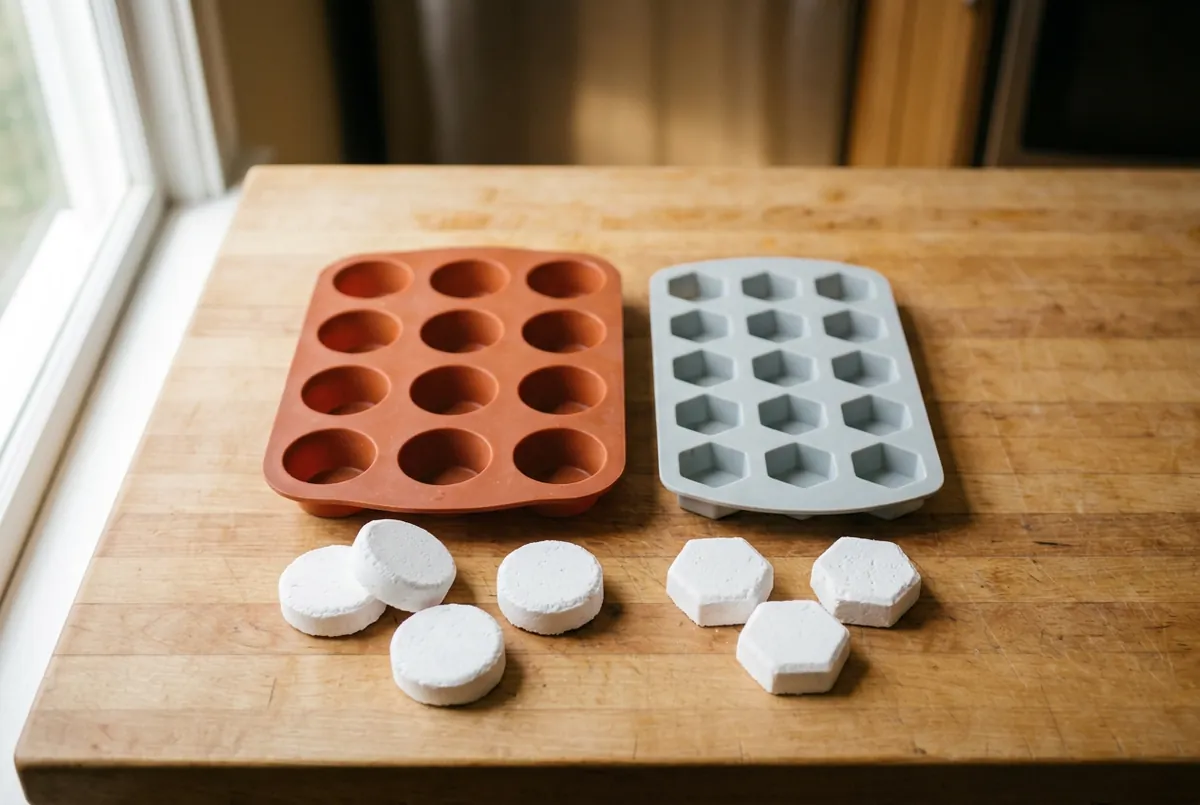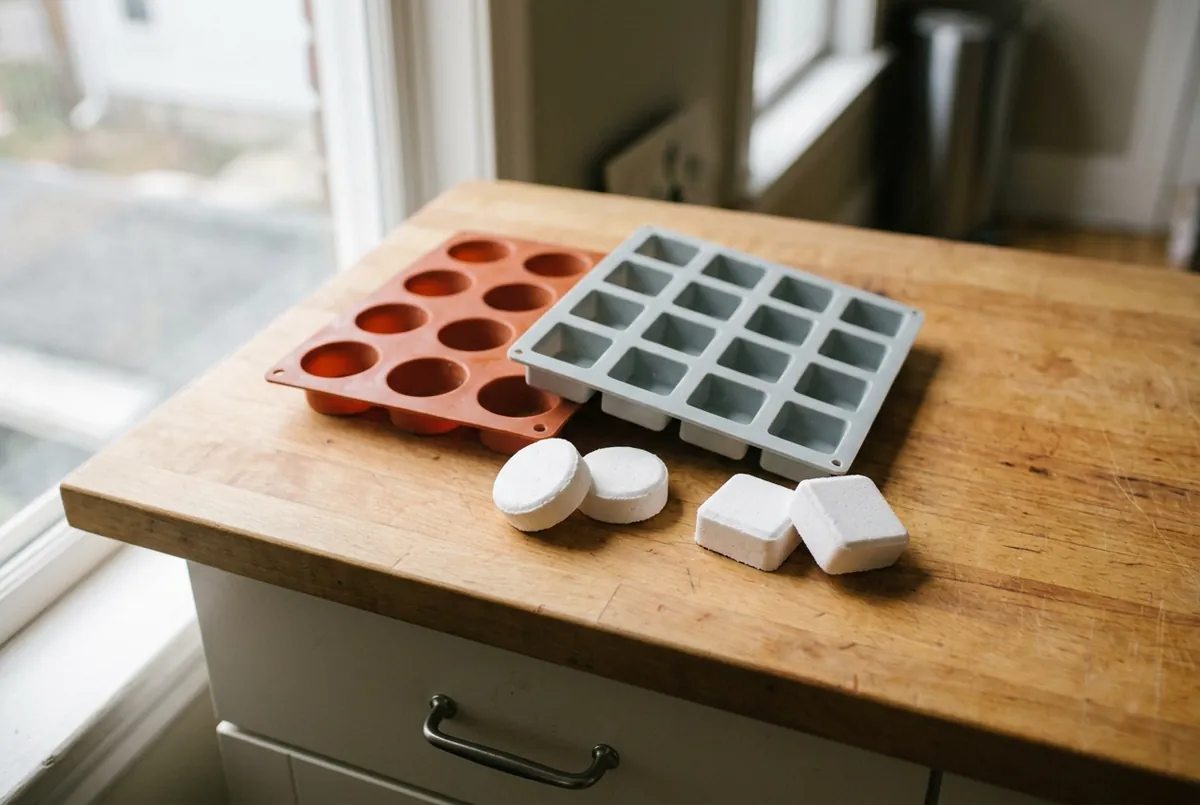
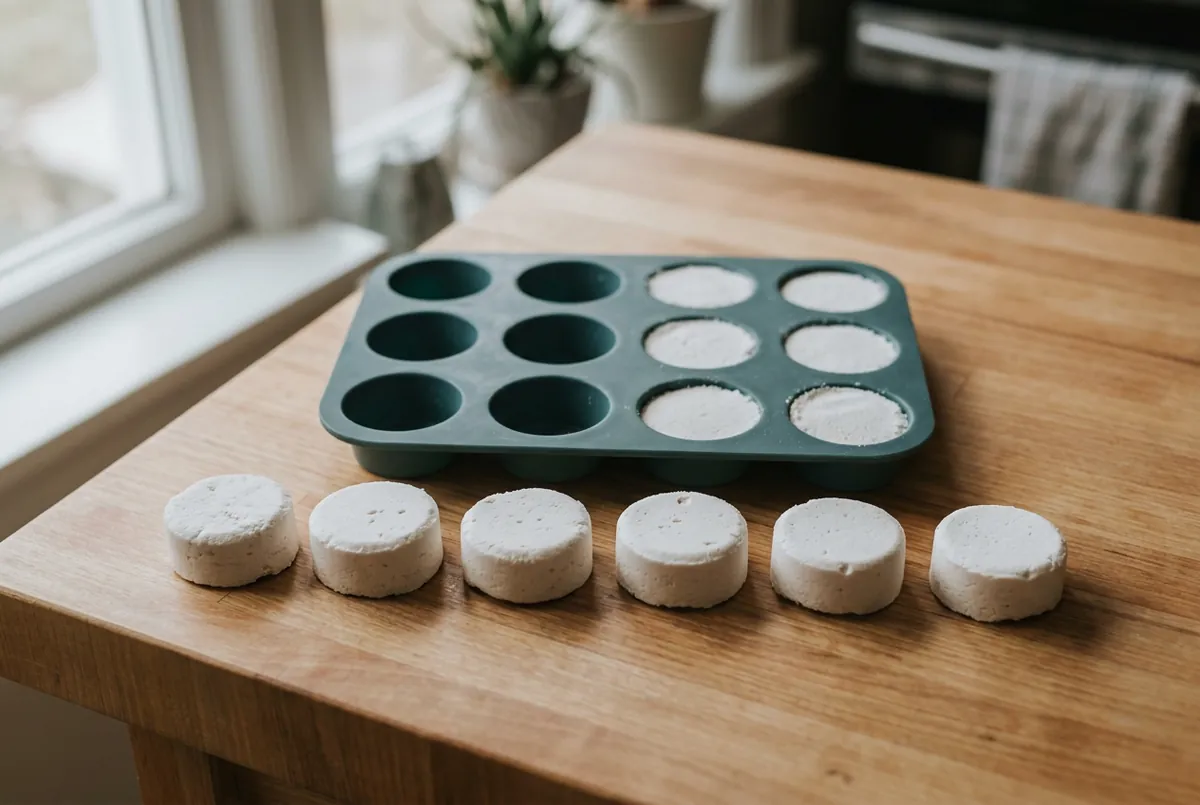
To use a shower steamer mold, overfill each cavity, press hard, top up and press again, then scrape the tops level with a knife. Leave it somewhere dry for a full 24 hours, then flex the mold and push each steamer out from underneath. Wash and dry the mold completely between batches.
A shower steamer mold does most of the work of shaping a steamer, but how you fill it, press it and let it go decides whether you get twelve smooth tablets or a tray of crumbs. The mixture is only barely holding together when it goes in, and it is at its most fragile in the first hours of drying. This guide is about the mold itself: how to pack it, how long to leave it, how to release the steamers without cracking them, and how to look after it between batches. A full recipe is in the shower steamer recipe; this is everything that happens after the mixture is ready.
How to use a shower steamer mold
In short: overfill every cavity, press hard, top up, press again, scrape level, then leave it alone for a full day before you flex it and push each steamer out from underneath. Each of those steps prevents a specific failure, so it is worth understanding why.
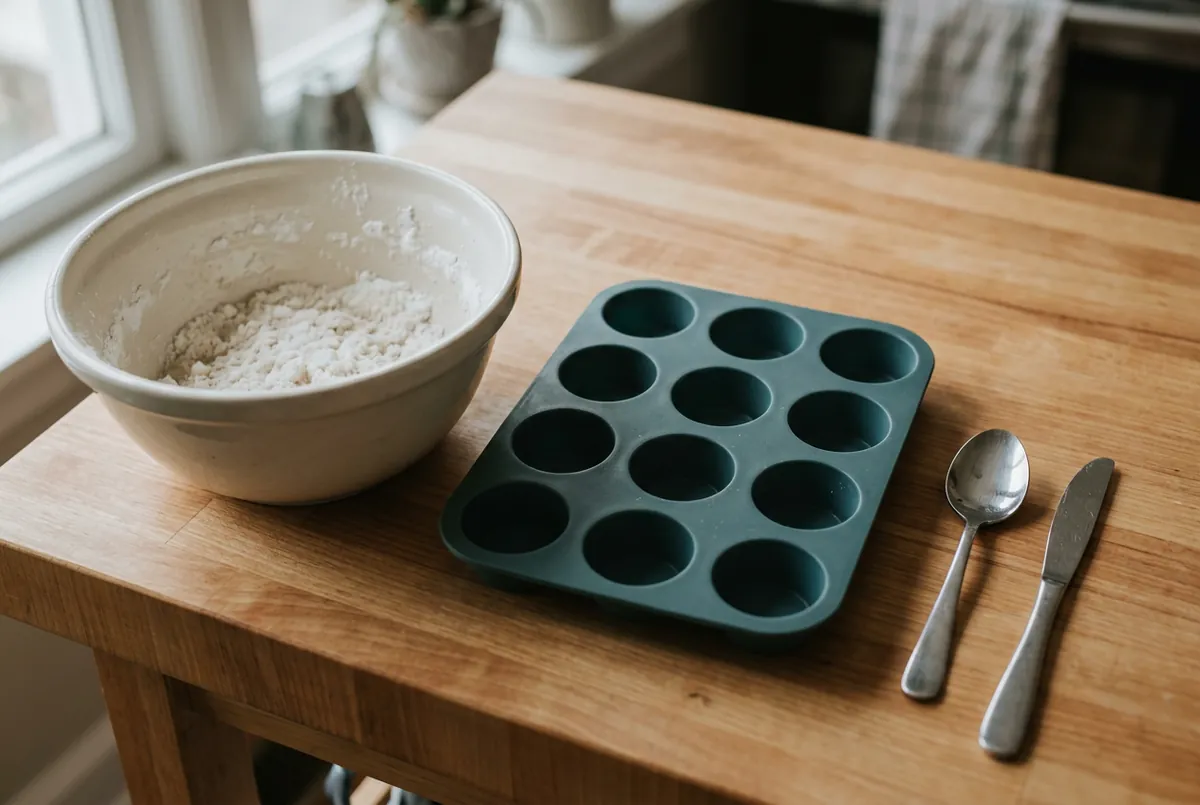
Start with a clean, completely dry mold. Water left in a cavity from washing sets off the fizz in the bottom of the steamer, and you will find a crusty, bubbly base when you unmold. If you washed it recently, leave it an hour before using it.
Overfill every cavity
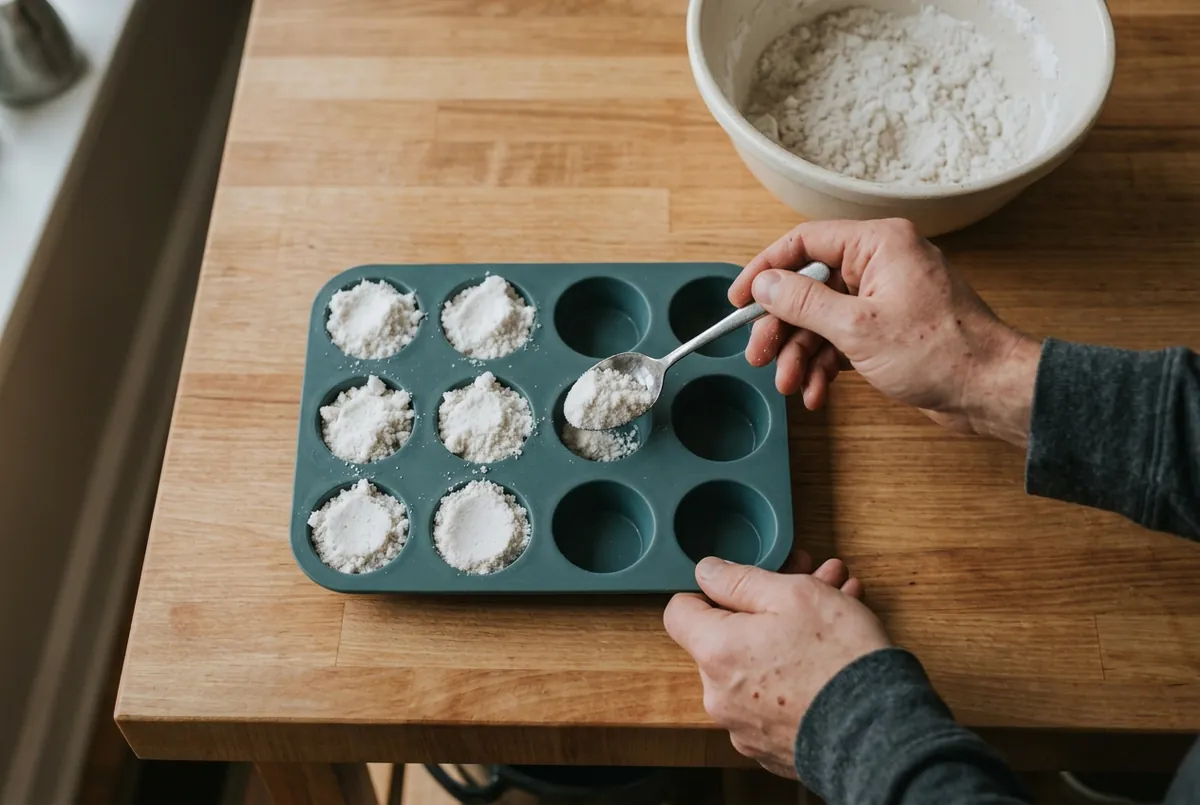
Heap the mixture well above the rim of each cavity. It compresses a lot when pressed, often by a third, and a cavity filled only to the rim ends up as a thin, weak steamer. Work quickly once the mixture is ready; it dries out in the bowl within ten or fifteen minutes, and dry mixture does not press into a solid tablet.
Press twice
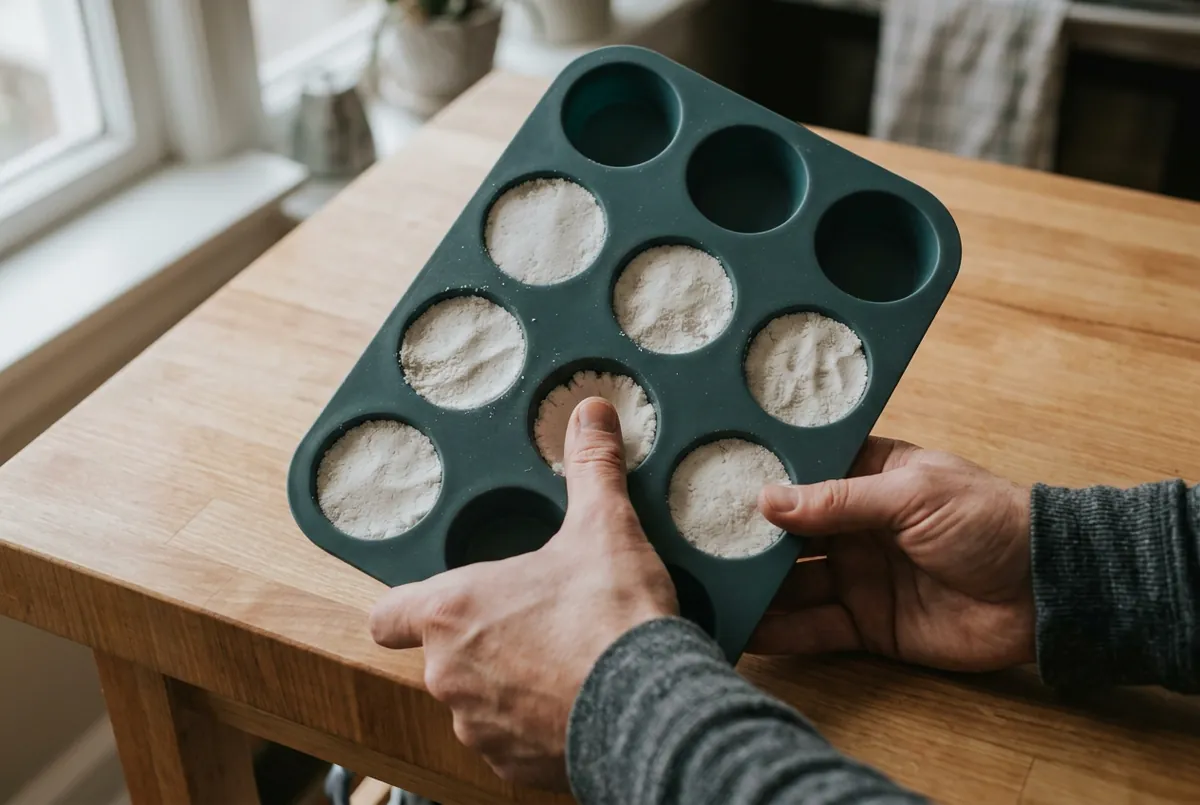
Press each cavity firmly with your thumb or the back of a spoon, add another heap on top, and press again. The second press is what turns a loose tablet into a hard one. Press straight down rather than smearing sideways, which leaves a loose layer on top that flakes off later.
You should feel real resistance. If the mixture squishes and sticks to your thumb, it is too wet; if it will not bind at all, it is too dry. Why are my shower steamers crumbling covers fixing either.
Scrape the tops level
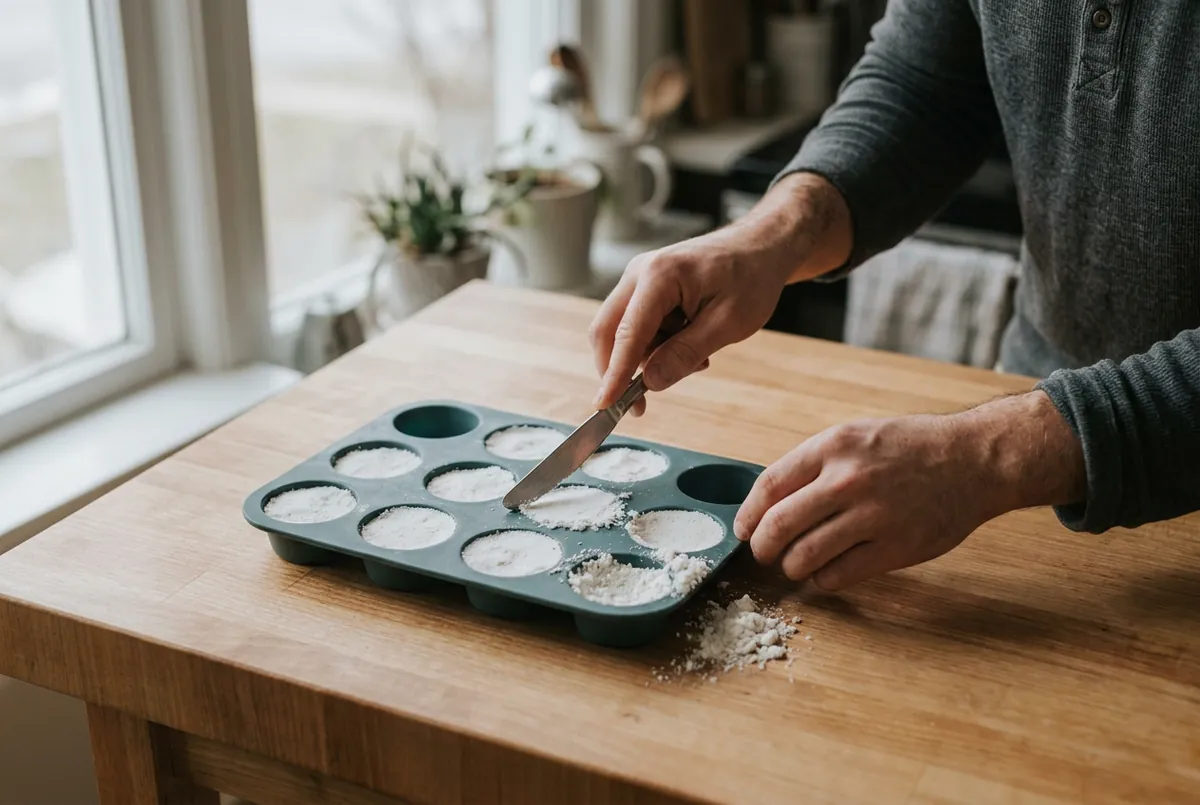
Draw a flat knife across the top of the mold to level every cavity with the rim. A flat back sits steady on a shower shelf, and an even thickness means the steamer dries evenly. Tip the scrapings back into the bowl for the next cavity.
Wait a full day, then release
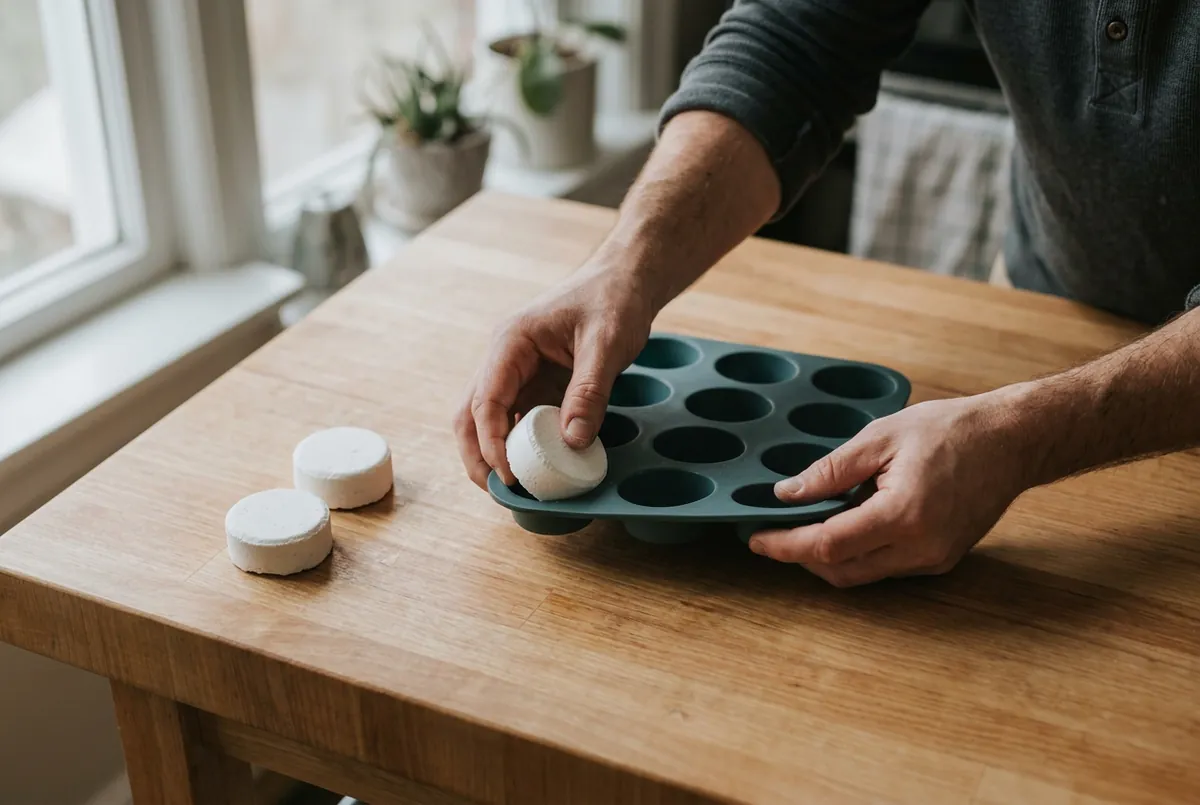
Leave the filled mold somewhere dry for 24 hours. The surface feels dry within a couple of hours, but the middle is still soft, and a steamer released early often cracks across the centre.
To release, peel the edge of the cavity back a little, then push from underneath with your thumb while you flex the mold. The steamer should pop up cleanly. Never pull a steamer out by its top, and never lever it out with a knife.
Clean and dry the mold
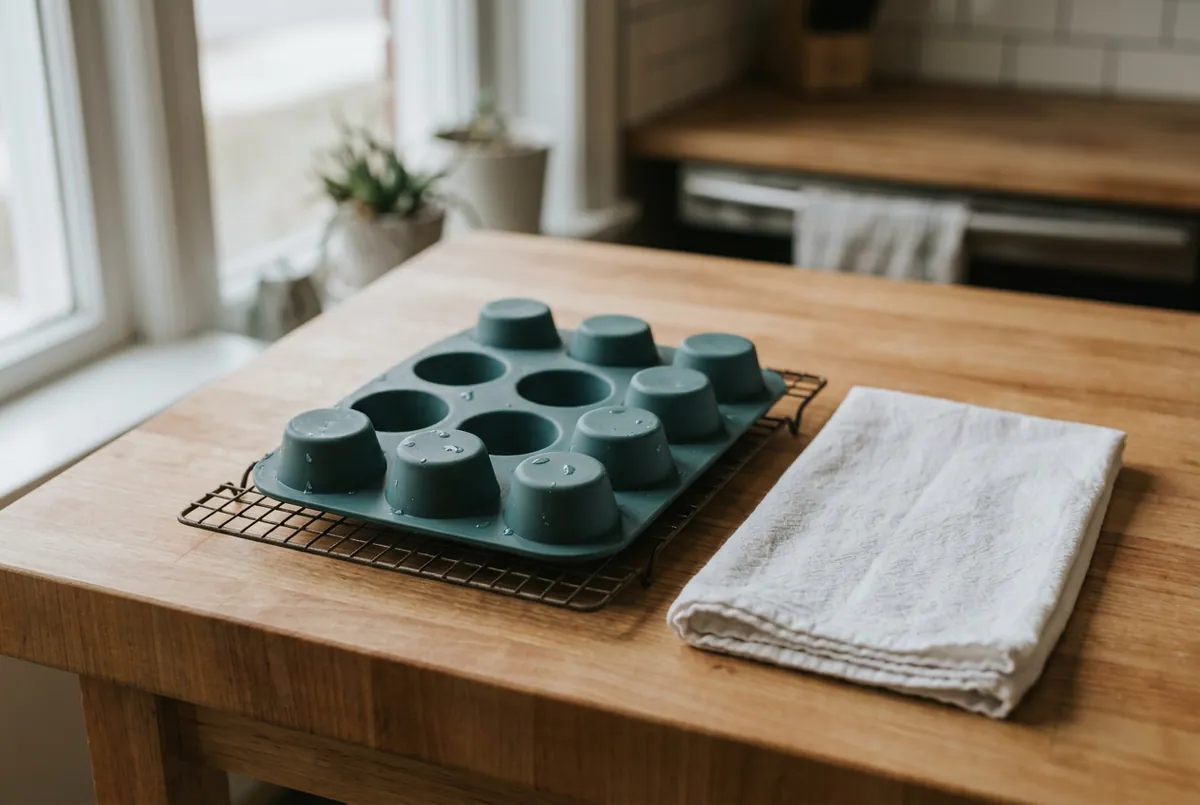
Rinse off loose powder, wash in warm soapy water, and dry upside down on a rack. Silicone holds a thin film of oil and scent, so a strong eucalyptus batch can leave a faint smell in the next one. Wash twice if you are switching from a strong scent to a gentle one.
Where should the filled mold dry?
Somewhere dry, still and out of the way: a shelf in a spare room, the top of a wardrobe, a kitchen corner well away from the kettle, sink and dishwasher. Steam is the enemy here, because the tablets are drying by giving up moisture to the air, and a humid spot slows that down and keeps the reaction going. Do not dry them in the bathroom, however convenient it seems.
Leave the mold flat and do not move it for the first few hours. Carrying a full silicone mold across the room bends it, and a bend in the first hour becomes a crack. If you need to move it, slide a baking sheet underneath first. In a warm, dry room, some makers unmold after 12 hours; in winter or a humid climate, 36 hours is safer.
Common mold problems
Steamers stick in the cavity. The mixture was too wet, or you released too soon. Wait longer, and next time mist a little less.
Steamers crack across the middle when released. Released too early, or pressed unevenly. Give them the full 24 hours.
The tops rise and dome above the rim. The mixture was too wet and reacted in the mold.
A crusty, bubbly base. Water was left in the mold. Dry it completely before filling.
Which mold should you use?
A flexible silicone mold with round cavities about 4cm across is the easiest to use well. Shower steamer molds compares the other options, and the silicone molds guide covers choosing a good one. The rest of the kit is in the supplies hub.
Frequently asked questions
How long do you leave shower steamers in the mold?
A full 24 hours somewhere dry. The surface dries in a couple of hours, but the middle stays soft and cracks if you release it early.
Why are my shower steamers sticking to the mold?
Usually the mixture was a little too wet or they were released too soon. Wait the full day and mist slightly less next time.
Do you need to grease a silicone shower steamer mold?
No. Silicone releases cleanly on its own. Rigid plastic trays can be dusted with a little cornstarch.
How do you clean a shower steamer mold?
Rinse off loose powder, wash in warm soapy water and dry upside down. Make sure it is completely dry before the next batch.