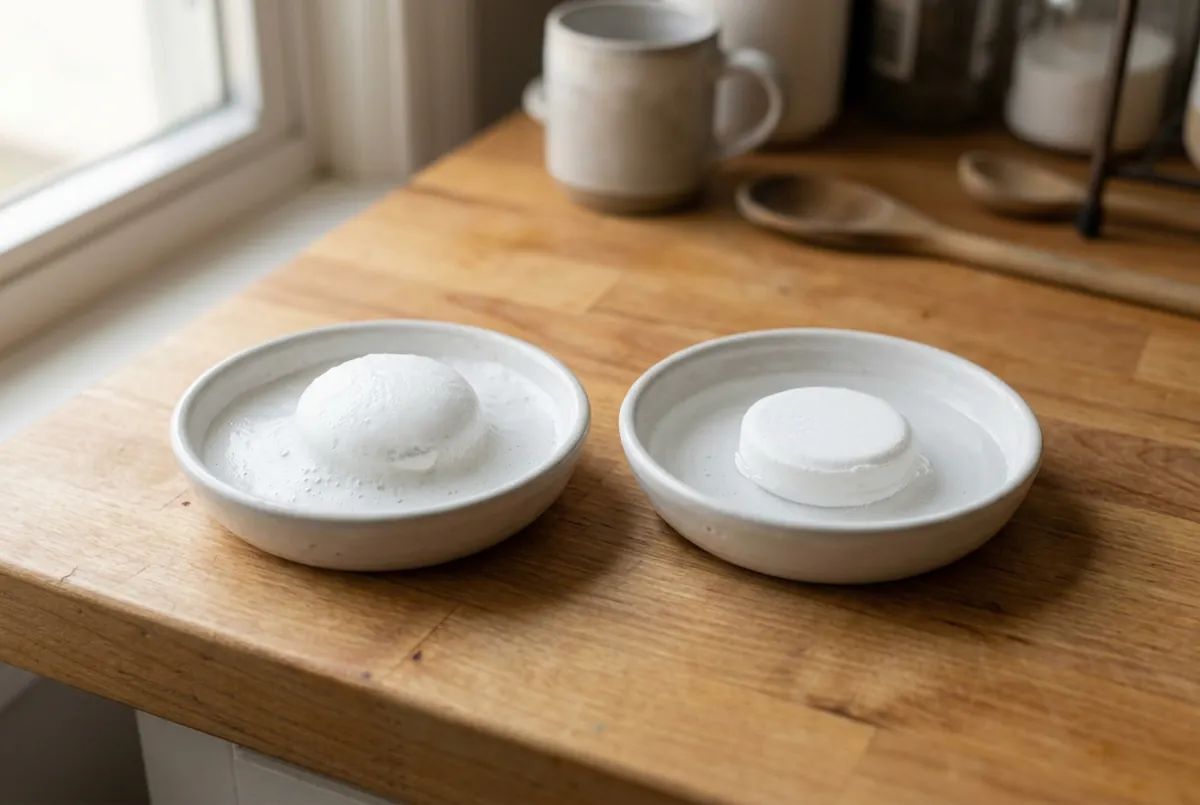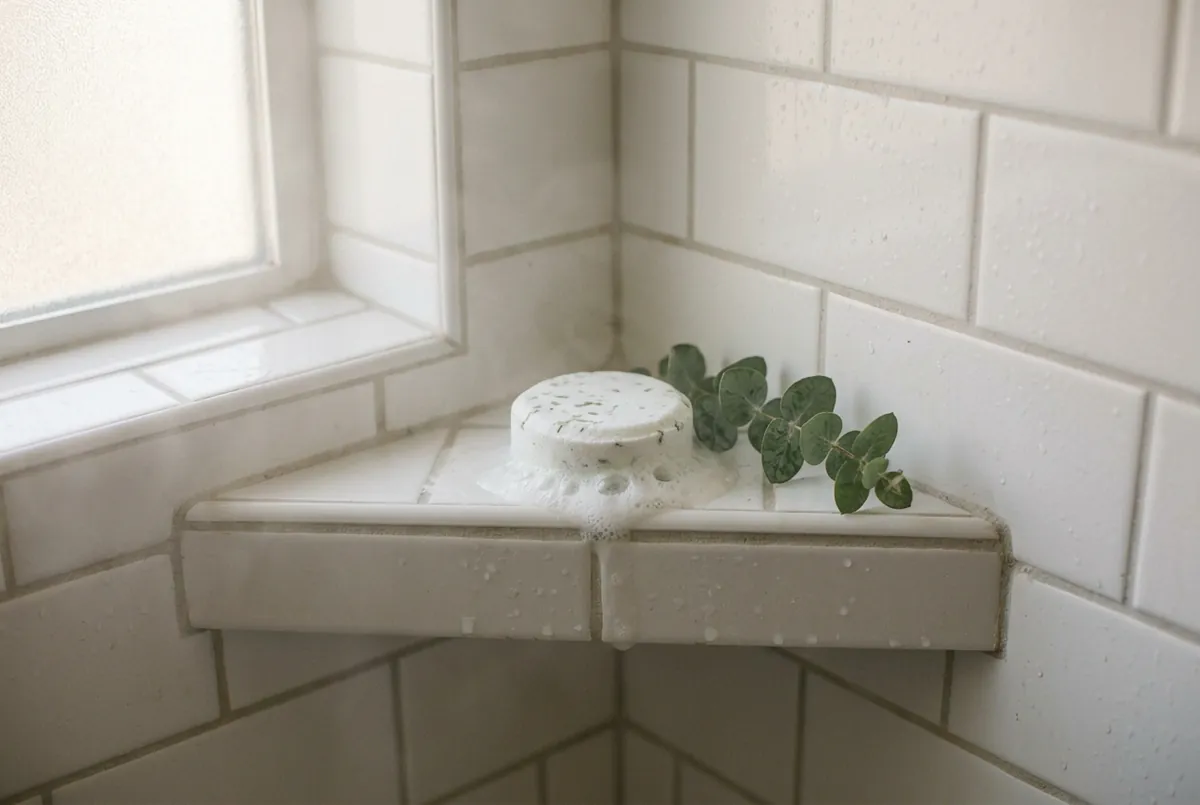
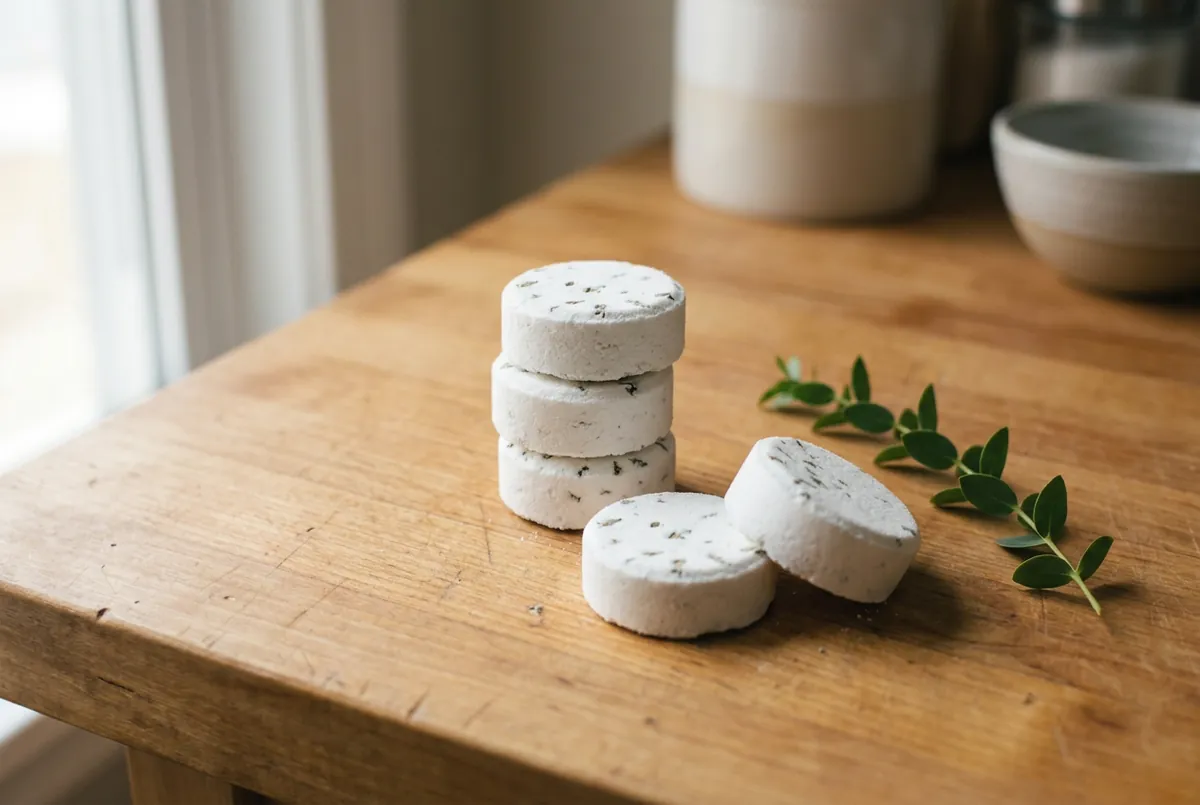
A shower steamer is a small pressed tablet of baking soda and citric acid, scented with essential oils or menthol. Placed on the shower floor or a shelf, it fizzes slowly as water splashes it and releases its scent into the steam, so you breathe it in while you shower.
That is the whole idea in one sentence, and it is why people who have never heard of them tend to love them the first time they try one. You get the scent of a bath without running one.
What is a shower steamer, exactly?
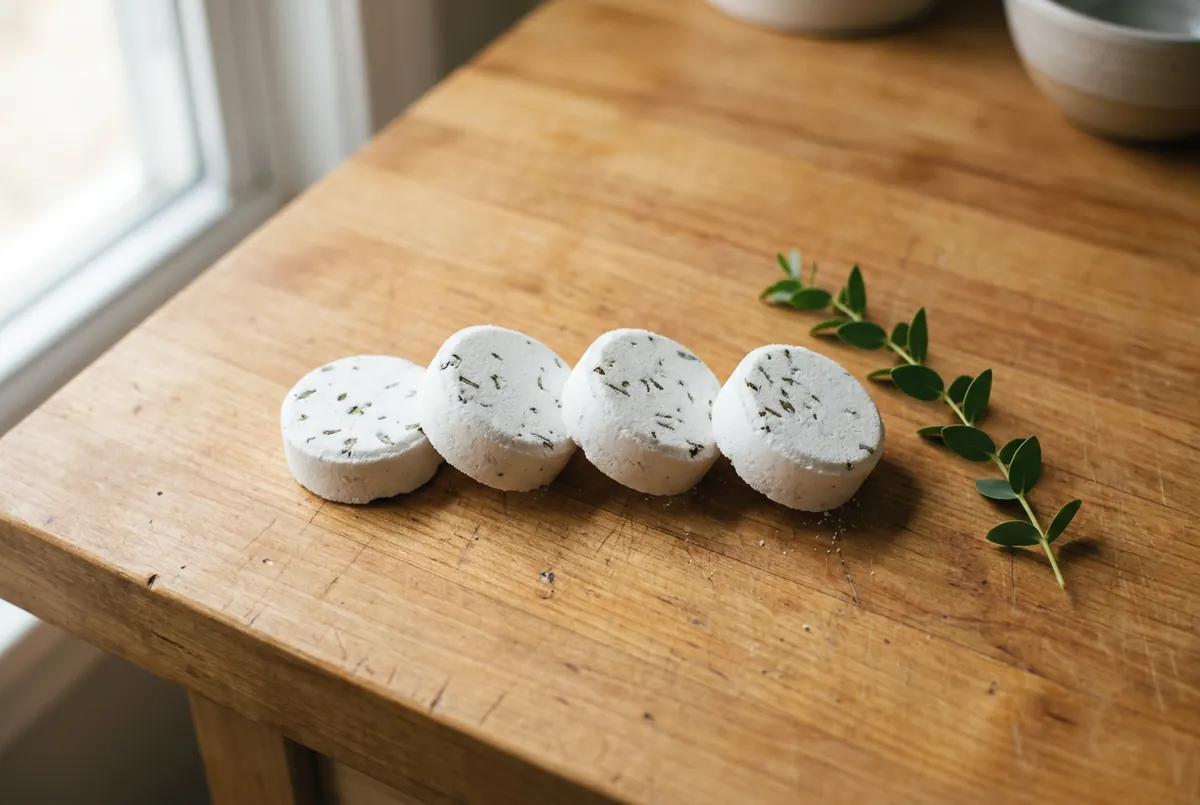
A shower steamer is a small pressed puck of baking soda and citric acid, scented with a strong dose of essential oil or menthol. You put it on the floor of the shower, somewhere it gets splashed but not blasted, and as the water reaches it the two powders react and fizz. The fizz carries the scent up into the steam, and because you are standing in a small enclosed space full of warm air, you breathe it in for as long as the tablet lasts.
People also call them shower bombs, shower tablets, shower melts and, when they are sold as a cold remedy, vapor tablets. They are all the same thing. The one term that means something different is “bath steamer”, which is usually just a bath bomb by another name.
They are not meant to touch your skin. A bath bomb dissolves in water you sit in, so it is formulated to be gentle. A shower steamer is formulated to be smelled, so it carries far more fragrance than you would ever put in a bath. That difference matters more than any other, and it comes up again below.
What are shower steamers made of?
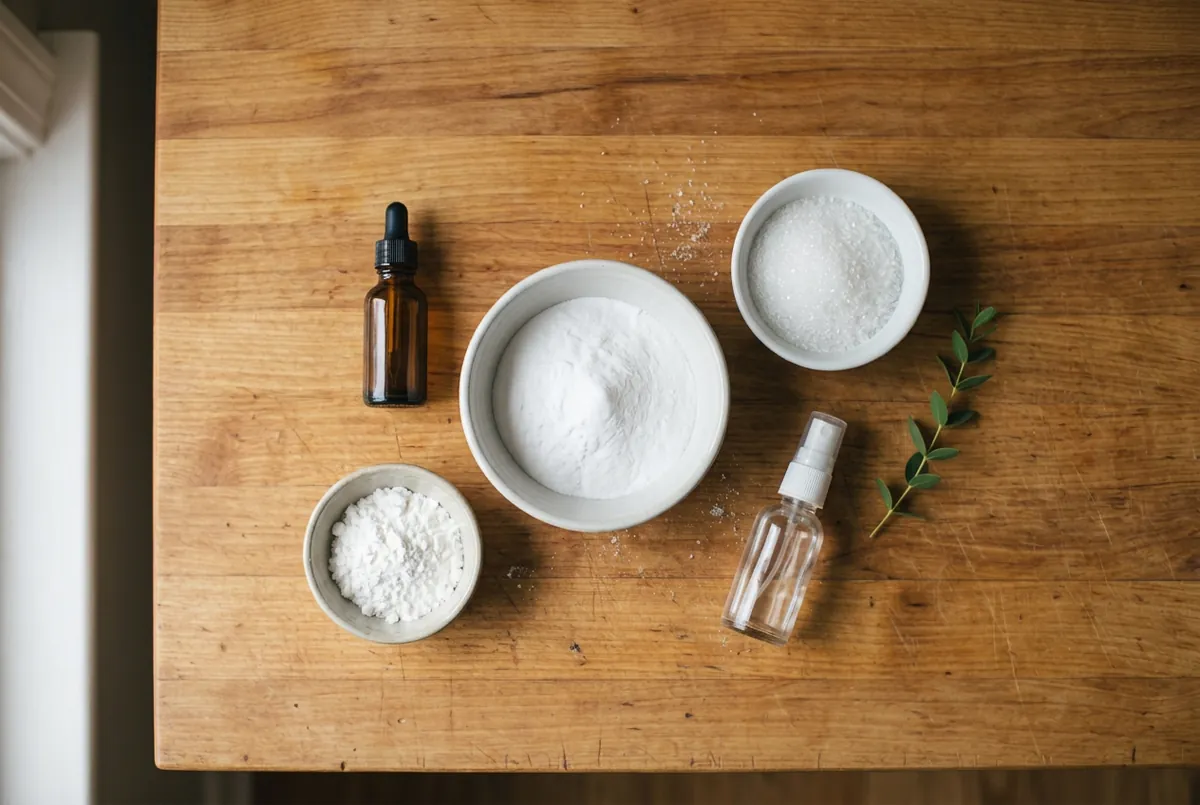
Almost every shower steamer, homemade or shop-bought, comes down to four things.
- Baking soda. The base, and most of the weight. It is the alkali half of the fizz.
- Citric acid. The acid half. Dry, it does nothing. Wet, it reacts with the baking soda and releases carbon dioxide, which is the fizz.
- Something to hold it together. A light mist of witch hazel or water, sometimes with a spoonful of cornstarch or a little clay in the dry mix. The goal is a mixture that holds its shape when pressed and still falls apart in the shower.
- Scent. Essential oils, menthol crystals, or both, at a much higher rate than a bath product would use.
The ratio of baking soda to citric acid is roughly two to one in most recipes, and it is the setting most worth adjusting. More citric acid gives a faster, louder fizz that is over sooner. More baking soda gives a slower one. How to make shower steamers works through it step by step, starting from exactly this ratio.
A few recipes swap the citric acid for something else, usually cream of tartar, because citric acid can be hard to find in some shops. That works, with some trade-offs.
How does a shower steamer work?
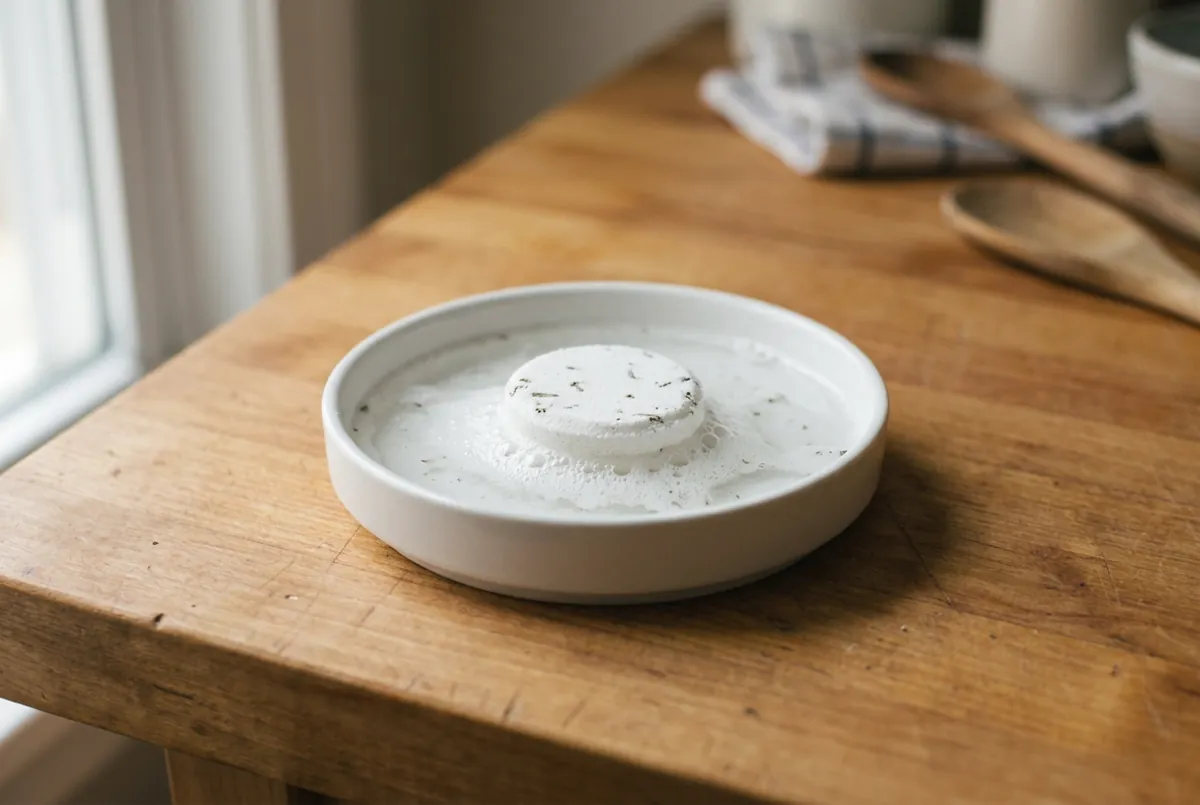
It is the same reaction as a vinegar-and-baking-soda volcano, just slower and tidier.
As long as the tablet stays dry, the baking soda and citric acid sit side by side and nothing happens. When water reaches them, the citric acid dissolves, meets the baking soda, and the two react to make carbon dioxide. That gas forms the bubbles. Each bubble that breaks on the surface throws a little of the essential oil into the air, and the warm, humid air of a shower carries it up to where you can smell it.
This is also why placement matters so much. Under the direct stream, a steamer is washed away in a minute or two and most of the scent goes down the drain with it. On a shelf or a corner of the floor that only gets splashed, the water reaches it slowly, the fizz lasts much longer, and the scent builds instead of vanishing. How to use a shower steamer covers the spots that work best.
Shower steamer vs bath bomb: what’s the difference?
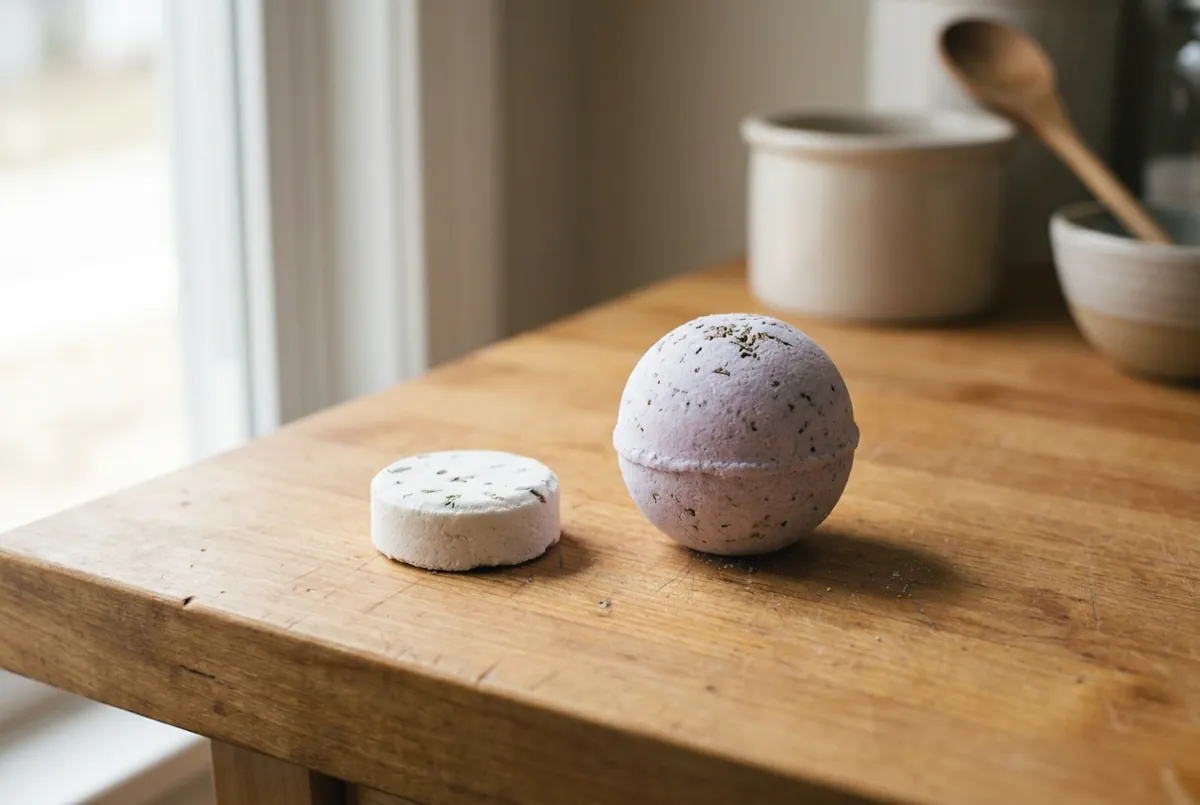
They look alike and they use the same two powders, so it is easy to assume they are interchangeable. They are not, and using one as the other is the most common mistake people make.
A bath bomb is made to dissolve in bath water you are sitting in. It usually carries oils and butters for your skin, often colour, and a gentle amount of fragrance, because all of it ends up on you.
A shower steamer is made to fizz near you, not on you. It is usually smaller, contains no skin-care oils, and carries several times the fragrance. Drop one in a bath and you are soaking in a concentrated dose of essential oil, which can irritate skin. Put a bath bomb in the shower and you get a brief puff of scent and a slippery floor.
The short version: steamers are for your nose, bath bombs are for your skin.
How do you use a shower steamer?
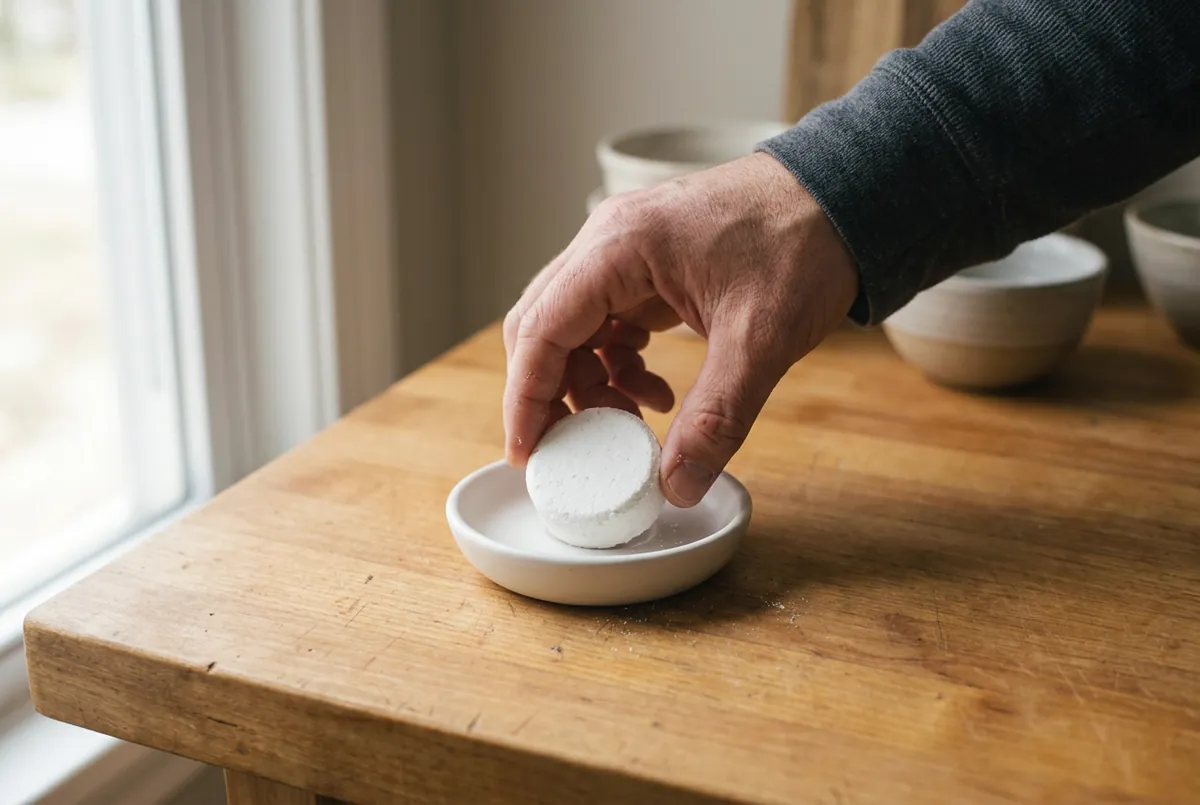
Unwrap it if it came wrapped, turn the shower on, and put the steamer somewhere it will get splashed but not soaked. The floor in the corner furthest from the showerhead works in most showers. A shelf or a soap dish at chest height works better, because the scent starts closer to your face.
Then shower as normal. Most tablets fizz for somewhere between five and fifteen minutes, depending on their size and how much water reaches them. When it has gone, rinse the residue away. It is only baking soda and citric acid and it washes off in seconds.
How long does a shower steamer last?

In use, a 4cm tablet usually lasts around eight to ten minutes when it sits out of the direct spray. Bigger ones last longer, but only up to a point. Past a certain size, the outside fizzes away and the middle stays dry until the end, so you get a slow start and a rushed finish.
On the shelf, the fizz lasts for months if you keep moisture away from them. Humidity is the enemy. A steamer left in a steamy bathroom starts reacting with the damp air and slowly loses its fizz, and the essential oils fade faster than the fizz does. Keep them in a sealed jar outside the bathroom and bring one in at a time. There is more on this in how long do shower steamers last.
Are shower steamers safe?
For most adults, used as intended, yes. They are baking soda, citric acid and fragrance. The things worth knowing are all about the fragrance.
Essential oils are concentrated, and a shower steamer releases a lot of them into a small space. If the scent feels too strong, step back from it or open the door. Menthol and eucalyptus in particular can feel sharp, and eucalyptus is not recommended around young children. Keep steamers out of reach of children and pets, since a tablet looks a lot like a sweet and the oils can be harmful if swallowed.
If you have asthma, are pregnant, or have sensitive airways, it is worth checking with your doctor before using strongly scented products like these. And a shower steamer is not a medicine. Many people find a eucalyptus or peppermint one feels pleasant when they are stuffy, but it does not treat anything.
Why make your own?
Shop-bought steamers are fine, and some are very good. The catch is that you cannot choose how strong they are or how fast they fizz, and a box that has sat on a shelf for months may have lost much of its scent.
Making them at home lets you control the two things that matter most: how strong the scent is, and how slowly they fizz. They take about twenty minutes to make and a day to dry, and the ingredients cost a fraction of a boxed set. If you want to start with the simplest version, the shower steamer recipe uses four ingredients and a silicone mold, and everything else on this site about shower steamers builds from there. For the scent side, the eucalyptus shower steamers page is the one most people start with, and scents and blends has the rest.
Frequently asked questions
Do you put a shower steamer directly under the water?
No. Under the direct stream it washes away in a minute or two and most of the scent goes down the drain. Put it where it gets splashed but not soaked, such as a corner of the shower floor away from the showerhead or a shelf at chest height.
Can you use a shower steamer in the bath?
It is not a good idea. Shower steamers carry far more fragrance than bath products, because they are made to be smelled rather than sat in, and soaking in that much essential oil can irritate skin. Use a bath bomb in the bath instead.
Are shower steamers the same as shower bombs?
Yes. Shower bombs, shower tablets, shower melts and vapor tablets are all names for the same thing: a pressed tablet of baking soda and citric acid with a strong scent, made to fizz on the shower floor.
Do shower steamers help with a stuffy nose?
Many people find a eucalyptus or peppermint steamer feels pleasant when they are congested, because the scent rises with the steam. It is not a medicine and does not treat anything, and strong menthol can feel sharp, so step back from it if it is too much.
Do shower steamers expire?
They lose their fizz and scent slowly rather than going bad. Kept sealed and dry, away from the bathroom, homemade ones stay good for a few months. Humid air makes them react and fade, and the essential oils weaken before the fizz does.