To make shower steamers, sift 1 cup of baking soda with a little cornstarch, stir in half a cup of citric acid, add about 60 drops of essential oil, then mist with witch hazel until a squeezed handful holds. Press it hard into a silicone mold and dry for 24 hours.
When people learn how to make shower steamers, most first batches fail in one of two ways: they crumble when they come out of the mold, or they puff up and fizz before they ever reach the shower. Both come from the same place, which is not knowing what the mixture should look and feel like at each stage. This guide walks through the method with a check at every step, so you know before you move on whether it is going right.
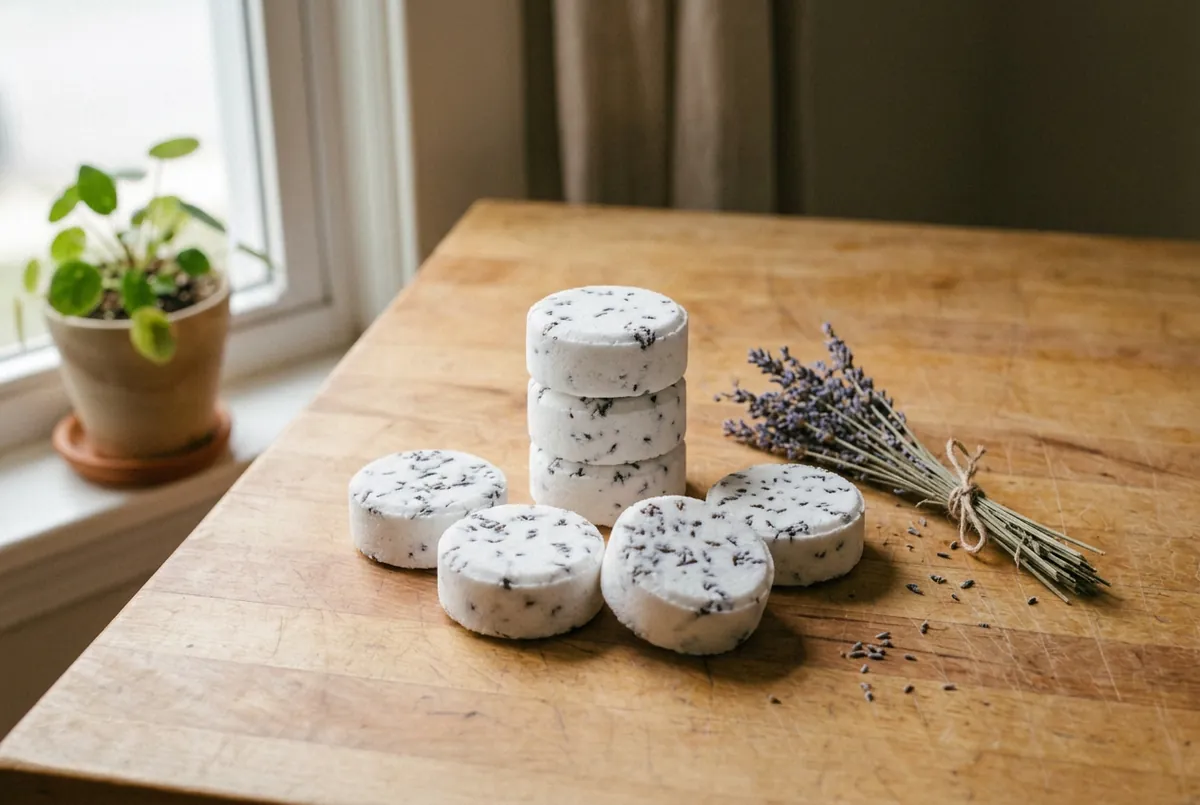
The recipe here is the standard one, with dried lavender for a softer evening steamer. If you want the plain version with exact quantities and nothing else, the shower steamer recipe is the short form. This page is the long form, for anyone who has had a batch go wrong and wants to know why.
Ingredients
- 1 cup (about 220g) baking soda
- 1/2 cup (about 110g) citric acid
- 2 tablespoons cornstarch
- 1 tablespoon dried lavender buds
- 40 drops lavender essential oil
- 20 drops sweet orange essential oil
- Witch hazel in a small spray bottle
Tools
- Large glass, ceramic or steel mixing bowl
- Fine sieve
- Measuring cups and spoons
- Silicone mold with 12 round cavities, about 4cm across
- Tablespoon, for pressing
- Gloves
- Airtight jar for storing
How to make shower steamers, step by step
1Set up a dry workspace
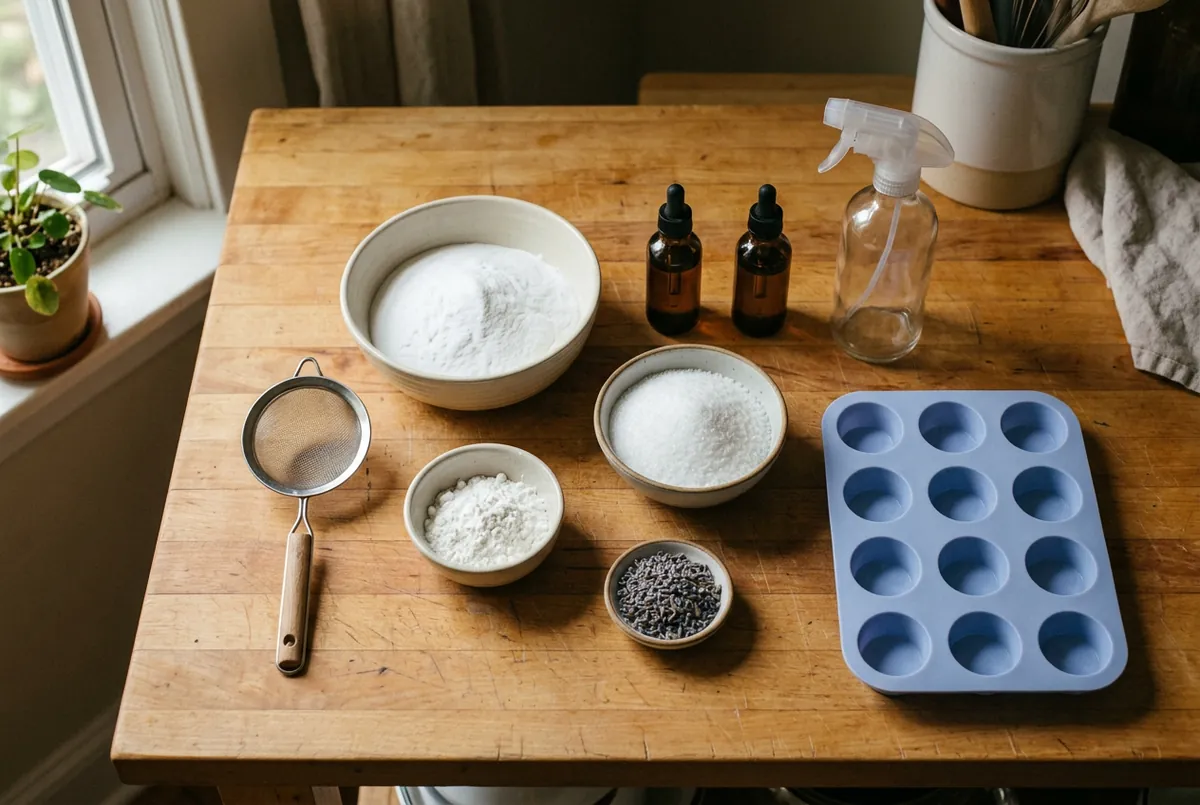
Water is the enemy until the very last moment, so start dry. Wipe the counter and dry it, make sure the bowl and mold are completely dry, and keep the kettle and sink out of reach. A single drop of water in the bowl sets off a patch of fizz that you will find later as a hard lump in the finished steamer.
Check before moving on: everything is measured, the mold is bone dry, and the witch hazel is in a spray bottle rather than a jug.
2Sift the dry ingredients
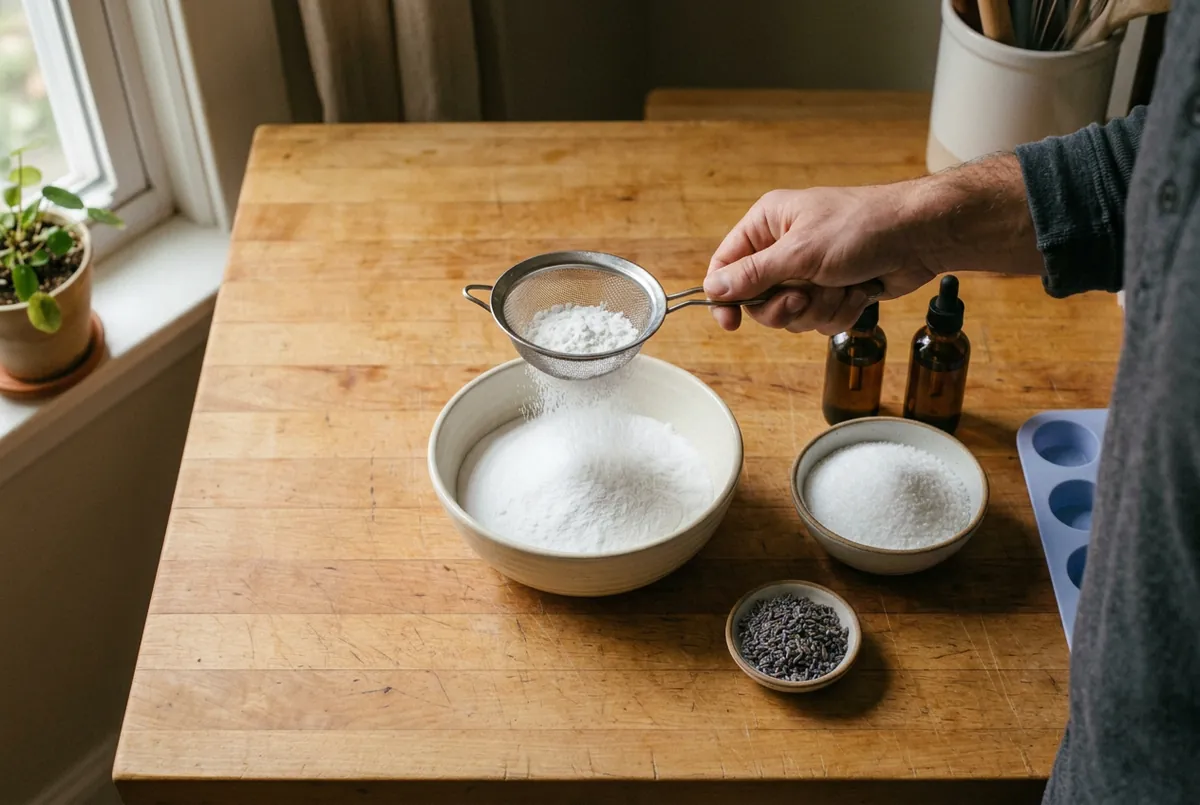
Sift the baking soda and cornstarch through a fine sieve, then stir in the citric acid and the lavender buds. Sifting takes a minute and removes the hard lumps of baking soda that otherwise end up as white specks and weak spots.
Check before moving on: run your fingers through the bowl. It should feel like fine flour with glinting citric acid crystals, and no lumps at all.
3Scent the base
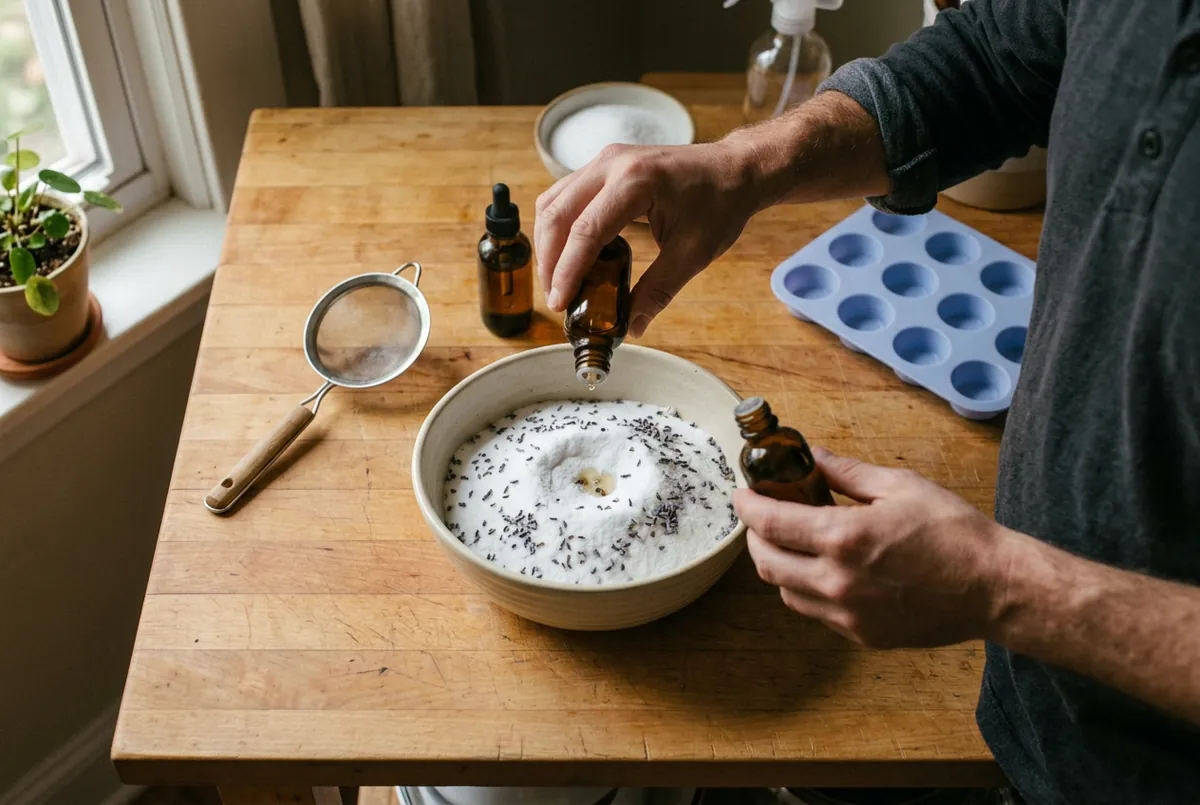
Add the essential oils a few drops at a time, into different spots, mixing between each. Sixty drops across the batch, about five per steamer, is strong in a closed shower and gentle in an open one.
Check before moving on: there should be no wet clumps. If a drop has made a damp patch, rub it between your fingertips until it disappears into the powder.
4Bind it and do the squeeze test
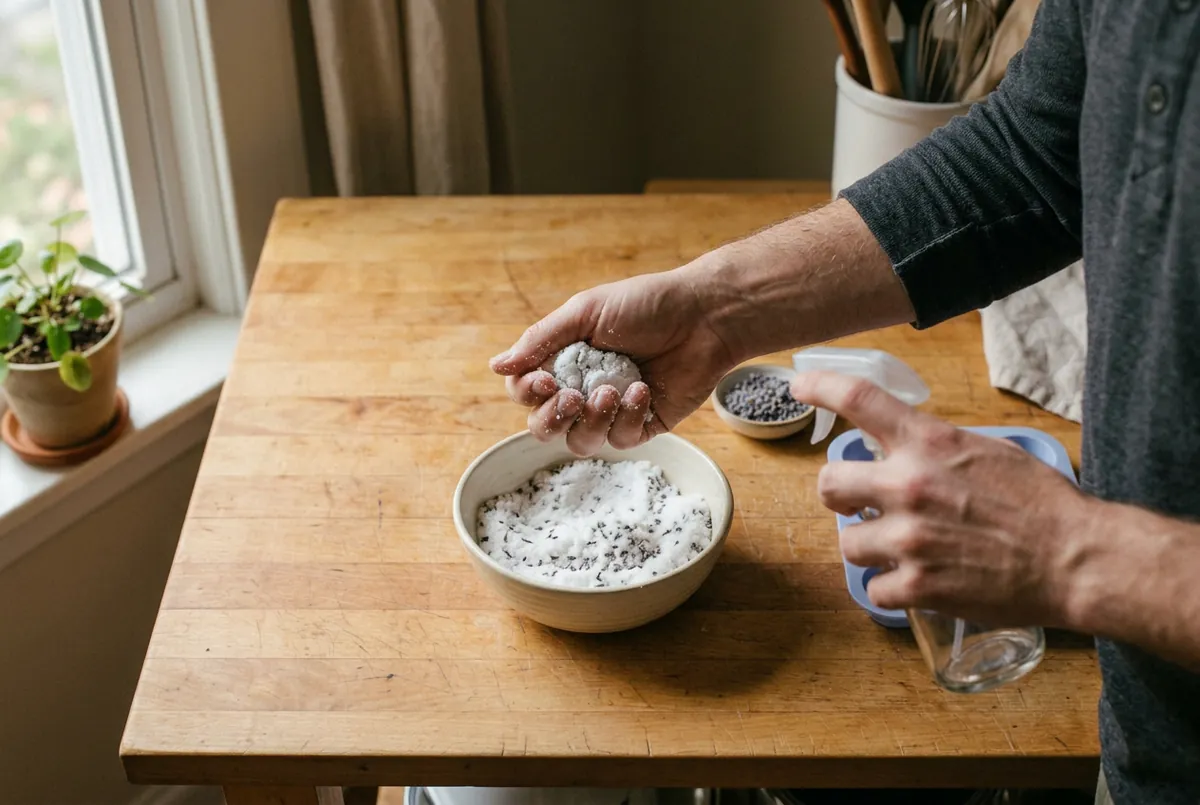
Mist the mixture with witch hazel, two or three sprays at a time, and mix straight away with your hand. After each round, squeeze a handful. When it holds together in a clump and breaks cleanly when you poke it, it is ready.
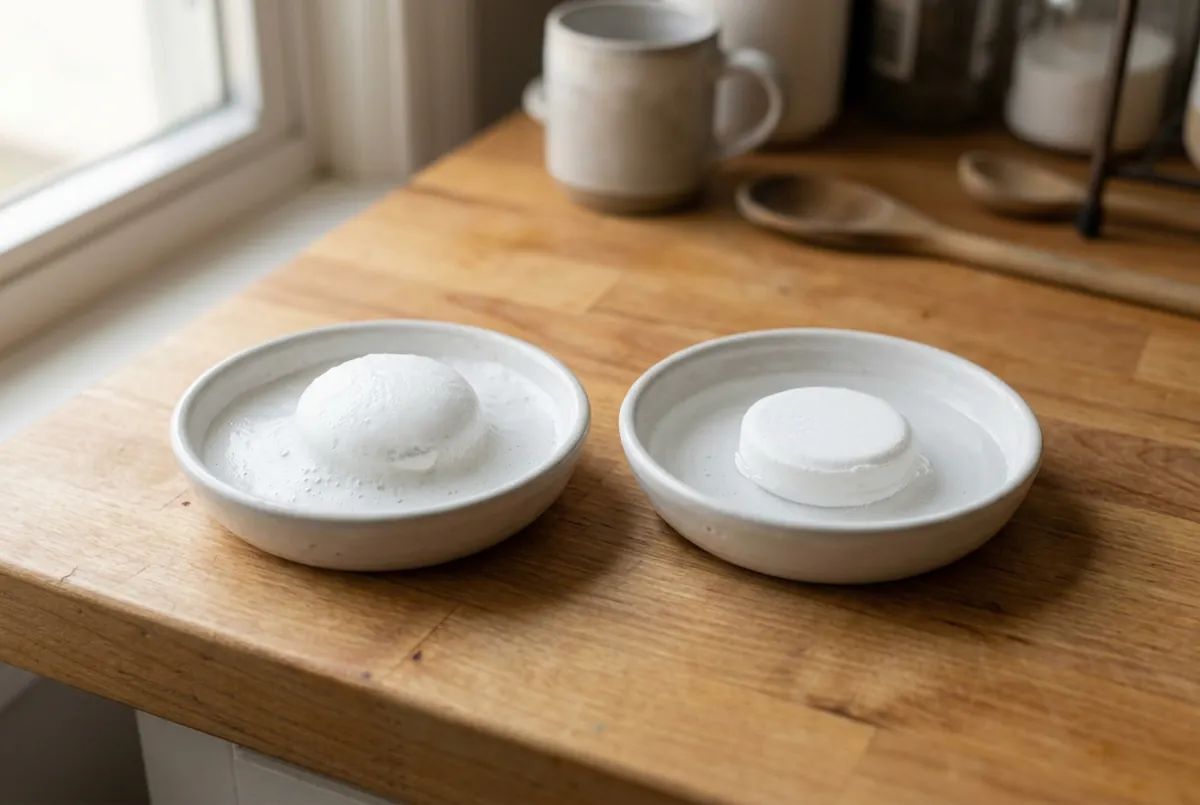
Check before moving on: listen and look. A faint crackle or a swelling surface means it is starting to react; stop spraying and keep mixing. If it is crumbly, spray once more. The crumbling shower steamers page covers the dry side of this, and fizzing in the mold covers the wet side.
5Press and level each cavity
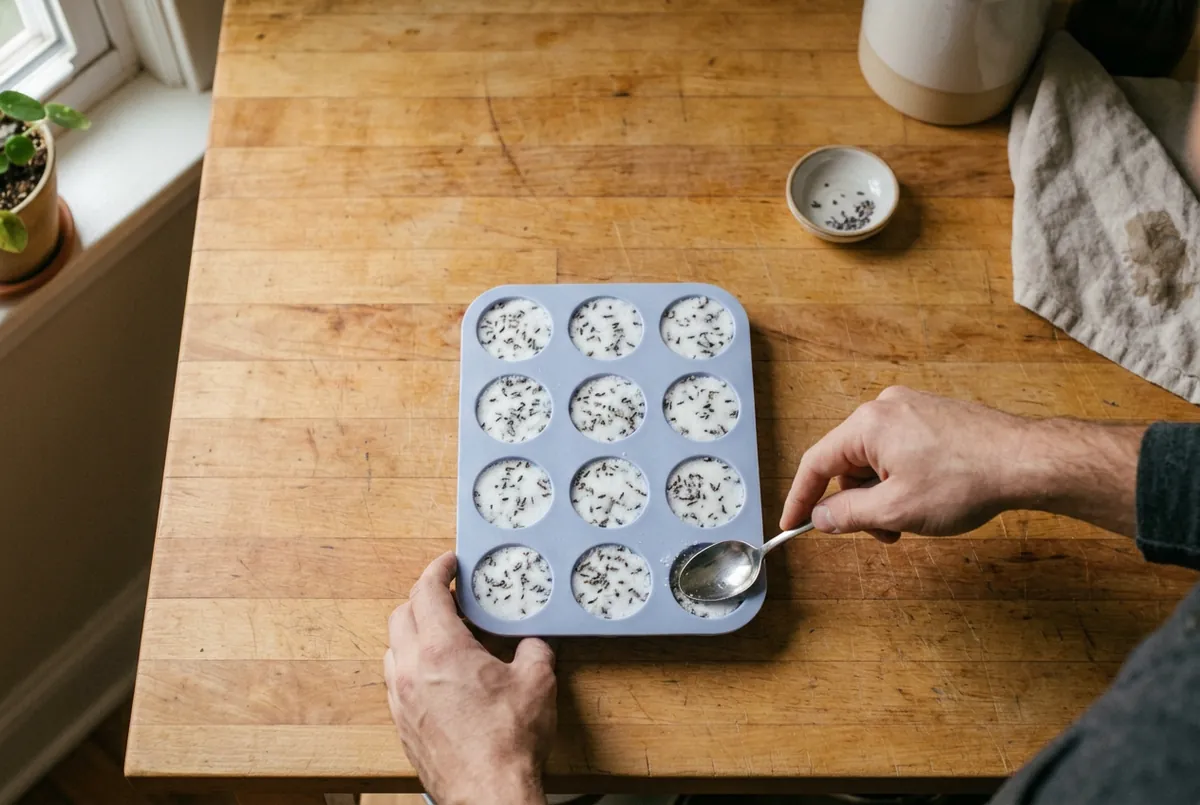
Overfill each cavity, press down hard with the back of a spoon, top up, and press again until the surface is level and solid. Scrape the excess back into the bowl.
Check before moving on: press a fingertip gently on one filled cavity. If it dents, it is not packed enough. Loose steamers are the ones that crumble later.
6Dry, unmold and do the fizz test
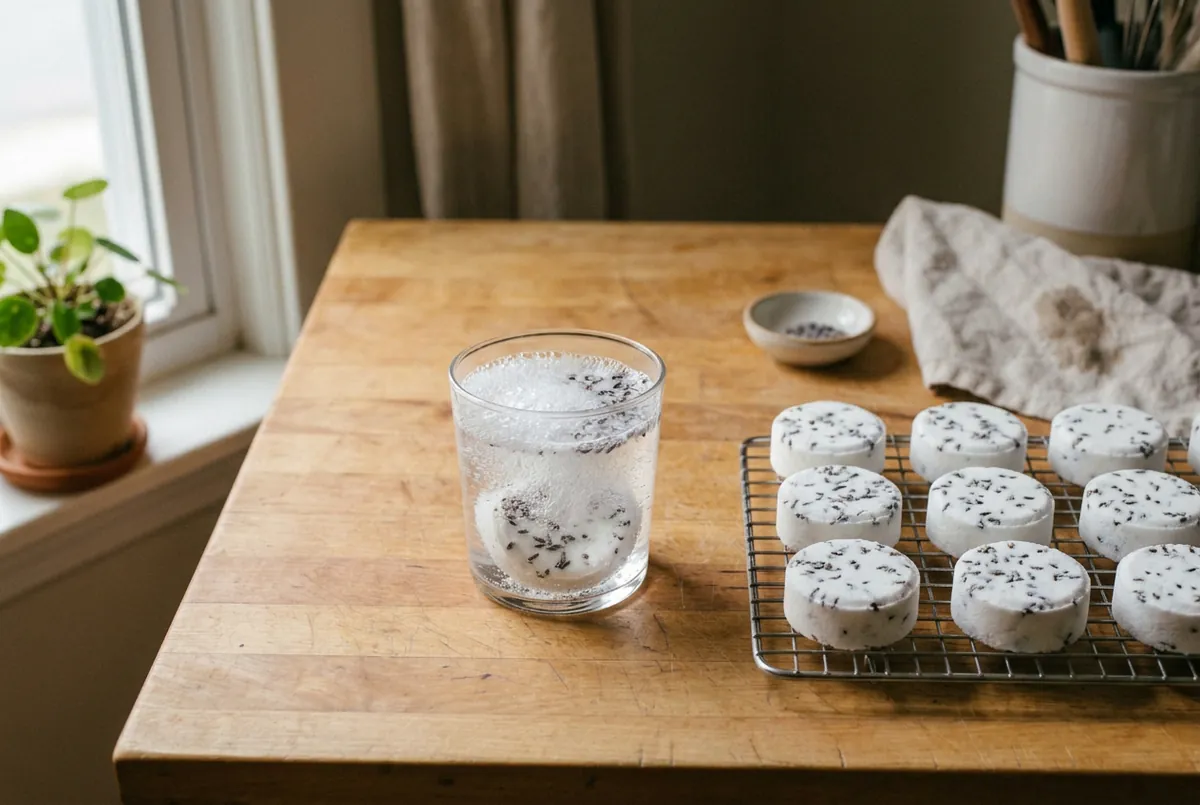
Leave the mold somewhere dry for 24 hours, then flex it and push each steamer out from underneath. Before you store the batch, drop one into a glass of water. It should fizz steadily for a couple of minutes and smell clearly of lavender.
Check before moving on: if it barely fizzes, something used up the reaction early; shower steamers not fizzing walks through the usual reasons. If it passes, seal the rest in an airtight jar straight away.
If it goes wrong
| Problem | Likely cause | How to fix it |
|---|---|---|
| Hard white lumps in the finished steamers | Baking soda clumps or a drop of water in the bowl | Sift the dry ingredients and make sure the bowl and counter are completely dry. |
| The mixture crackles or swells while mixing | Too much witch hazel added at once | Stop spraying, keep mixing, and add liquid only two or three sprays at a time. |
| Steamers dent or crumble when handled | The cavities were not packed hard enough | Overfill and press each cavity until a fingertip leaves no dent. |
| The fizz test barely fizzes | The reaction was used up during mixing or drying | Mist more lightly next time and dry the batch away from humidity. |
How do you know shower steamers are made right?
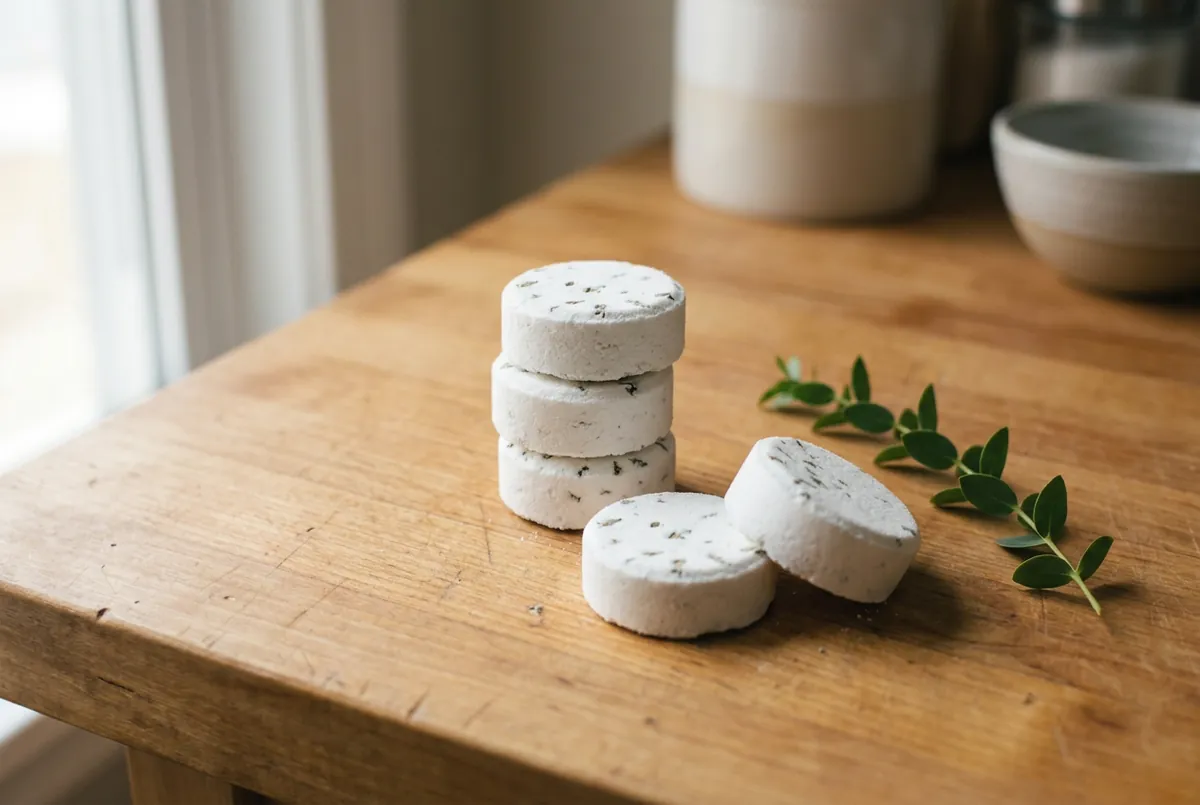
A good shower steamer is hard enough to handle without crumbs, fizzes steadily for five to fifteen minutes when splashed, and still smells clearly at the end. If yours do all three, the method is working and you can start changing things: the scent, the colour, the mold. The scents and blends section is a good next step, and the silicone molds guide covers shapes.
What equipment do you need to make shower steamers?
Less than you think. A mixing bowl, a whisk or sieve, measuring cups, a small spray bottle and a silicone mold are the whole kit. Glass, ceramic or steel bowls are better than plastic, which holds on to essential oil scents. Gloves are worth having because citric acid stings small cuts. Everything else on this site about shower steamers uses the same kit.
Frequently asked questions
What are the main ingredients in shower steamers?
Baking soda and citric acid, usually two parts to one, plus essential oil for scent and a light mist of witch hazel to bind it. Cornstarch or clay is optional and slows the fizz slightly.
Why do you sift shower steamer ingredients?
Baking soda forms hard lumps in the bag. Sifting breaks them up so the finished steamers are smooth, even and free of white specks, which are also weak spots where tablets break.
How do you know when shower steamer mixture is wet enough?
Squeeze a handful. It is ready when it holds together in a clump and breaks cleanly when poked, like damp sand for a sandcastle. If it falls apart, mist once more.
Can you add dried flowers to shower steamers?
Yes, in small amounts. A tablespoon of dried lavender buds or crushed herbs per batch looks lovely and rinses away. Avoid large petals and whole flowers, which collect in drains.